Meitheal in Hong Kong: How Two Irish Architects Are Using an Ancient Irish Tradition to House the Homeless
Irish architects Elspeth Lee and Donn Holohan, who founded their practice Superposition between Hong Kong and Ireland, are applying the traditional Irish concept of meitheal — the cooperative community working practice in which neighbours come together to help one another — to one of the world's most acute housing crises, developing an innovative "Backpack Housing" system that provides transitional accommodation for homeless individuals in vacant urban office buildings and is attracting international attention as a model for resource-conscious architecture.
Background
The meitheal tradition — from the Irish word for a working party or cooperative effort — has deep roots in Irish rural life. Historically, it referred to the practice of neighbours coming together to help with tasks that were too large for a single household to manage alone, from harvesting crops to building houses. The tradition reflects a philosophy of mutual aid and community solidarity that is deeply embedded in Irish culture, and it has been adapted and reinterpreted in many different contexts as Irish people have carried their values and traditions to every corner of the world.
Lee and Holohan, who met while studying architecture in Ireland and subsequently built careers in Hong Kong, have made the meitheal philosophy central to their practice. They apply it not as a nostalgic gesture but as a practical design methodology — using collaborative, community-based approaches to solve architectural problems that conventional, top-down design processes have failed to address. Their work spans two continents, from a wind and rain bridge in an 800-year-old village in China to an agricultural training centre at Moy Hill Farm in County Clare.
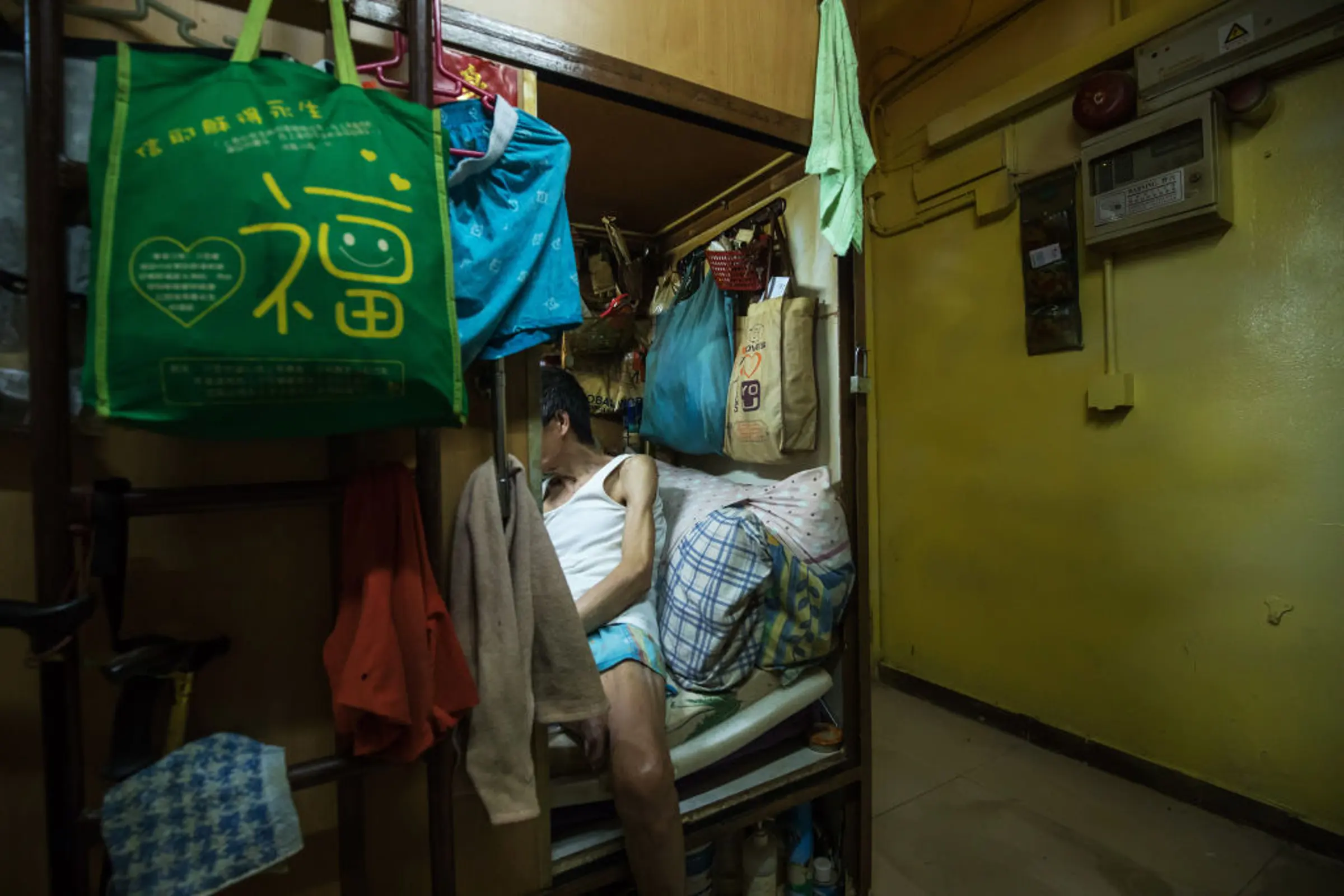
Hong Kong's housing crisis is one of the most severe in the world. The city has some of the highest property prices and rents on the planet, and a significant proportion of its population lives in conditions that would be considered unacceptable in most developed countries. The homeless population, while smaller than in many Western cities, faces particular challenges in a city where the cost of even the most basic accommodation is prohibitive and where the social safety net for those without housing is limited.
Key Developments
The Backpack Housing project, which Lee and Holohan developed in response to the housing crisis, is a "reconfigurable kit of parts" designed to provide transitional accommodation for homeless individuals in vacant office buildings that are awaiting demolition or redevelopment. The system allows occupants to maintain a private, lockable enclosure that can be disassembled and moved as they transition through different housing systems — hence the name "Backpack Housing," which reflects the portability and adaptability of the design.
The project uses the meitheal approach in its construction, with volunteers — including architecture students, community groups, and local residents — involved in the assembly of the units. This not only reduces costs but creates a sense of community ownership and investment in the project that conventional construction approaches cannot achieve. The architects have documented the process in their forthcoming book, Material, Making and Place: A Playbook for Resource-Conscious Architecture, which is scheduled for publication on October 1, 2026.
Lee and Holohan describe their work as shaped by an "outsider perspective" — the view of people who are neither fully Irish nor fully Hong Kongese, but who carry elements of both cultures and can see possibilities that those embedded in either tradition might miss. "We don't feel at home anywhere," Lee told The Irish Times. "But that idea is becoming less important. What matters is the work."
Why It Matters
The Backpack Housing project matters for several reasons. It demonstrates that Irish creative and intellectual traditions — including the meitheal philosophy — can be applied to contemporary global challenges in ways that are both practically effective and culturally meaningful. It also demonstrates that the Irish diaspora is not merely a source of economic remittances and political lobbying but a reservoir of creative talent and innovative thinking that can make a genuine contribution to the societies in which Irish people live and work.
The project also has implications for how Ireland thinks about its own housing crisis. The Republic is facing a severe shortage of affordable housing, and the conventional responses — planning reform, state investment, private development — have so far been insufficient to meet the scale of the need. The meitheal approach — community-based, resource-conscious, adaptable — offers a different way of thinking about the problem, one that draws on Ireland's own traditions and that has been tested in one of the world's most challenging urban environments.
The architects' work in China — using digital tools to adapt traditional local crafts for use by volunteers — also points to the potential of combining traditional knowledge with modern technology in ways that are both culturally sensitive and practically effective. This is a model that has relevance far beyond Hong Kong and China.
Local Impact
In County Clare, where Lee and Holohan have worked on the Moy Hill Farm agricultural training centre, the meitheal approach has been applied in a distinctly Irish context, bringing together local farmers, volunteers, and students to create a facility that serves the needs of the local agricultural community. The project has been praised by Clare County Council and by the farming organisations that use the centre as a model of community-led development that respects local traditions while meeting contemporary needs. The architects' book, which documents both the Hong Kong and Irish projects, is expected to be of particular interest to Irish architecture schools and to the community development sector.
What's Next
Lee and Holohan's book, Material, Making and Place, will be launched at events in Hong Kong, Dublin, and London in October. The architects are also in discussions with several Irish universities about collaborations that would bring the meitheal approach to Irish architecture education, and with community development organisations in Ireland about the potential application of the Backpack Housing model to the Irish context. A documentary film about their work, produced by an Irish production company, is currently in development and is expected to be completed in 2027. The architects have indicated that they plan to spend more time in Ireland in the coming years, and that they are exploring the possibility of establishing a permanent base in the country alongside their Hong Kong practice.