Irish-Americans Watch Trump's Unity Remarks with Mixed Feelings as Diaspora Navigates Divided Loyalties
Donald Trump's declaration during his Dublin visit that he would "love to see" a united Ireland has stirred complex and sometimes contradictory emotions among the Irish-American community, where historical support for Irish unity sits alongside deep political divisions over the president himself, and where the question of how the diaspora should engage with Ireland's constitutional future has never been more contested.
Background
The Irish-American community has historically been one of the most politically engaged diaspora communities in the world, and its influence on the Irish peace process was significant. The fundraising networks of Irish-America provided crucial financial support to nationalist political movements in the 1970s and 1980s, and the diplomatic leverage of Irish-American politicians — most notably Senator Edward Kennedy and Congressman Peter King — was instrumental in securing US government engagement with the peace process in the 1990s. Bill Clinton's decision to grant Gerry Adams a visa to visit the United States in 1994, over the objections of the British government, was a turning point that is widely credited with accelerating the path to the Good Friday Agreement.
The Irish-American community of 2026 is, however, a very different entity from the one that shaped the peace process. The community is more diverse, more geographically dispersed, and more politically divided than it was in the 1990s. The traditional Irish-American political identity — Catholic, Democratic, working-class — has been disrupted by demographic change, by the rise of Trump's Republican coalition, and by the generational distance from the Ireland that earlier waves of emigrants left behind. Many Irish-Americans who support Trump do so for reasons that have nothing to do with Ireland, and their reaction to his unity remarks reflects that complexity.
The Irish government's Diaspora Strategy 2026-2030, launched earlier this year, has sought to engage with this more diverse and complex diaspora, moving beyond the traditional focus on heritage-based ties to include an "affinity diaspora" of people who have studied, worked, or lived in Ireland. The strategy reflects a recognition that the Irish-American community of the 21st century cannot be engaged through the same channels and messages that worked in the 20th.
Key Developments
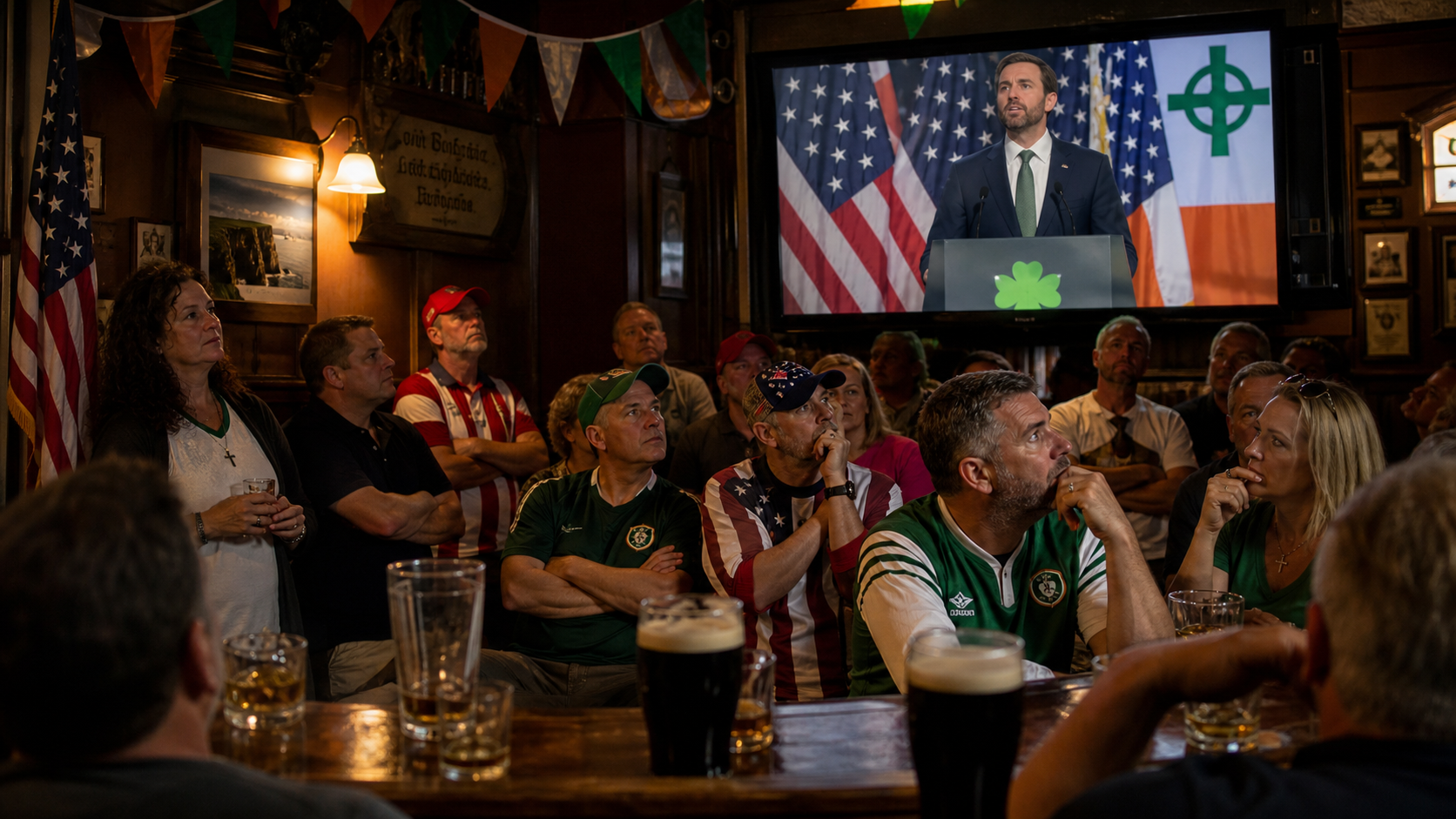
Trump's unity remarks, made during his Dublin visit on 12 September 2026, generated an immediate and divided response in the Irish-American community. Among those with strong nationalist sympathies — particularly in cities like Boston, New York, and Chicago, where Irish-American political identity has historically been most pronounced — the remarks were broadly welcomed as a validation of long-held aspirations. Social media posts from Irish-American community organisations expressed enthusiasm for the president's intervention, with some calling on the Irish government to respond positively.
Among Irish-Americans who support Trump primarily for domestic political reasons — his economic policies, his immigration stance, his cultural conservatism — the reaction was more ambivalent. Many expressed surprise at the unity remarks, noting that they did not fit the pattern of Trump's usual foreign policy positions. Some were sceptical about the sincerity of the intervention, suggesting that it was primarily intended for a domestic American audience rather than reflecting a genuine policy position.
Among Irish-Americans who are critical of Trump, the reaction was one of deep discomfort. The prospect of a president they regard as a threat to democratic norms becoming an advocate for Irish unity created a cognitive dissonance that was difficult to resolve. Several prominent Irish-American commentators argued that Trump's intervention was more likely to harm the cause of unity than to advance it, by associating it with a figure who is deeply unpopular in many parts of Ireland and Northern Ireland.
Why It Matters
The Irish-American community's reaction to Trump's unity remarks is a window into the complexity of diaspora politics in the 21st century. The community is no longer a monolithic bloc that can be mobilised around a single cause, and its influence on Irish politics — while still significant — is more diffuse and more contested than it was in the 1990s. The question of how the Irish government engages with this more complex diaspora, and how it manages the expectations that Trump's remarks have generated, is one that will require careful navigation in the months ahead.
The record 18,910 US applications for Irish citizenship through the Foreign Birth Register in 2025 — driven partly by a desire to maintain European connections in an uncertain political environment — is a reminder that the relationship between Ireland and its American diaspora remains vital and dynamic, even as its character has changed. Those applicants are not primarily motivated by Irish unity; they are motivated by practical concerns about their own futures. But they are also part of a community that is watching Ireland's constitutional debate with interest and, in many cases, with a sense of personal stake.
Local Impact
In the major centres of Irish-American life — Boston's South Boston and Dorchester neighbourhoods, New York's Woodside and Woodlawn, Chicago's Beverly and Mount Greenwood — the Trump unity remarks have been a topic of intense discussion in the days since the Dublin visit. Irish community organisations, including the Ancient Order of Hibernians and the Irish American Unity Conference, have issued statements welcoming the remarks, while noting that the path to unity remains a matter for the people of Ireland and Northern Ireland. The Ancient Order of Hibernians, which has historically been one of the most vocal advocates for Irish unity in the United States, has called on the Irish government to begin formal planning for a unity referendum.
What's Next
The Irish government's response to the pressure generated by Trump's unity remarks will be closely watched by the Irish-American community. The Taoiseach is expected to address the issue when the Dáil resumes, and the Department of Foreign Affairs will be monitoring the diaspora reaction closely. The Irish government's Shared Island unit, which is responsible for cross-border cooperation and unity planning, is expected to publish an updated work programme before the end of the year. The question of whether Trump's intervention will have any lasting impact on the unity debate — or whether it will be quickly forgotten in the noise of American domestic politics — remains to be seen.