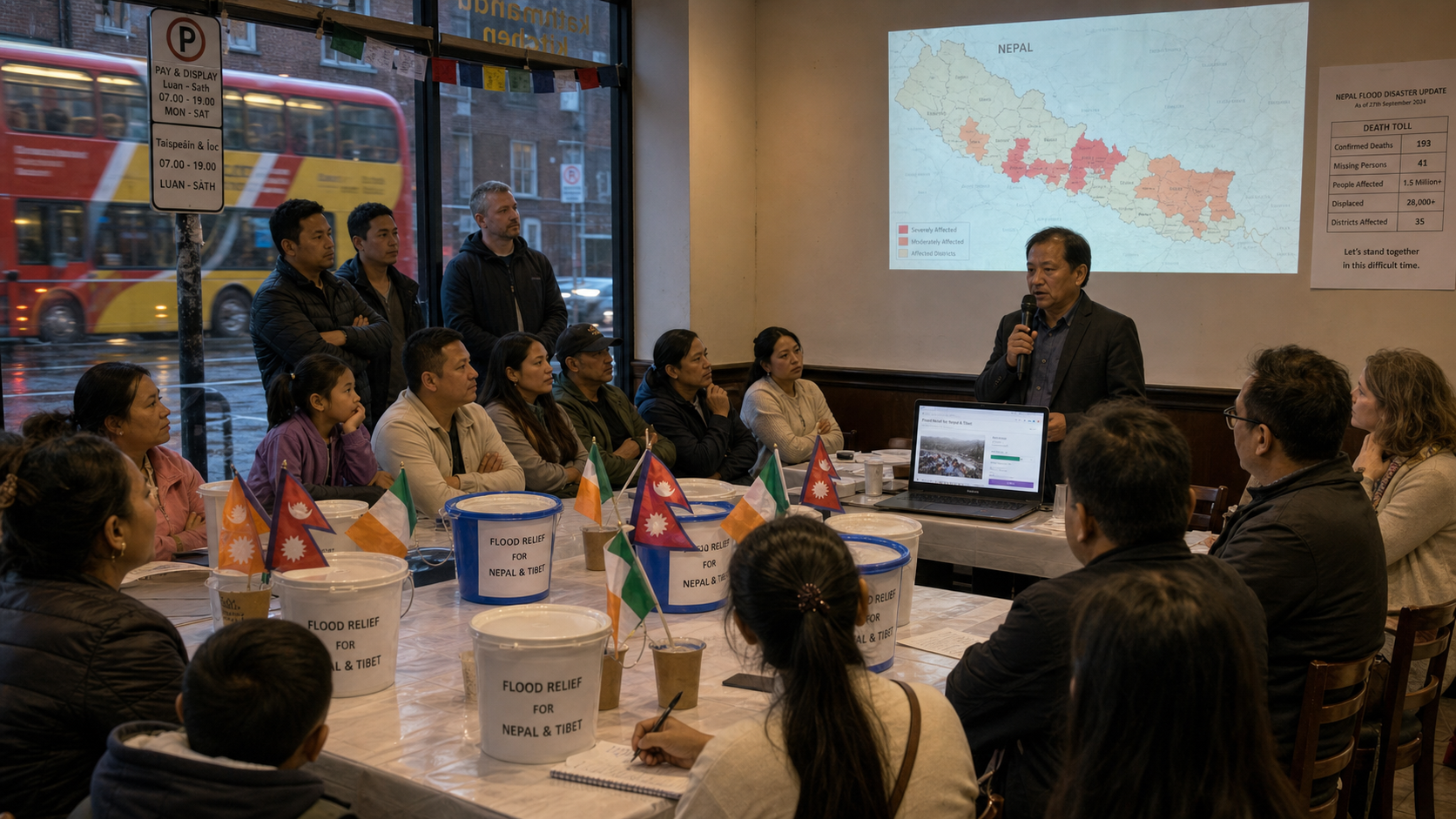
Ireland's Nepalese Community Raises Funds for Flood Victims as Death Toll Passes 626 and 2,400 Remain Missing
Ireland's Nepalese community is engaged in an urgent fundraising effort for the victims of the catastrophic flooding that has devastated Nepal and the Tibet border region, with the death toll having passed 626 and approximately 2,400 people still missing as rescue teams from China and other countries work through the ruins of communities that were swept away by floodwaters of unprecedented scale — while Irish officials continue to work to account for two Irish citizens who were in the affected region when the disaster struck.
Background
Nepal is one of the most disaster-prone countries in the world, situated in the Himalayas at the intersection of tectonic plates and subject to the monsoon rains that bring both life-giving water and devastating floods to the region each year. The country's mountainous terrain, which makes it one of the most spectacular landscapes on earth, also makes it extraordinarily vulnerable to the kind of flash flooding and landslides that have caused the current catastrophe.
The 2026 floods, which began in late August following an exceptionally intense monsoon season, have been described by Nepalese authorities as the worst in living memory. The flooding has affected communities across a wide area, with the border region between Nepal and Tibet — including the Tatopani border crossing — among the worst affected. Chinese rescue teams, who were among the first to reach the border area, reported finding 'nothing but ruins' at the crossing, with entire communities swept away by the floodwaters.
Ireland has a small but well-established Nepalese community, concentrated primarily in Dublin and other urban centres, that has developed over the past two decades as Nepalese citizens have come to Ireland to work and study. The community maintains strong connections with Nepal, and the scale of the current disaster has prompted an immediate and generous response from Irish-based Nepalese families and organisations.
Key Developments
RTÉ reported this weekend that Ireland's Nepalese community is actively fundraising for flood victims, with community organisations coordinating collections and directing funds to established relief organisations working in the affected areas. The fundraising effort reflects the deep connections that Irish-based Nepalese families maintain with their home country, and the anxiety that many feel about relatives and friends in the affected regions.
The death toll from the flooding has continued to rise, passing 626 as of Sunday, with approximately 2,400 people still missing. The scale of the disaster has overwhelmed Nepal's own emergency response capacity, and the country has sought technical help and aid from international partners. China, India, and several European countries have responded with rescue teams and humanitarian assistance.
Irish officials at the Department of Foreign Affairs have confirmed that they are working to account for two Irish citizens who were in the affected region when the disaster struck. The department's consular team has been in contact with local authorities and with the families of the missing citizens, and is providing whatever assistance it can in the difficult circumstances. One Irish woman was reported to have spoken to RTÉ about her husband, who remains missing in the region, describing the situation as 'heartbreaking'.
Why It Matters
The Nepal floods matter to Ireland for several reasons. The most immediate is the human connection — the Irish citizens who are missing, the Irish-based Nepalese families who are anxious about their relatives, and the broader Irish tradition of solidarity with communities in crisis around the world. Ireland has a long history of responding generously to humanitarian disasters, from the Ethiopian famine of the 1980s to the more recent crises in Syria, Ukraine, and elsewhere, and the response to the Nepal floods is consistent with that tradition.
The disaster also matters because it is a stark illustration of the human cost of climate change. The intensity of the 2026 monsoon season in Nepal has been linked by climate scientists to the warming of the Indian Ocean, which is increasing the moisture content of monsoon rains and making extreme precipitation events more frequent and more severe. The communities that have been destroyed by the flooding are among the least responsible for the greenhouse gas emissions that are driving climate change, yet they are bearing the heaviest burden of its consequences.
For Ireland's Nepalese community, the disaster is a deeply personal crisis. Many community members have family members in the affected regions, and the uncertainty about the fate of missing relatives is a source of profound anxiety. The fundraising effort is not just a practical response to the disaster — it is also a way of maintaining connection with home and of expressing solidarity with a country that is suffering.
Local Impact
In Dublin, where the largest concentration of Ireland's Nepalese community is based, community organisations have been coordinating the fundraising effort through social media and community networks. The Nepalese Community in Ireland, which is one of the main representative organisations for the community, has been directing donations to established relief organisations including the Nepal Red Cross and UNICEF Nepal. Local Irish organisations, including several GAA clubs and community groups, have also contributed to the fundraising effort in solidarity with their Nepalese neighbours.
The Irish Nepalese community has also been providing practical support to families who are trying to contact relatives in the affected areas, helping to navigate the communication difficulties that arise when infrastructure is destroyed by flooding. Community members with contacts in Nepal have been sharing information about the situation on the ground, helping to fill the gaps left by the disruption to official communications.
What's Next
The rescue operation in Nepal is expected to continue for several more days, with teams working through the debris of destroyed communities to search for survivors. The death toll is expected to rise further as rescue teams reach more remote areas. The Department of Foreign Affairs has indicated that it will continue to work to account for the two missing Irish citizens and will provide consular support to their families. The Irish Aid programme, which provides development assistance to Nepal, is expected to contribute to the humanitarian response, and the government may announce additional emergency funding for the relief effort in the coming days.