Ireland Women's T20 World Cup Campaign Ends as National Cricket Centre Construction Begins
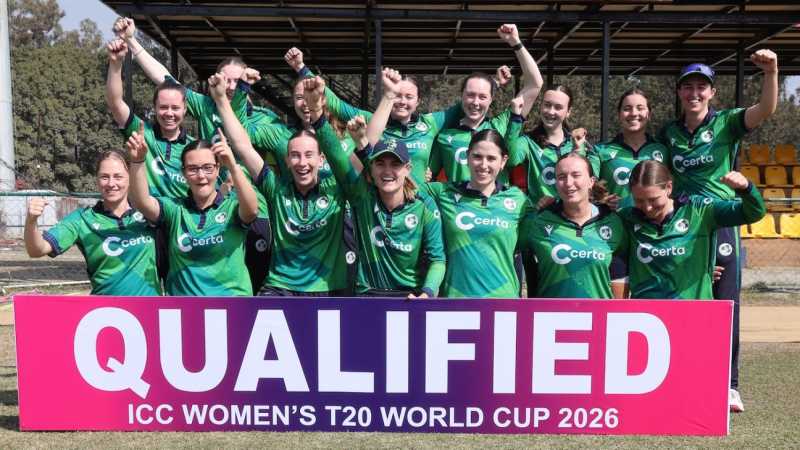
It was a week of contrasting emotions for Irish cricket: the women's team saw their T20 World Cup campaign in England end in frustrating circumstances as a rain-affected result denied them the victory they needed to advance, while at home the official start of construction on the new National Cricket Centre at the Sport Ireland Campus provided a moment of genuine optimism about the sport's long-term future on the island.
Background
Irish women's cricket has made significant strides in recent years, with the team establishing itself as a competitive force in the global game. The 2026 Women's T20 World Cup, hosted in England, represented an opportunity for Ireland to demonstrate their progress on the biggest stage, and the squad — drawn from clubs across Leinster, Munster, and Ulster — had prepared extensively for the tournament. The format of the competition, with its group stage and Super 8 knockout rounds, meant that every match was critical, and Ireland knew that they needed to win their crucial fixture to advance.
The men's team had their own T20 World Cup experience earlier in 2026, with the tournament held in February. Their campaign produced one memorable victory — a dominant 96-run win over Oman in which captain Lorcan Tucker scored an unbeaten 94 in Ireland's total of 235-5 — but they were unable to progress beyond the group stage. The men's team's record across the 2024 and 2026 tournament cycles has been a source of frustration for Cricket Ireland, which has invested significantly in the professional programme and expects results to reflect that investment.
The construction of the National Cricket Centre at the Sport Ireland Campus in Blanchardstown is the most significant infrastructure development in the history of Irish cricket. The facility, which will include 4,240 permanent seats, a high-performance centre, and the capacity to expand to 12,000 spectators for major events, has been in planning for the better part of a decade and represents a transformative investment in the sport's future.
Key Developments
The Ireland women's T20 World Cup campaign came to an end when a rain-affected result in a crucial group stage match allowed Zimbabwe to advance to the Super 8 stage instead of Ireland. The Duckworth-Lewis-Stern method, which is used to calculate results in rain-affected matches, produced an outcome that left the Irish squad and their supporters deeply frustrated, as the team had been in a strong position when the rain intervened. Cricket Ireland expressed disappointment at the result but praised the squad's commitment and performance throughout the tournament.
The sod-turning ceremony at the Sport Ireland Campus on 16 June was attended by three government ministers — Patrick O'Donovan, Charlie McConalogue, and Jack Chambers — alongside Sport Ireland chief executive Anna Marie Kennedy and Cricket Ireland CEO Sarah Keane. The ceremony marked the official start of construction on a facility that has been described as a "game-changer" for Irish cricket. Phase one will deliver the main oval with 4,240 permanent seats and a high-performance centre, with the capacity to expand to 12,000 for major events such as T20 World Cup fixtures.
Sarah Keane described the project as transformative. "This is a permanent home for our sport," she said. "It gives us the infrastructure to develop players from grassroots to international level under one roof, and it gives us the credibility to host world-class events. We are on track, and we plan to use the facility for test events in 2029 ahead of the T20 World Cup." Ireland is confirmed as a co-host of the 2030 Men's T20 World Cup alongside England, Scotland, and the Netherlands.
Why It Matters
The juxtaposition of the women's team's World Cup exit and the start of construction on the National Cricket Centre captures something important about where Irish cricket is at this moment. The sport is in a period of transition — investing heavily in infrastructure and player development while the results on the field have not yet consistently reflected that investment. The National Cricket Centre is the most visible expression of Cricket Ireland's long-term ambition, and its construction sends a clear signal that the sport is committed to building a sustainable future in Ireland rather than relying on temporary arrangements and borrowed facilities.
The women's game, in particular, stands to benefit enormously from the new facility. Women's cricket in Ireland has grown significantly in recent years, with increased participation at club level and a growing pool of talented players coming through the age-group pathway. Having access to a permanent, high-quality training facility will accelerate that development and give the women's programme the resources it needs to compete consistently at the highest international level.
Local Impact
The Sport Ireland Campus in Blanchardstown is already one of the busiest sporting hubs in the country, and the addition of a cricket centre will bring a new dimension to the facility. The Blanchardstown area has a large and diverse population, including significant South Asian communities for whom cricket is a central cultural activity. The new centre will provide a focal point for cricket in the Dublin area and will be accessible to clubs and schools from across Leinster. Construction is expected to create several hundred jobs in the building phase, with permanent employment in facility management and coaching to follow. Cricket Ireland has indicated that a community engagement programme will be launched later in 2026 to involve local clubs and schools in the development of the new centre.
What's Next
Construction on the National Cricket Centre is now under way, with the project expected to be completed in time for test events in 2029. Cricket Ireland will use those events to fine-tune operations ahead of the 2030 T20 World Cup. The ICC is expected to confirm Ireland's specific hosting schedule for the tournament in late 2027. The women's team will return to action in the coming months, with a series of bilateral fixtures planned against European opposition as they build towards the next major tournament cycle. Cricket Ireland has indicated that the lessons of the 2026 World Cup campaign will be incorporated into the women's programme's development plan.