Ireland Launches Diaspora Strategy 2026-2030 as Australia Overtakes US as Top Destination for Irish Emigrants
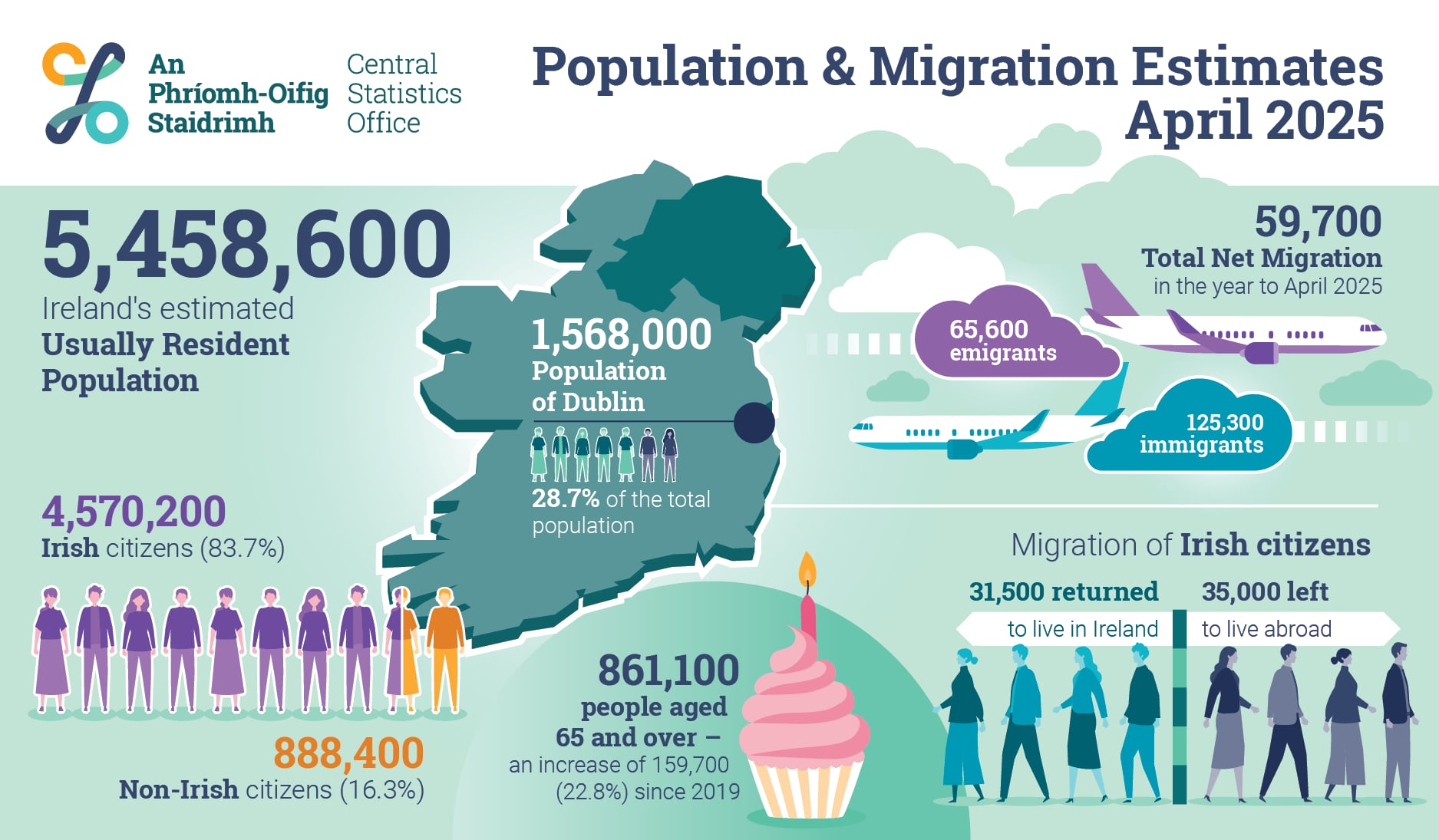
The Irish government has launched its third diaspora strategy, Ireland's Diaspora Strategy 2026-2030, with 23 specific commitments across five thematic pillars, as new migration data reveals a significant geographic shift in Irish emigration patterns — with Australia now overtaking the United States as the primary destination for Irish emigrants, with 13,500 departures to Australia compared to 6,100 to the US in the year to April 2025.
Background
Ireland's relationship with its diaspora is one of the defining features of the country's national identity and international presence. With an estimated 70 million people worldwide claiming Irish heritage, the diaspora represents a network of cultural, economic, and political connections that extends to every corner of the globe. The Irish government has recognised the strategic importance of this network through a series of diaspora strategies, the first of which was published in 2015, and the new 2026-2030 strategy represents the most ambitious and comprehensive engagement with the diaspora to date.
The strategy was developed following nine months of extensive international consultations, including the first-ever online consultation for the Irish abroad — a recognition that the diaspora is increasingly connected through digital channels and that engagement with it must reflect this reality. The consultations involved Irish communities in Australia, the United States, the United Kingdom, continental Europe, and beyond, and the resulting strategy reflects the diversity of experiences and needs within the global Irish community.
The geographic shift in Irish emigration patterns is one of the most striking findings to emerge from the data accompanying the strategy's launch. Australia's emergence as the primary destination for Irish emigrants — ahead of the United States for the first time in modern records — reflects a combination of factors including Australia's strong economy, its relatively accessible visa system for Irish citizens, and the established Irish community networks that make the transition to life in Australia more manageable for new arrivals.
Key Developments
The strategy's 23 commitments are organised around five thematic pillars: wellbeing and advocacy, identity and culture, connection and contribution, departure and return, and sharing Ireland's experience. Among the most significant commitments are enhanced support for vulnerable and elderly members of the overseas community through the Emigrant Support Programme, a modern and inclusive understanding of Irishness that embraces multi-heritage and LGBTQI+ narratives, and the use of the "Ireland House" model to enhance collaboration at diplomatic missions.
Minister of State for the Diaspora Neale Richmond emphasised the strategy's commitment to redefining the diaspora in response to changing global realities. "The Irish diaspora is not a fixed or homogeneous community," Richmond said. "It is dynamic, diverse, and constantly evolving. Our strategy must reflect that reality and must be responsive to the changing needs and circumstances of Irish people around the world."
The strategy explicitly seeks to move beyond traditional, heritage-based definitions of the diaspora, acknowledging the "affinity diaspora" — people who have lived, studied, or worked in Ireland and retain a deep cultural connection to the country, even without hereditary Irish links. This broader definition reflects the reality of modern Ireland as a country that has attracted significant numbers of international students, workers, and residents who have developed genuine connections to Irish society and culture.
Why It Matters
The diaspora strategy matters because the Irish diaspora is not merely a sentimental concept — it is a strategic asset of considerable economic, cultural, and political significance. Irish people and people of Irish heritage occupy positions of influence in business, politics, academia, and the arts across the world, and the connections they maintain with Ireland can be leveraged to advance Irish interests in ways that formal diplomacy cannot always achieve. The strategy's recognition of the "affinity diaspora" is particularly significant, as it acknowledges that Ireland's global network extends beyond those with Irish blood to include the many thousands of people who have been shaped by their experience of living in Ireland.
The shift in emigration patterns towards Australia also has implications for Irish policy. The United States has historically been the primary focus of Irish diaspora engagement, reflecting the size and influence of the Irish-American community. As Australia becomes an increasingly important destination, the government will need to ensure that its consular and community support infrastructure in Australia is adequate to meet the needs of a growing Irish population there.
Local Impact
Across Ireland, the launch of the diaspora strategy has been welcomed by organisations that work with emigrants and returnees, including the Emigrant Support Programme's network of funded organisations. In counties with high rates of emigration — including Donegal, Mayo, Roscommon, and Leitrim — the strategy's commitments on departure and return are of particular relevance, as these communities have been most directly affected by the outflow of young people in recent years. The strategy's commitment to supporting returnees — those who choose to come back to Ireland after periods abroad — is also significant, as return migration has become an increasingly important source of skills and experience for the Irish economy.
What's Next
The strategy will be implemented over the period 2026-2030, with annual progress reports to be published by the Department of Foreign Affairs. The Emigrant Support Programme, which provides funding to organisations supporting Irish communities abroad, will be expanded as part of the strategy's implementation. A Global Irish Civic Forum, which brings together representatives of Irish communities from around the world, is expected to meet in Dublin in 2027 to review progress on the strategy's commitments and to provide input into its ongoing development.