Ireland Establishes New AI Office as Cyber Attacks Named Top Threat to Financial Sector
The Irish government has approved the creation of a dedicated AI office, responding to a stark new survey showing that 60% of compliance professionals in the Irish financial services sector now identify cyber attacks and system outages as their single greatest operational threat — a concern sharpened by the growing use of sophisticated digital tools by criminal networks.Background
Ireland's position as a European hub for major technology companies — home to the European headquarters of Google, Meta, Apple, and dozens of other global firms — has made it both a beneficiary of the digital economy and a target for sophisticated cyber threats. The country's financial services sector, which includes a significant international funds industry centred in Dublin's IFSC, handles trillions of euros in assets and is a critical node in the global financial system. The security of this infrastructure is not merely a commercial concern but a matter of national economic security.
The 2021 ransomware attack on the Health Service Executive (HSE) remains the most vivid illustration of Ireland's vulnerability to cyber threats. The attack, carried out by the Conti criminal group, crippled the Irish health service for months, forcing the cancellation of thousands of appointments, disrupting cancer treatment programmes, and costing the state hundreds of millions of euros in recovery costs. The incident exposed significant weaknesses in the cybersecurity posture of Irish public institutions and prompted a major review of digital security across the public sector.
Since then, the threat landscape has evolved rapidly. The proliferation of tools that can automate and scale cyber attacks has lowered the barrier to entry for criminal groups, while the increasing sophistication of social engineering techniques has made even well-defended organisations vulnerable. Irish financial regulators have been warning for several years that the sector needs to invest more heavily in cyber resilience, and the latest survey data suggests those warnings are being heard.
Key Developments
A new survey published on 28 April 2026 by the Compliance Institute reveals that Irish financial services firms now consider cyber attacks and system outages to be their primary operational threat for 2026. A commanding 60% of compliance experts cited these digital threats as their top concern, a significant increase from previous years. The survey reflects the severe impact of recent high-profile incidents and the growing recognition that the threat is intensifying rather than abating.
Michael Kavanagh, CEO of the Compliance Institute, emphasised the gravity of the situation, noting that the increasing use of sophisticated digital tools by cybercriminals is escalating the potential for damage. "The threat is not static," Kavanagh said. "What we are seeing is a professionalisation of cybercrime, with criminal groups operating with the resources and discipline of legitimate enterprises." The Irish Cabinet's approval of the new AI office signals the government's commitment to developing a robust regulatory and strategic framework for emerging technologies. The office will be tasked with navigating the complexities of technology development and deployment while simultaneously bolstering the nation's defences against a new generation of sophisticated threats targeting critical infrastructure and the financial sector.
Why It Matters
Ireland's establishment of a dedicated AI office places it alongside the UK, which has its own AI Safety Institute, and the EU, which is implementing the AI Act, in developing institutional capacity to govern emerging technologies. However, Ireland's approach is distinctive in its explicit linkage between AI governance and cybersecurity — recognising that the same technologies that offer enormous economic benefits also create new attack vectors. For context, the EU's AI Act, which Ireland must implement as an EU member state, creates a tiered regulatory framework based on risk, with the highest-risk applications subject to the most stringent requirements. The new Irish AI office will need to coordinate with EU-level institutions while also addressing Ireland's specific vulnerabilities as a small, open economy with a disproportionately large technology sector. Unlike the UK, which has left the EU's regulatory orbit, Ireland must navigate both domestic priorities and European obligations simultaneously.
Local Impact
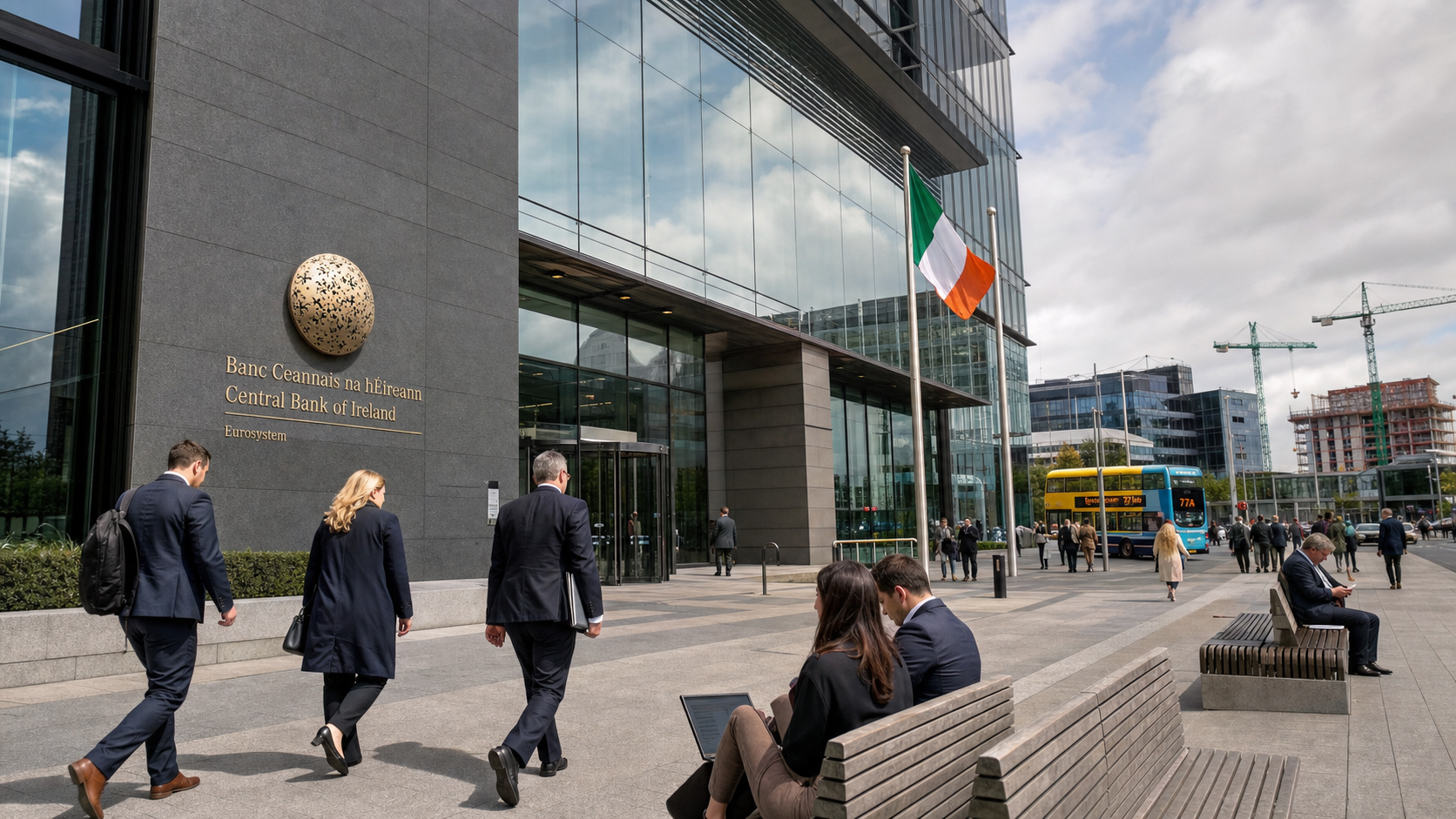
For Irish businesses and consumers, the establishment of the AI office and the heightened focus on cybersecurity have practical implications. Financial services firms will face increased regulatory scrutiny of their cyber resilience arrangements, with the Central Bank of Ireland expected to incorporate the new survey findings into its supervisory priorities. For ordinary consumers, the growing threat of cyber attacks on financial institutions raises the risk of fraud, data breaches, and service disruptions. In Northern Ireland, where many residents bank with institutions that operate across the island, the security of cross-border financial infrastructure is a shared concern. The PSNI's cybercrime unit has also been expanding its capacity in response to the growing threat, reflecting the recognition that digital crime is now a mainstream policing challenge.
What's Next
The new AI office is expected to be formally established and staffed within the next six months, with its first regulatory priorities to be announced by the end of 2026. The Compliance Institute's survey will be presented to the Oireachtas Finance Committee in May, where TDs are expected to question the Central Bank and the Department of Finance about the adequacy of current cybersecurity frameworks. Watch for the publication of the government's updated National Cyber Security Strategy, which is expected to incorporate the new AI office's mandate and set out Ireland's approach to the intersection of artificial intelligence and digital security.
Sources: The Irish Times — Irish financial firms cyber threats, 28 April 2026; Irish Times