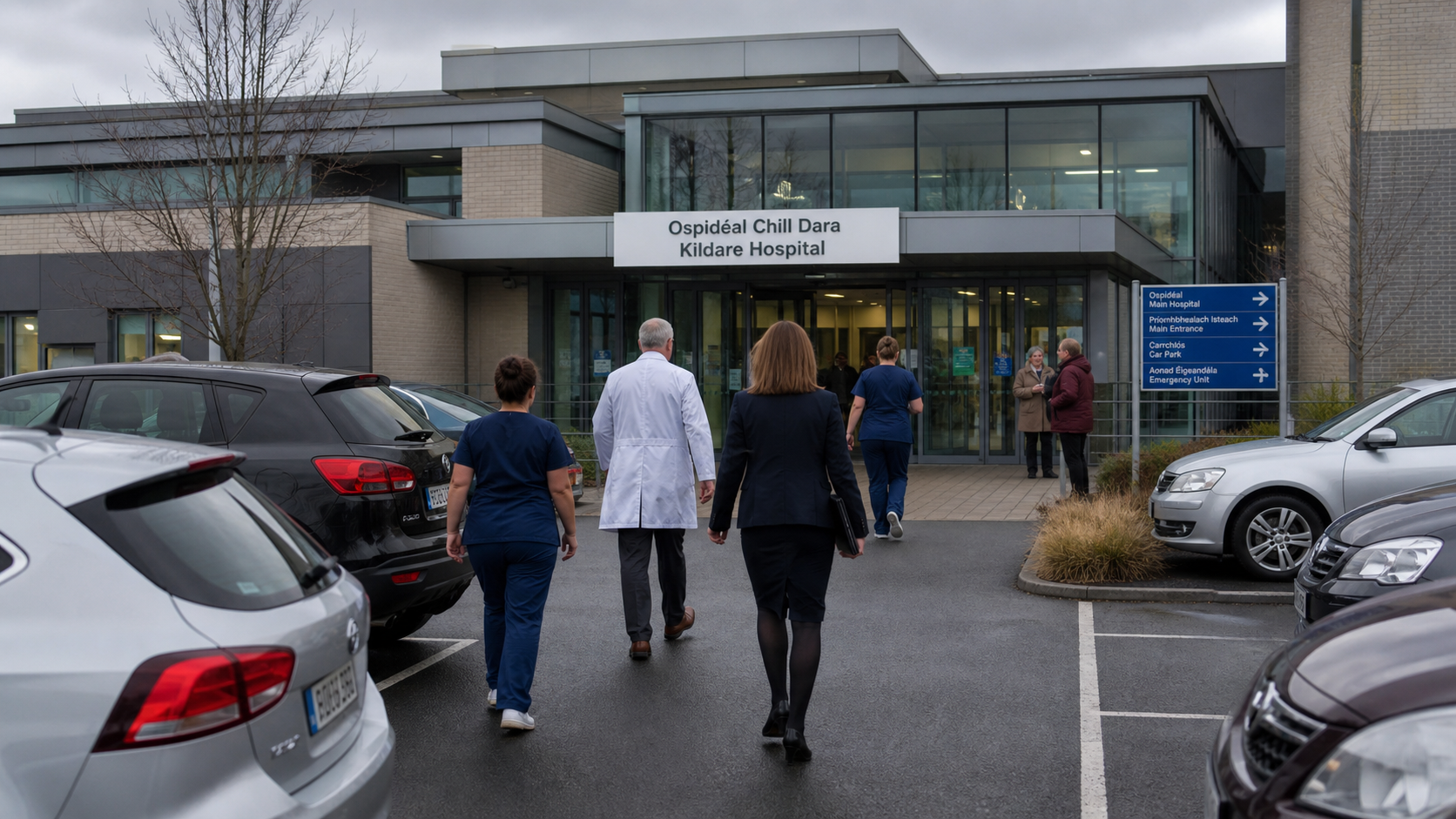
HSE Cost Recovery Team Established at Naas General Hospital as €41 Million Deficit Prompts Urgent Intervention
The Health Service Executive has established a dedicated cost recovery team at Naas General Hospital in County Kildare after the facility was projected to run a €41 million deficit for the current financial year — a figure that has prompted urgent intervention from HSE management and raised serious questions about the financial governance of one of the busiest hospitals in the Leinster region.
Background
Naas General Hospital is the principal acute hospital serving County Kildare and parts of County Wicklow, providing emergency, surgical, and medical services to a catchment population of approximately 250,000 people. The hospital has been under significant pressure in recent years, driven by the rapid population growth of the greater Dublin commuter belt and the corresponding increase in demand for acute hospital services. It is part of the HSE's Dublin and Midlands Health Region, which has been grappling with financial pressures across multiple facilities.
The financial difficulties at Naas came to light in a particularly stark way following the publication of an internal HSE audit, finalised in November 2025 and subsequently released under a Freedom of Information request, which found that the hospital had paid €2 million to consultants in ways that deviated from public pay policy guidelines between 2022 and 2025. The payments, which were made through the National Treatment Purchase Fund to reduce waiting lists, were found to have been made at rates significantly higher than would have been appropriate under standard contractual or overtime arrangements, and without the competitive procurement processes that public spending rules require.
The audit identified a series of governance failures, including the absence of a Memorandum of Agreement with the NTPF for three years of funding, a lack of controls to verify that invoiced amounts were actually paid, and an inability to confirm that NTPF-funded consultations occurred outside of core hospital hours. The findings were described by the audit as representing "an inefficient use of public funds" and creating "governance risks."
Key Developments
The establishment of the cost recovery team at Naas represents the HSE's most direct intervention in the hospital's financial management to date. The team, which includes financial specialists from the HSE's central office, has been tasked with identifying the sources of the projected €41 million deficit and developing a plan to reduce it to a manageable level before the end of the financial year. The team will also oversee the implementation of the recommendations from the November 2025 audit, including the introduction of proper procurement processes for consultant payments and the establishment of controls to verify NTPF-funded activity.
The hospital's management has acknowledged the findings of the audit and stated that it is committed to implementing the recommendations. In a statement, the hospital said it was "working constructively with the HSE to address the financial challenges facing the hospital and to ensure that the governance frameworks required for sound financial management are in place." The HSE's Dublin and Midlands Health Region has indicated that it will provide additional management support to the hospital during the recovery process.
Why It Matters
The situation at Naas General Hospital is significant for several reasons. It is a reminder that the HSE's financial management challenges are not confined to the national level but extend to individual hospitals, where local governance failures can compound the systemic pressures facing the health service. The €41 million projected deficit at a single hospital is a substantial sum, and it raises questions about whether similar issues exist at other facilities across the country. The HSE's overall budget overrun for 2026 is estimated at €580 million — a figure that has already prompted significant political controversy — and the Naas situation is one of the more visible examples of the local-level financial management failures that contribute to that national figure.
Local Impact
For patients and staff at Naas General Hospital, the financial intervention is a source of both concern and cautious optimism. Concern, because cost recovery exercises in hospitals typically involve difficult decisions about staffing, services, and capital investment. Optimism, because the establishment of a dedicated recovery team signals that the HSE is taking the situation seriously and is committed to providing the support needed to address it. The hospital's emergency department, which has been under significant pressure from the growing population of County Kildare, is expected to be a particular focus of the recovery plan, with the team examining whether additional capacity or different patient pathways could reduce the cost of emergency care without compromising its quality.
What's Next
The cost recovery team is expected to present its initial findings to HSE management before the end of September. A formal recovery plan, with specific targets and timelines, is expected to be in place by the end of October. The Public Accounts Committee has indicated that it will seek an update on the situation at Naas General Hospital at its October hearings. The hospital's management has been asked to appear before the committee to explain the circumstances that led to the projected deficit and to outline the steps being taken to address it.