Heritage Week Kicks Off Across Ireland with Hundreds of Free Events Open to the Public
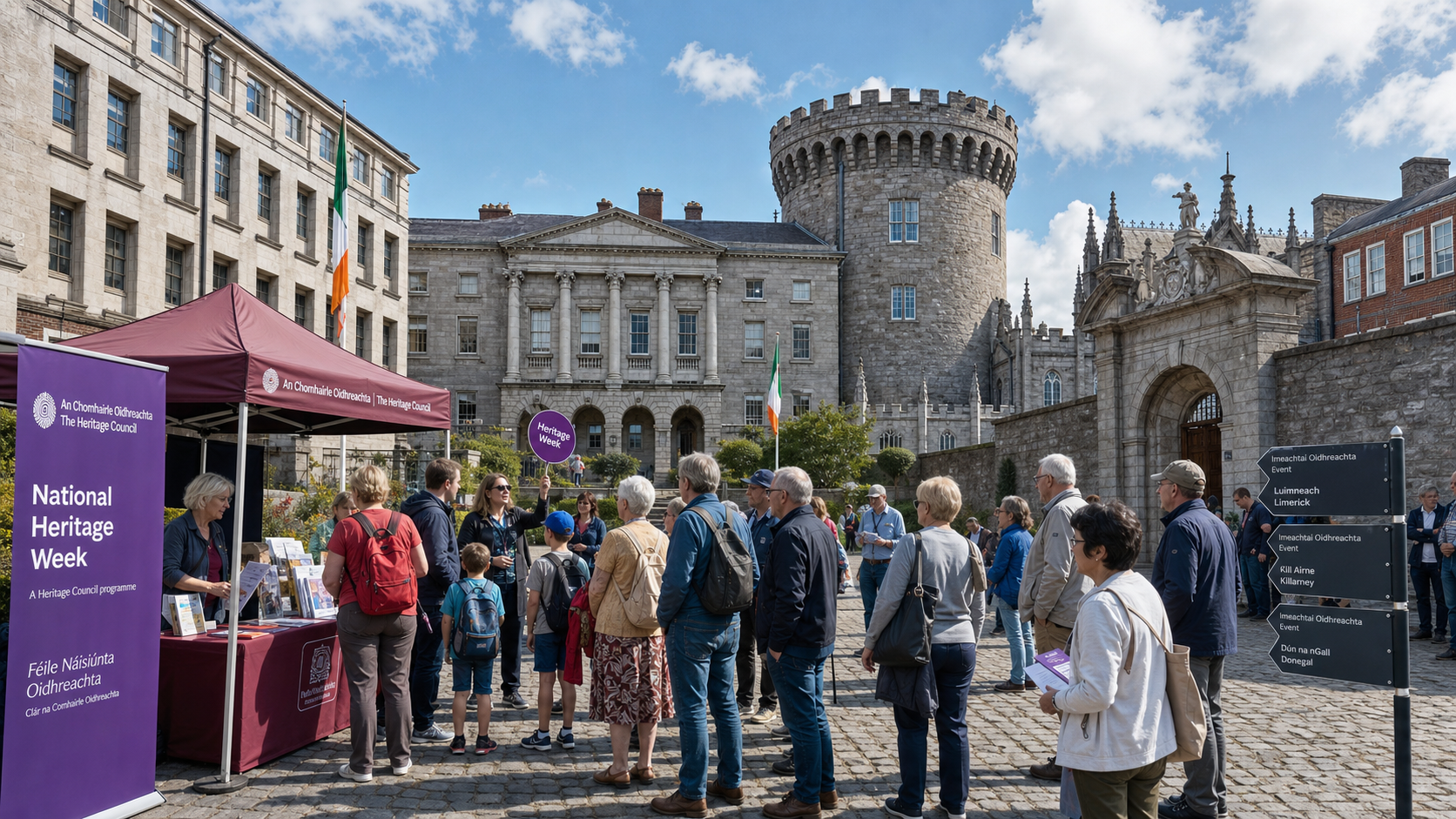
Ireland's annual Heritage Week gets under way this weekend, with hundreds of free events taking place across the country over the coming days, offering the public access to historic buildings, guided tours of archaeological sites, traditional craft demonstrations, and cultural performances that celebrate the richness and diversity of Ireland's built, natural, and cultural heritage.
Background
Heritage Week is an annual initiative organised by the Heritage Council of Ireland, a state body established under the Heritage Act 1995 to promote awareness, appreciation, and protection of Ireland's natural and cultural heritage. The week has grown significantly since its inception, and now attracts hundreds of thousands of participants across the island each year, making it one of the most widely attended cultural events in the Irish calendar.
The 2026 edition of Heritage Week takes place against a backdrop of renewed public interest in Ireland's history and built environment, driven in part by the ongoing debates about planning, development, and the preservation of historic streetscapes in Irish towns and cities. The Irish Times has been running a series on derelict Ireland — the hollowing out of town centres and the loss of historic buildings to neglect and demolition — and Heritage Week provides an opportunity to celebrate what has been preserved and to make the case for protecting what remains.
This year's programme includes events in every county on the island, from guided walks through medieval walled towns in Wexford and Galway to open days at country houses, archaeological digs, and traditional music sessions in historic venues. Many events are free of charge, reflecting the Heritage Council's commitment to making Ireland's heritage accessible to all.
Key Developments
Among the highlights of this year's programme are a series of events celebrating Ireland's walled towns, which have been the subject of renewed interest following recent coverage of the extraordinary medieval walls in Wexford, Galway, and other towns. Guided tours of the walls, which in some cases are among the best-preserved examples of medieval urban fortification in western Europe, will be offered in several locations.
The week also includes a programme of events focused on Ireland's natural heritage, including guided walks through national parks and nature reserves, birdwatching events, and talks on the conservation of endangered species. The recent stranding of dolphins on a Kerry beach has heightened public awareness of marine heritage, and several coastal events will focus on Ireland's relationship with the sea.
A selection of events will also celebrate Ireland's intangible cultural heritage — the traditions, practices, and knowledge that are passed down through generations. Traditional music sessions, storytelling events, and demonstrations of traditional crafts such as basket-weaving and lace-making will take place in venues across the country.
Why It Matters
Heritage Week matters because it makes the case, in the most practical and accessible way possible, for the value of Ireland's heritage to the quality of life of its citizens. At a time when Irish towns and cities are under pressure from development, dereliction, and the homogenising effects of globalisation, the week provides a counterpoint — a celebration of the specific, the local, and the irreplaceable. The Heritage Council's research consistently shows that people who engage with their local heritage have a stronger sense of place and community, and that heritage tourism is a significant contributor to the Irish economy. Heritage Week is both a celebration and an argument: an argument that what we have inherited is worth protecting and sharing.
Local Impact
In every county across Ireland, Heritage Week events are organised by local heritage officers, community groups, historical societies, and voluntary organisations. The week provides a platform for local knowledge and expertise that is often invisible in the national media, and it creates connections between people who share an interest in the history and character of their local area. In rural communities in particular, Heritage Week events can be significant social occasions that bring people together around a shared sense of place and identity. The Heritage Council has reported that participation in Heritage Week events is associated with increased civic engagement and community cohesion.
What's Next
Heritage Week runs until Sunday, August 23. A full programme of events is available on the Heritage Council's website and through local authority heritage offices. The Heritage Council will publish a report on the week's activities and attendance figures in September. The organisation has also announced that it is developing a new national heritage strategy for the period 2027-2032, which will be subject to public consultation in the autumn.