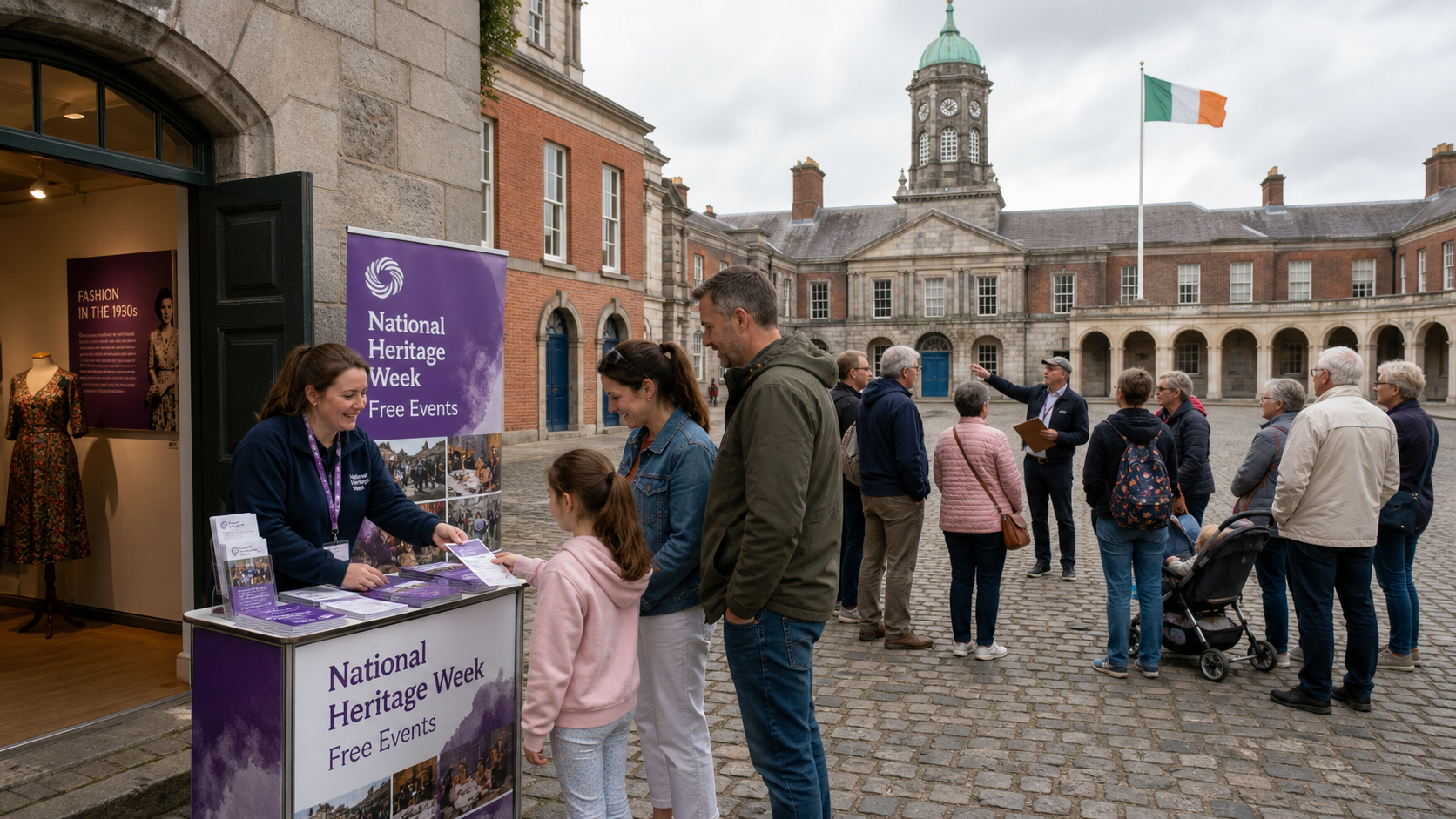
Heritage Week 2026: Hundreds of Free Events Open Ireland's Hidden History to the Public
Ireland's annual Heritage Week has opened with hundreds of free events taking place across all 32 counties, offering the public unprecedented access to historic buildings, guided tours of archaeological sites, cultural demonstrations, and exhibitions that celebrate the richness and diversity of Ireland's built, natural, and cultural heritage — with highlights including a rare 1930s fashion exhibition at Birr Castle and the opening of a rescued Wicklow mansion to public tours.
Background
Heritage Week, organised by the Heritage Council, has been a fixture of the Irish cultural calendar for more than two decades. The event, which typically runs for eight days in mid-August, is designed to make Ireland's heritage accessible to as wide an audience as possible, with the majority of events offered free of charge. The week encompasses an extraordinary range of activities — from guided walks through medieval town centres to demonstrations of traditional crafts, from archaeological open days to architectural tours of buildings that are normally closed to the public.
The 2026 edition of Heritage Week is particularly significant because it coincides with a period of heightened public interest in Ireland's built heritage, driven in part by the success of several high-profile conservation projects and in part by a growing awareness of the threats facing historic buildings across the country. The Heritage Council has reported a significant increase in the number of events registered for this year's week, reflecting both the enthusiasm of heritage organisations and the public appetite for engagement with Ireland's past.
The theme of this year's Heritage Week — "Our Living Heritage" — reflects the Heritage Council's emphasis on heritage as something that is actively lived and experienced rather than simply preserved behind glass. The events programme has been designed to reflect this theme, with a particular focus on activities that allow participants to engage directly with heritage rather than simply observe it.
Key Developments
Among the highlights of this year's Heritage Week is a rare exhibition of 1930s fashion at Birr Castle in County Offaly, which opened to coincide with the start of the week. The exhibition showcases an extraordinary collection of period clothing and accessories that offers a window into the social world of Ireland's landed gentry in the years between the wars — a period that is often overlooked in the broader narrative of Irish history. The collection, which has been assembled from private sources and from the castle's own archives, includes evening gowns, day dresses, accessories, and personal effects that paint a vivid picture of life in a particular stratum of Irish society during a turbulent decade.
In County Wicklow, Coollattin House — the vast 65,000 square foot Palladian mansion near Shillelagh that was rescued from near-total ruin by a partnership of seven individuals in 2021 — has opened its doors to the public for guided tours that showcase one of the most remarkable conservation stories in modern Irish history. The house, which had been abandoned for decades and was in a state of advanced decay when the conservation project began, has been stabilised and partially restored, and the tours offer visitors a rare opportunity to see both the grandeur of the original building and the scale of the work that has been required to save it.
Across the country, events range from guided tours of medieval churches and tower houses to demonstrations of traditional crafts including blacksmithing, thatching, and lace-making. Archaeological sites that are normally closed to the public have been opened for guided visits, and a number of private historic gardens are offering free access for the duration of the week.
Why It Matters
Heritage Week matters because it makes the case, in the most practical and accessible way possible, that Ireland's heritage is not a burden or an obstacle to development but a resource of enormous cultural, economic, and social value. The events programme demonstrates that heritage is not something that belongs exclusively to academics, conservationists, or the wealthy — it belongs to everyone, and it is most valuable when it is most widely shared.
The economic dimension of heritage is also significant. Heritage tourism is one of the fastest-growing segments of the Irish tourism market, and the investment that Heritage Week generates in terms of visitor numbers, media coverage, and public engagement has a direct impact on the viability of heritage sites and organisations throughout the year. The Heritage Council's research has consistently shown that every euro invested in heritage generates a multiple return in economic activity, and Heritage Week is one of the most cost-effective ways of generating that return.
Local Impact
The impact of Heritage Week is felt most directly at the local level, where individual events bring communities together around shared history and shared places. In Birr, the fashion exhibition at the castle has attracted visitors from across the midlands and beyond, providing a boost to local businesses and accommodation providers. In Shillelagh, the opening of Coollattin House has generated significant local interest and has been welcomed by the community as a sign that the conservation project is progressing. In towns and villages across Ireland, Heritage Week events are providing opportunities for communities to engage with their own history in ways that are both educational and enjoyable.
What's Next
Heritage Week 2026 runs until 24 August, with events taking place across all 32 counties throughout the week. The Heritage Council will publish a full evaluation of the week's events in the autumn, including attendance figures and economic impact data. The Council has also indicated it will use the week's events as a platform to launch a new public consultation on Ireland's heritage policy, which is due for review in 2027. The consultation will seek public input on priorities for heritage conservation, access, and promotion over the next decade.