Global Irish Civic Forum Calls for Diaspora to Champion Inclusive Irishness as Strategy 2026-2030 Takes Shape
The Global Irish Civic Forum, held at Croke Park in Dublin, has called on the Irish diaspora to act as a global network for inclusive, positive values — pushing back against the "hijacking" of Irish symbols by far-right groups — as the government's Diaspora Strategy 2026-2030 takes shape following the largest consultation process in the history of the Irish diaspora, involving over 27 in-person meetings globally and the inaugural Global Irish Survey conducted in 2025.
Background
Ireland's relationship with its diaspora is one of the defining features of the country's international identity. With an estimated 70 million people worldwide claiming Irish descent — compared to a population of just over five million on the island of Ireland — the diaspora is a resource of extraordinary scale and diversity, encompassing communities that range from the established Irish-American networks of Boston and New York to the newer Irish communities in Sydney, Dubai, and Berlin.
The Irish government has maintained a formal diaspora strategy since 2015, recognising that the relationship between Ireland and its global community requires active management and investment rather than passive assumption. The third iteration of that strategy, covering the period 2026 to 2030, was launched in New York in May 2026 by Minister of State for International Development and Diaspora Neale Richmond, following the most extensive consultation process ever undertaken with the diaspora.
The consultation — which involved over 27 in-person meetings across the globe and the inaugural Global Irish Survey, completed by tens of thousands of diaspora members in 2025 — revealed a diaspora that is more diverse, more geographically dispersed, and more complex in its relationship with Ireland than previous strategies had acknowledged. The findings have shaped a strategy that is more inclusive and more nuanced than its predecessors, recognising the "affinity diaspora" of those who have studied or worked in Ireland alongside the traditional hereditary diaspora.
Key Developments
The Global Irish Civic Forum at Croke Park brought together diaspora representatives from across the world to discuss the implementation of the new strategy and to identify the priorities for the coming four years. The forum's discussions were wide-ranging, covering everything from the practical challenges of returning to Ireland — where the housing crisis remains a significant deterrent — to the more philosophical question of what it means to be Irish in 2026.
One of the most significant themes to emerge from the forum was the concern about the "hijacking" of Irish symbols — the tricolour, the shamrock, the imagery of Irish heritage — by far-right groups in Ireland and abroad. Forum participants called on the diaspora to act as a global network for inclusive, positive values, countering the narrative that Irishness is defined by ethnicity or religion rather than by the values of openness, hospitality, and solidarity that the forum argued are the true hallmarks of Irish identity.
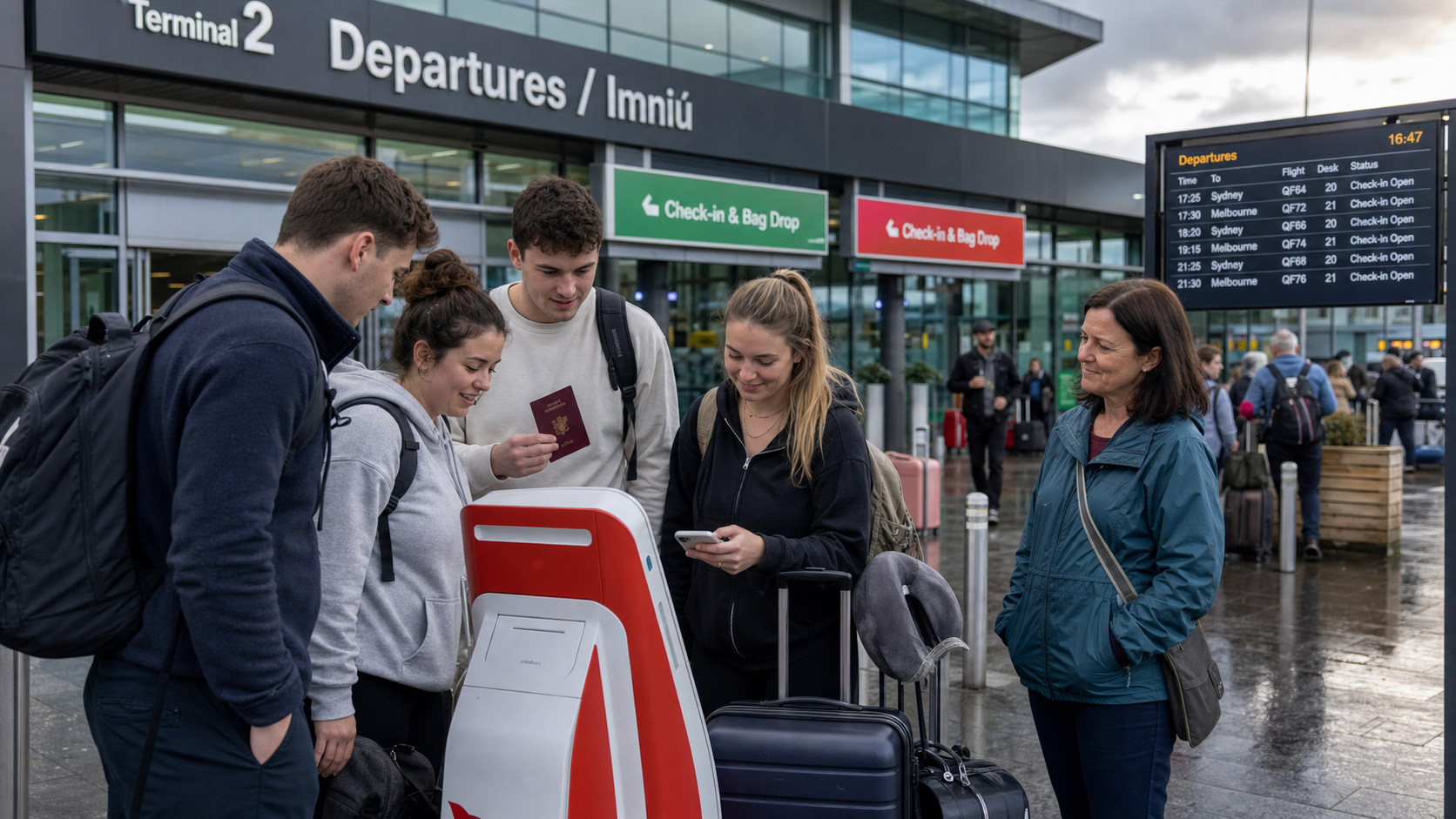
Minister Richmond highlighted the government's recognition that emigration patterns have changed significantly, with Australia now surpassing the United States as the primary destination for Irish emigrants. The strategy commits to providing enhanced support for Irish communities in Australia, including consular services, cultural programming, and support for those who wish to return to Ireland.
Why It Matters
The Diaspora Strategy 2026-2030 matters because the Irish diaspora is not merely a sentimental connection to the past — it is a living, active network with the potential to influence Ireland's international agenda in trade, diplomacy, and culture. The forum's emphasis on harnessing the expertise and insights of the diaspora community reflects a recognition that Ireland's global reach — through its diaspora — is one of its most significant strategic assets.
The inclusion of the "affinity diaspora" — those who have studied or worked in Ireland and maintain a deep connection to the country despite lacking ancestral ties — is a significant expansion of the traditional definition of the Irish diaspora. Ireland's universities and research institutions attract students and researchers from across the world, and many of those who come to Ireland for education or work develop a genuine attachment to the country that can be a valuable resource for Irish diplomacy and trade promotion.
The concern about the far-right appropriation of Irish symbols is also significant. The rise of far-right movements in Ireland — which have used Irish nationalist imagery to promote an exclusionary vision of Irish identity — has been a source of deep concern for many in the diaspora, particularly in communities where Irish identity has historically been associated with values of solidarity and welcome. The forum's call for the diaspora to champion inclusive Irishness is a response to that concern.
Local Impact
The Diaspora Strategy has direct implications for Irish communities across the world, from the established Irish-American networks of the east coast of the United States to the newer Irish communities in the Gulf states and Southeast Asia. The strategy's commitment to enhanced consular services, cultural programming, and support for returning emigrants will be felt in communities that have historically felt underserved by the Irish state's diaspora engagement.
In Australia, where the Irish community has grown significantly in recent years — with the country now the primary destination for Irish emigrants — the strategy's specific commitments to enhanced support will be particularly welcome. The Irish community in Sydney, Melbourne, and Brisbane has been growing rapidly, driven by the housing crisis in Ireland and the strong employment market in Australia, and the demand for consular services and community support has grown accordingly.
What's Next
The Diaspora Strategy 2026-2030 will be formally launched in Ireland in October, with Minister Richmond expected to outline the specific commitments and funding allocations that will underpin the strategy's implementation. The Global Irish Civic Forum will meet annually to review progress and to provide input into the strategy's development. The Department of Foreign Affairs has indicated that it will publish an annual report on the implementation of the strategy, providing transparency and accountability for the commitments made.