The West's Awake — and It's Spectacular
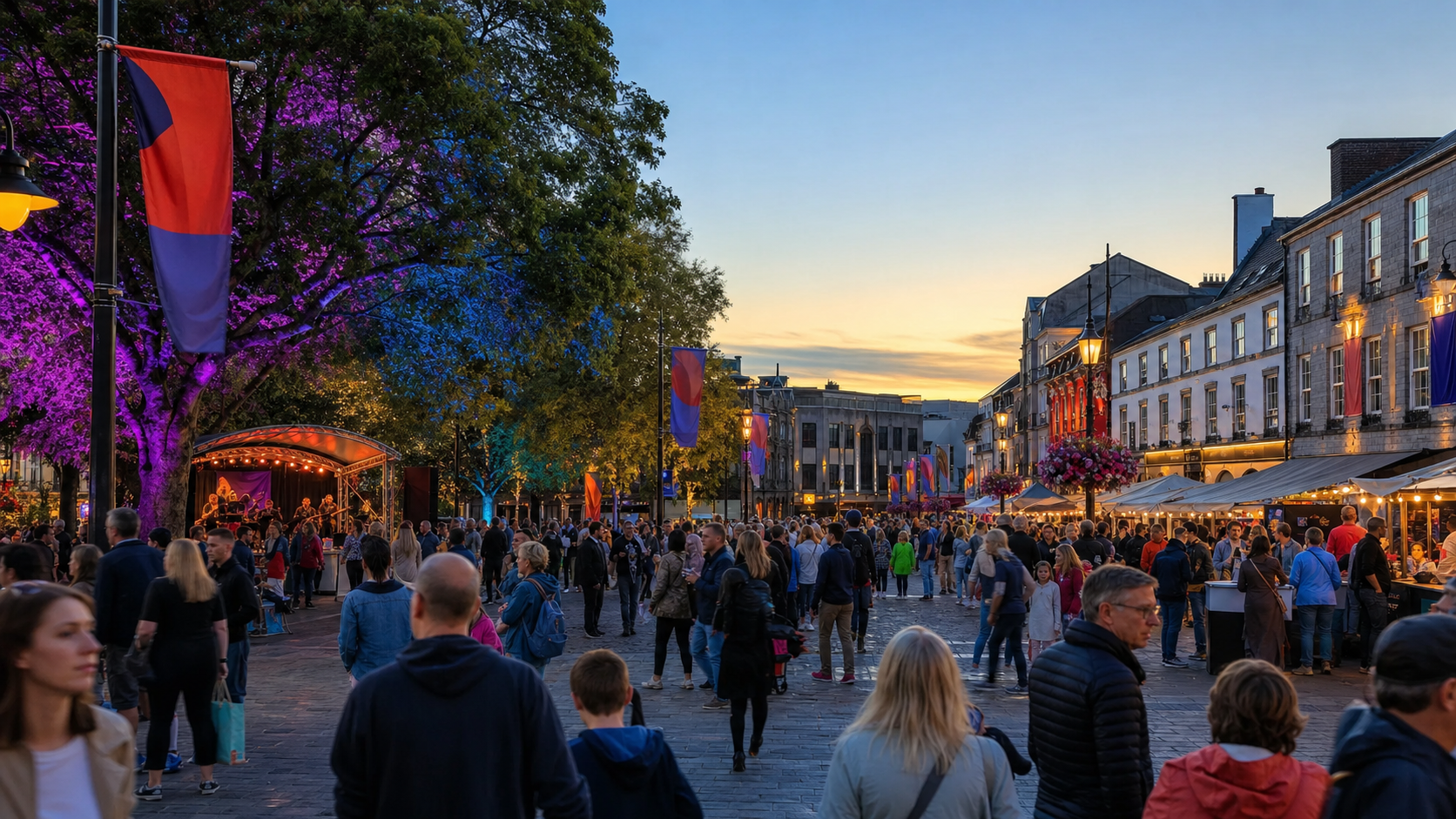
Galway has always known how to throw a party. The city on the edge of the Atlantic, with its medieval streets, its bohemian energy, and its deep roots in Irish language and culture, has been hosting the Galway International Arts Festival for 49 years — and with each passing year, the festival seems to grow more ambitious, more international, and more essential to the cultural life of the nation. The 2026 edition, which opened on Friday to record crowds estimated at more than 25,000 people on the first day alone, is no exception.
The festival's artistic director, Paul Fahy, has assembled a programme that is, by any measure, extraordinary: 17 world premieres, collaborations with artists from 34 countries, more than 200 events across 40 venues, and a free outdoor programme that transforms the city's streets, squares, and parks into stages for some of the most innovative performance art in the world. For two weeks, Galway is not just a city in the west of Ireland — it is one of the most exciting cultural destinations on the planet.
The Opening Night
The festival opened on Friday evening with a spectacular outdoor performance in Eyre Square — the city's central plaza — that drew an estimated 8,000 people. The piece, created by French theatre company Compagnie Carabosse, involved hundreds of performers, thousands of candles, and a soundscape that seemed to emerge from the very stones of the city. It was, by all accounts, breathtaking.
"I've been coming to GIAF for twenty years," said one audience member, a teacher from Roscommon who had driven to Galway specifically for the opening. "And I've never seen anything like that. It was like the whole city was alive."
The opening night also featured the world premiere of a new play by Galway-born playwright Enda Walsh, performed by the Druid Theatre Company in the festival's main venue, the Big Top. Walsh, whose work has been performed on Broadway and in the West End, described the play — a dark comedy about memory, identity, and the Irish relationship with the past — as "the most personal thing I've ever written." Early reviews have been ecstatic.
The Programme
The 2026 GIAF programme is built around three main themes: the relationship between humans and the natural world, the experience of migration and belonging, and the role of language — particularly the Irish language — in shaping identity and community. These themes run through the festival's theatre, dance, visual art, music, and literature programming, creating a coherent artistic vision that is rare in a festival of this scale.
Among the highlights of the programme are: a new dance piece by choreographer Oona Doherty, performed in the ruins of a medieval church on the outskirts of the city; a major visual art installation by Cork artist Niamh O'Malley, which transforms the interior of the Galway Cathedral into a meditation on light and time; and a series of concerts by traditional Irish musicians, including a special performance by Iarla Ó Lionáird that explores the connections between sean-nós singing and the musical traditions of West Africa.
The Economic Impact
The Galway International Arts Festival is not just a cultural event — it is an economic powerhouse. A recent study commissioned by the festival found that it generates approximately €50 million in economic activity for Galway and the surrounding region each year, supporting thousands of jobs in hospitality, retail, and the creative industries. Hotel occupancy in Galway during the festival period is consistently above 95%, and restaurants and bars report their highest revenues of the year.
"GIAF is the single most important economic event in Galway's calendar," says Galway Chamber of Commerce CEO Gillian Hynes. "But more than that, it's what makes Galway Galway. It's the festival that tells the world who we are and what we value."
Looking Ahead to the 50th
Next year's festival will be the 50th edition of GIAF — a milestone that the festival's board and artistic team are already planning for with considerable excitement. Fahy has hinted at a programme of unprecedented ambition, involving collaborations with some of the world's greatest artists and a series of events that will mark the festival's half-century in a manner befitting its extraordinary history.
For now, though, the focus is on the 2026 edition — on the plays and performances and installations and concerts that are unfolding across Galway over the next two weeks. The city is alive with art, and the world is watching.