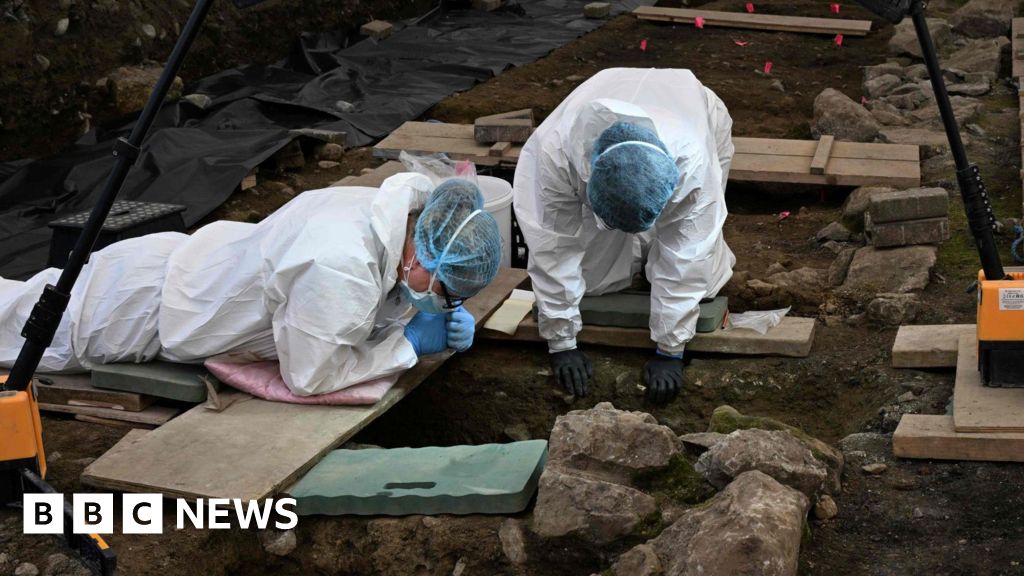
Forensic Work Begins on 99 Sets of Infant Remains Recovered from Tuam Mother and Baby Home
Forensic investigators have begun the painstaking process of analysing 99 sets of infant and child remains recovered from the former Bon Secours Mother and Baby Home in Tuam, County Galway, following the opening of a purpose-built forensic facility that represents the most significant step yet towards identifying the individuals buried at the site over decades of institutional care.
Background
The Tuam Mother and Baby Home operated from 1925 to 1961, housing unmarried mothers and their children in conditions that a 2021 Commission of Investigation found to be characterised by neglect, poor nutrition, and inadequate medical care. The commission's report documented the deaths of nearly 800 children at the home, many of whom were buried in a decommissioned sewage chamber on the grounds. The discovery of the remains, first brought to public attention by local historian Catherine Corless in 2014, prompted a national reckoning with Ireland's treatment of unmarried mothers and their children throughout the twentieth century.
The Office of the Director of Authorised Intervention, Tuam (ODAIT), was established to manage the excavation and identification process. The excavation, which began in July 2025, has been conducted with meticulous forensic standards, working outward from the edges of the site to avoid disturbing the ground before reaching the memorial garden that contains the decommissioned sewage chamber. The complexity of the site, and the need to maintain the highest possible standards of evidence preservation, has meant that the project will extend beyond the initial two-year timeframe originally envisaged.
The human cost of the Tuam story is immeasurable. The children buried at the site were born to women who had been stigmatised and institutionalised by a society that treated unmarried motherhood as a moral failing. Many of the mothers never knew what had happened to their children, and many of the children's descendants have spent years seeking answers about their family histories. The identification process now underway represents the first concrete step towards providing those answers.
Key Developments
The most recent update from ODAIT confirmed the recovery of 99 sets of infant and child remains from the site, including 22 additional coffined infant remains discovered in an area outside the memorial garden. These findings are part of a broader, methodical excavation that has proceeded in phases, with earlier work recovering 77 sets of remains from separate areas of the site. Experts have noted that the density of burials encountered suggests the final number of recovered individuals could be significantly higher, with some estimates reaching up to 800, though officials have emphasised that such figures remain speculative at this stage.
In July 2026, ODAIT opened a specialised Forensic Facility and Mortuary at the HSE Toghermore campus, supported by a state investment of approximately €4.1 million. The facility is designed to meet international best practice standards for the cleaning, drying, and analysis of human remains. The forensic team, led by experts in skeletal analysis, will work to determine the age, sex, and potential cause of death for each individual — a task made challenging by the young age of the deceased and the significant time that has elapsed since their deaths.
To assist in identification, 62 DNA reference samples have been collected from family members and submitted to Forensic Science Ireland. ODAIT is actively engaging with relatives, including first cousins, to expand the pool of available DNA for comparative analysis. Pending legislative amendments would allow a broader range of family members to contribute samples, potentially significantly increasing the number of individuals who can be identified.
Why It Matters
The Tuam excavation and identification process is one of the most significant forensic and historical undertakings in the history of the Irish state. It represents a formal acknowledgement by the state of its responsibility for what happened at Tuam and at the other mother and baby homes that operated across Ireland during the twentieth century. The quality and rigour of the forensic work will determine whether the families of those buried at the site can finally receive the answers they have been seeking for decades.
The opening of the Toghermore facility marks a transition from excavation to analysis — a shift from recovering remains to understanding who those remains belonged to. This is a qualitatively different phase of the work, requiring different expertise and different resources. The €4.1 million investment in the facility reflects the state's commitment to conducting the identification process to the highest possible standard, rather than cutting corners in the interests of speed or cost.
The legislative amendments required to allow first cousins to contribute DNA samples are currently before the Oireachtas, and their passage is considered a priority by the government. Without those amendments, the pool of potential DNA matches is significantly smaller, reducing the likelihood of successful identification for many of the recovered individuals.
Local Impact
For the Tuam community in County Galway, the opening of the forensic facility represents a significant moment in a process that has been deeply painful for the town and its residents. Tuam has been associated in the public mind with one of the darkest chapters of Irish institutional history, and many local people have expressed a desire to see the identification process completed with dignity and respect for those who died at the home.
The HSE Toghermore campus, where the forensic facility is located, is situated outside Tuam town, providing a degree of separation between the forensic work and the daily life of the community. The facility is not open to the public, but ODAIT has committed to regular updates on the progress of the identification process, ensuring that families and the wider public are kept informed of developments.
What's Next
The forensic analysis of the 99 sets of remains is expected to take several years, given the complexity of the work and the need to maintain rigorous standards throughout. ODAIT Director Daniel MacSweeney has indicated that the project will extend beyond the initial two-year timeframe, and the agency has committed to providing regular progress reports. The legislative amendments to allow first cousins to contribute DNA samples are expected to be passed by the Oireachtas in the autumn session. Families who wish to contribute DNA samples are encouraged to contact ODAIT directly to register their interest.


