Fleadh's 1.65 Million Visits Spark Push for Permanent Belfast City Centre Pedestrianisation
The legacy of Fleadh Cheoil na hÉireann's historic debut in Belfast is taking concrete shape this week, as Infrastructure Minister Liz Kimmins confirmed plans to launch a formal public consultation on permanently pedestrianising large sections of the city centre — a proposal that has drawn enthusiastic support from business owners, cultural organisations, and elected representatives, alongside important questions from disability advocacy groups about accessibility.
Background
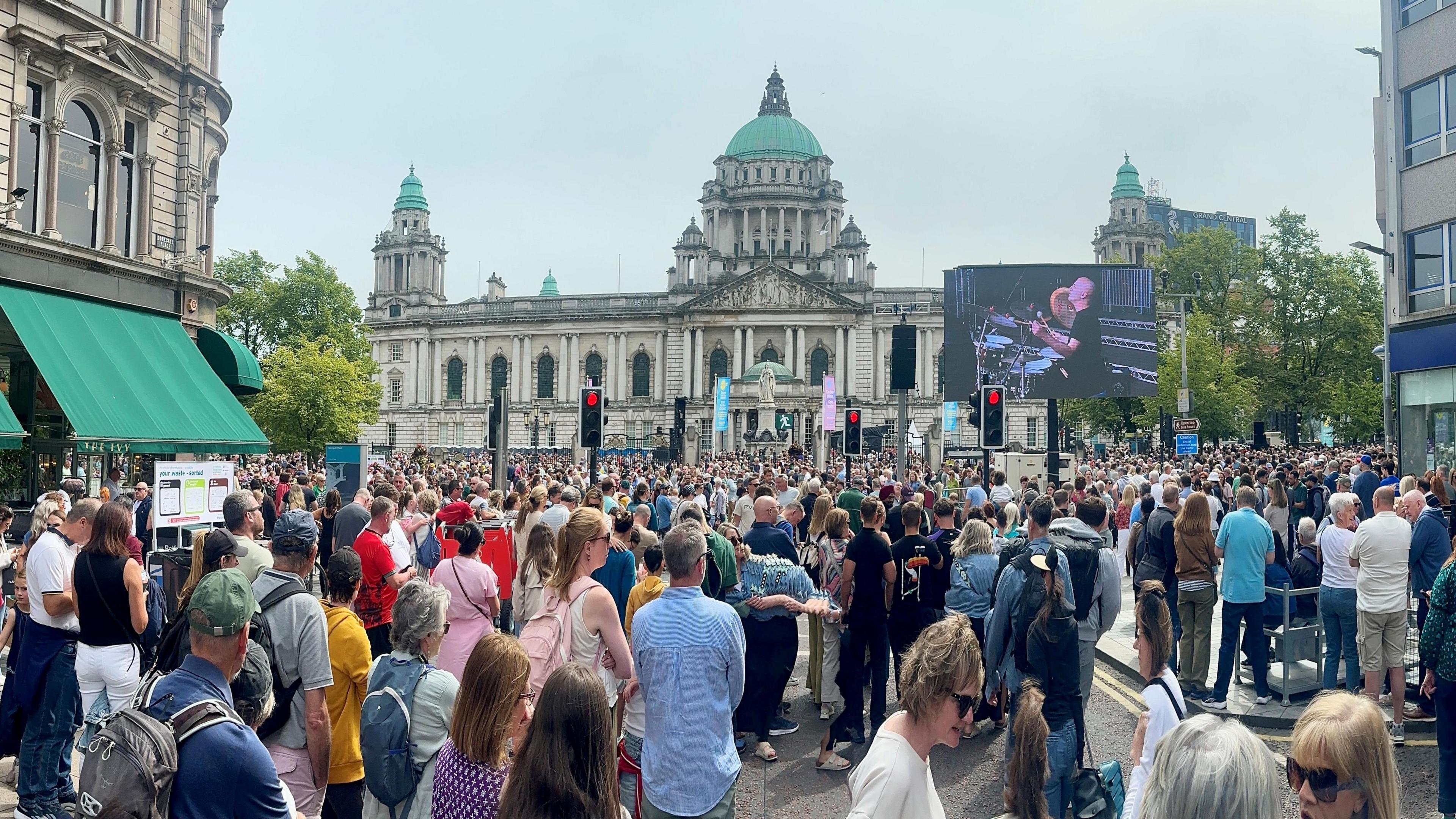
Fleadh Cheoil na hÉireann, the world's largest Irish traditional music festival, came to Belfast for the first time in August 2026, marking a watershed moment in the city's cultural and political life. The eight-day festival, organised by Comhaltas Ceoltóirí Éireann, drew an estimated 1.65 million visits to the city centre — a figure that surpassed even the most optimistic projections and placed Belfast among the most successful Fleadh host cities in the event's 75-year history.
To accommodate the festival safely, Belfast City Council, the Department for Infrastructure, and Translink implemented an extensive temporary pedestrianisation scheme covering the area around City Hall, Royal Avenue, and the Cathedral Quarter. The closure of these streets to vehicle traffic created a vast, interconnected public space that festival-goers and residents alike described as transformative. Buskers performed on every corner, céilí dancing broke out spontaneously in the shadow of the City Hall dome, and the city's bars, restaurants, and hotels reported record trading figures across the eight days.
The economic impact was substantial. Belfast City Council estimated that the festival generated approximately £40 million for the local economy, with hospitality businesses in the city centre reporting turnover increases of between 30 and 60 per cent compared to the same period in 2025. Hotels across the city were fully booked for the duration, and the Translink Glider service recorded its highest-ever daily passenger numbers on three separate days during the festival.
Key Developments
Minister Kimmins, speaking at a post-Fleadh review event at Belfast City Hall on Monday, confirmed that her department would bring forward a formal consultation on expanded pedestrianisation "in the coming weeks." She described the Fleadh as having provided "a living proof of concept" for what Belfast city centre could look like if streets were designed around people rather than cars.
Alliance Party MLA Kate Nicholl, who has been among the most vocal advocates for permanent pedestrianisation, welcomed the announcement. "What we saw during the Fleadh was not a temporary anomaly — it was a glimpse of what this city can be," she said. "The footfall, the atmosphere, the economic activity — all of it was enhanced by the simple act of removing cars from the equation."
Belfast City Council's planning committee has been asked to prepare a preliminary assessment of which streets could be permanently pedestrianised without disrupting essential vehicle access to businesses and residential properties. The assessment is expected to be completed by November 2026.
Why It Matters
The debate about Belfast city centre pedestrianisation has been running for decades, but the Fleadh has given it a new urgency and a concrete evidence base. Previous proposals have foundered on concerns about the impact on retail trade and the practicalities of managing deliveries and emergency vehicle access. The festival demonstrated that these challenges are manageable, and that the benefits — in terms of footfall, dwell time, and spending — can significantly outweigh the costs of adaptation.
Belfast's city centre has faced structural challenges that predate the pandemic. The shift to online retail, combined with the legacy of the Troubles-era security infrastructure that kept people away from the centre for decades, has left the city with a retail core that is less vibrant than comparable UK and Irish cities. Pedestrianisation, if implemented thoughtfully, could help reverse that trend by making the city centre a destination in its own right rather than merely a place to shop.
The disability access question raised by DPAC NI is a legitimate and important one. Any pedestrianisation scheme that does not adequately provide for blue badge holders, wheelchair users, and those with limited mobility risks creating a two-tier city centre. Minister Kimmins has acknowledged this, stating that accessibility will be "designed in from the start, not bolted on afterwards."
Local Impact
The areas most directly affected by any permanent pedestrianisation scheme would be the streets immediately surrounding City Hall — including Donegall Square, Chichester Street, and the lower end of Royal Avenue — as well as the Cathedral Quarter, which has already seen significant investment in public realm improvements. Businesses on these streets have broadly welcomed the proposal, with the Belfast Chamber of Trade and Commerce describing it as "an opportunity to reposition the city centre as a world-class destination."
Translink has indicated that any pedestrianisation scheme would need to be accompanied by enhanced bus and Glider connectivity to ensure that those without cars can access the city centre easily. The Glider network, which already serves the Falls Road and Newtownards Road corridors, would likely need to be extended or supplemented with additional services to the city centre perimeter.
What's Next
The formal public consultation is expected to launch in October 2026, with a 12-week engagement period that will include public meetings, online submissions, and targeted outreach to disability groups, business associations, and community organisations. A final recommendation is expected to go before Belfast City Council in the first quarter of 2027. If approved, the first phase of permanent pedestrianisation could be in place before the summer of 2027.