Fleadh Cheoil's Cultural Depth on Display as Ómós na n-Ultach and Bardic Awards Honour Ulster's Heritage
Tuesday's programme at Fleadh Cheoil na hÉireann in Belfast demonstrated the festival's capacity to move beyond the purely competitive and celebratory into something more reflective and profound, with the Comhaltas Ceannródaithe Bardic Awards honouring exceptional contributors to Irish traditional culture at the Belfast City Hall Gig Rig and the Ulster Hall hosting the premiere of Ómós na n-Ultach, a musical suite by Micheál Rooney that celebrates the landscape, heritage, and history of the Ulster province through the medium of traditional music.
Background
Fleadh Cheoil na hÉireann is, at its core, a competition — a gathering of the finest traditional musicians, singers, and dancers in Ireland to contest All-Ireland titles in their respective disciplines. But the Fleadh has always been more than a competition. It is a cultural event of the first order, a week-long immersion in the living tradition of Irish music that encompasses everything from informal pub sessions and street performances to formal concerts and educational workshops. The programme of events that surrounds the competitions is as important as the competitions themselves, and Belfast's hosting of the 2026 Fleadh has produced a programme of exceptional ambition and quality.
The Comhaltas Ceannródaithe Awards — known as the Bardic Awards — are among the most prestigious honours in the world of Irish traditional music. Established by Comhaltas Ceoltóirí Éireann, the organisation that promotes Irish traditional music, song, dance, and language, the awards recognise individuals who have made exceptional contributions to the preservation and development of the tradition over the course of their careers. Recipients are drawn from across the island of Ireland and from the Irish diaspora, and the awards ceremony is one of the highlights of the Fleadh week.
Ómós na n-Ultach — Homage to the Ulster People — is a work that speaks directly to the specific cultural heritage of the province in which the 2026 Fleadh is being hosted. Composed by Micheál Rooney, one of the most respected figures in contemporary Irish traditional music, the suite draws on the distinctive musical traditions of Ulster — the fiddle styles of Donegal and Tyrone, the flute playing of Fermanagh, the uilleann piping of Antrim — to create a work that is both rooted in tradition and genuinely new.
Key Developments
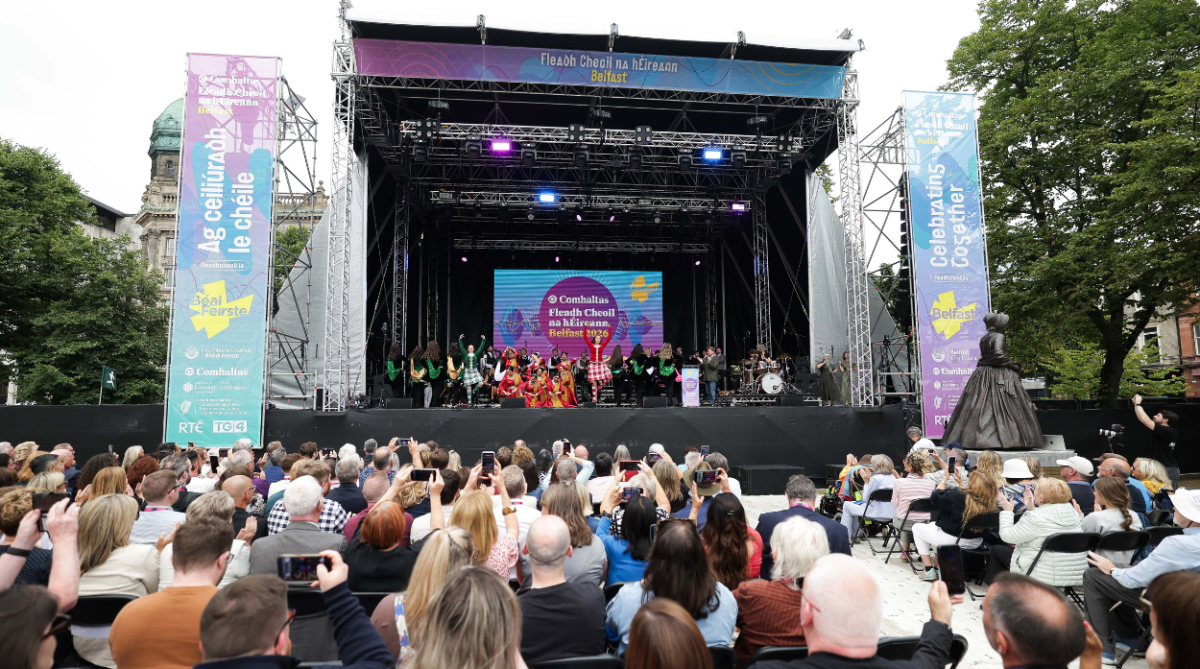
The Bardic Awards ceremony took place at the Belfast City Hall Gig Rig at 6:15pm on Tuesday, with a large crowd gathering in the civic heart of the city to witness the presentation of the awards. The recipients, drawn from across the island and the diaspora, were honoured for contributions ranging from decades of teaching and mentoring young musicians to the preservation of rare repertoire and the promotion of Irish traditional music in communities far from its geographic heartland. The ceremony was marked by the warmth and informality that characterises the best of Fleadh culture — a sense that the awards are not merely institutional recognition but a community's expression of gratitude to those who have given their lives to the tradition.
The Ulster Hall concert, which began at 8pm, featured the Ulster Youth Folk Orchestra performing Ómós na n-Ultach alongside a series of guest musicians drawn from across the province. The suite, which runs to approximately 70 minutes, takes the listener on a musical journey through Ulster's landscape and history, from the drumlin country of Cavan and Monaghan to the Antrim glens and the Fermanagh lakelands. Rooney's compositional approach is one of deep respect for the source material combined with a willingness to develop and extend it in ways that feel organic rather than imposed.
Earlier in the evening, The Wran performed at Lavery's, bringing their distinctive blend of traditional Irish sounds, punk energy, and psychedelia to one of Belfast's most beloved music venues. The contrast between the formal grandeur of the Ulster Hall and the intimate energy of Lavery's captured something essential about the Fleadh's character: it is a festival that can hold multiple registers simultaneously, from the ceremonial to the spontaneous.
Why It Matters
The cultural programme of the 2026 Belfast Fleadh matters because it demonstrates that Irish traditional music is not a museum piece but a living tradition capable of generating new work of genuine artistic ambition. Ómós na n-Ultach is not a nostalgic exercise in preservation but a creative act that takes the tradition seriously enough to extend and develop it. The Bardic Awards, meanwhile, remind us that traditions are sustained not by institutions alone but by individuals — teachers, musicians, collectors, organisers — who give their time and energy to passing the tradition on to the next generation. Belfast's hosting of the Fleadh has provided a platform for both of these dimensions of the tradition to be celebrated and shared with a wider audience than would normally encounter them.
Local Impact
The Ulster Hall concert drew an audience from across Northern Ireland and beyond, with many attendees travelling specifically to hear Ómós na n-Ultach in its premiere performance. The Ulster Youth Folk Orchestra, whose members come from schools and music programmes across the province, delivered a performance that was widely praised for its technical accomplishment and its emotional engagement with the material. For the young musicians involved, the experience of performing a major new work in one of Belfast's most prestigious concert venues, before a large and appreciative audience, will be a formative moment in their musical development. The Bardic Awards ceremony, meanwhile, drew a large crowd to the City Hall Gig Rig, demonstrating the appetite among Belfast's population for events that celebrate Irish cultural heritage in a civic setting.
What's Next
The Fleadh continues until Sunday, August 9, with the All-Ireland competition finals scheduled for the weekend. Wednesday's programme includes further concerts, céilís, and street performances across the city, with the Cathedral Quarter and the Titanic Quarter both hosting significant events. The closing concert on Sunday evening will bring together some of the festival's most celebrated performers for a finale at the City Hall Gig Rig. Comhaltas Ceoltóirí Éireann has indicated that a recording of Ómós na n-Ultach will be released in the autumn, making the work available to audiences who were unable to attend the premiere performance.