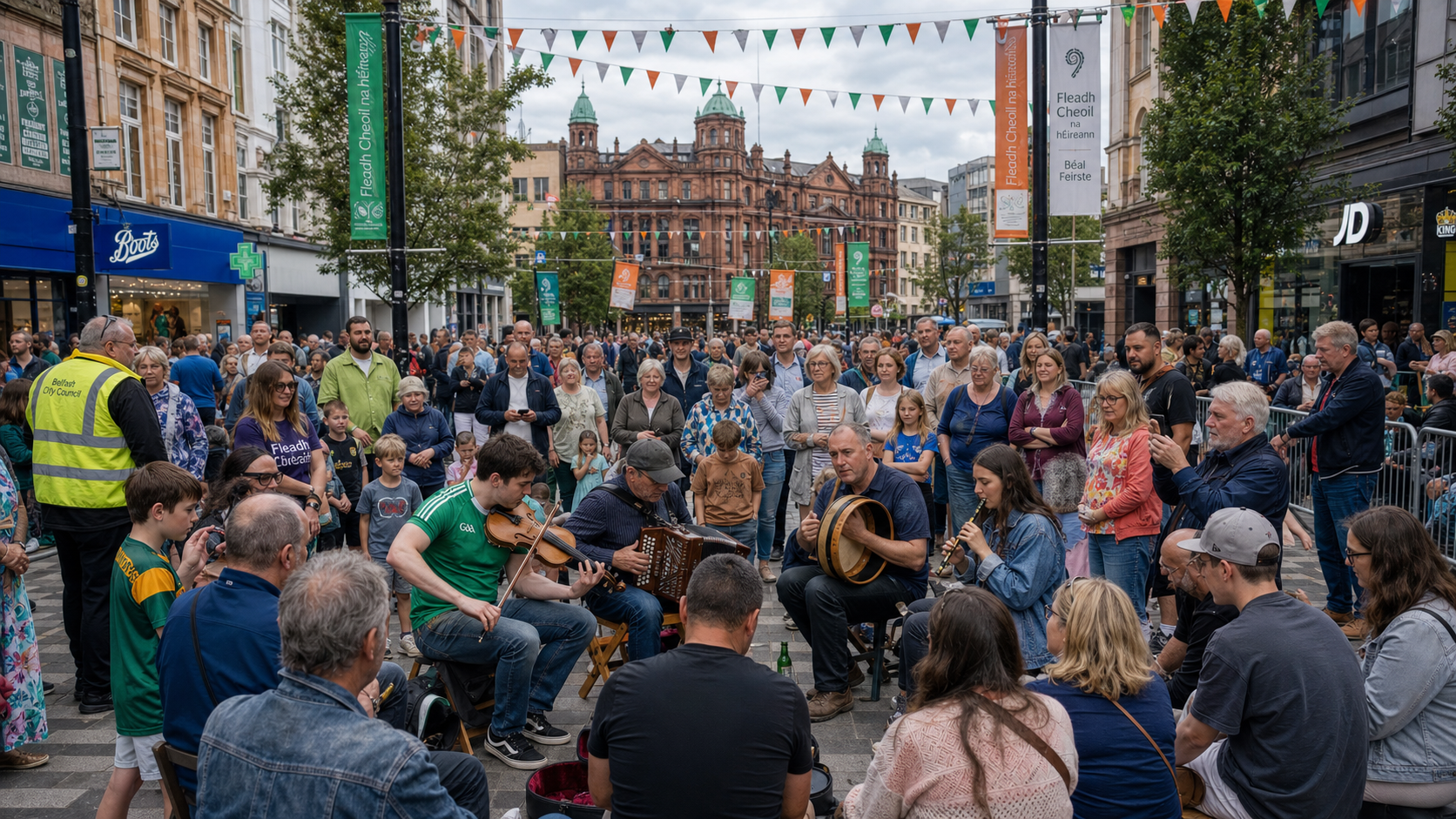
Fleadh Cheoil na hÉireann Concludes in Belfast with Record Visitor Numbers and Calls for Permanent Pedestrianisation
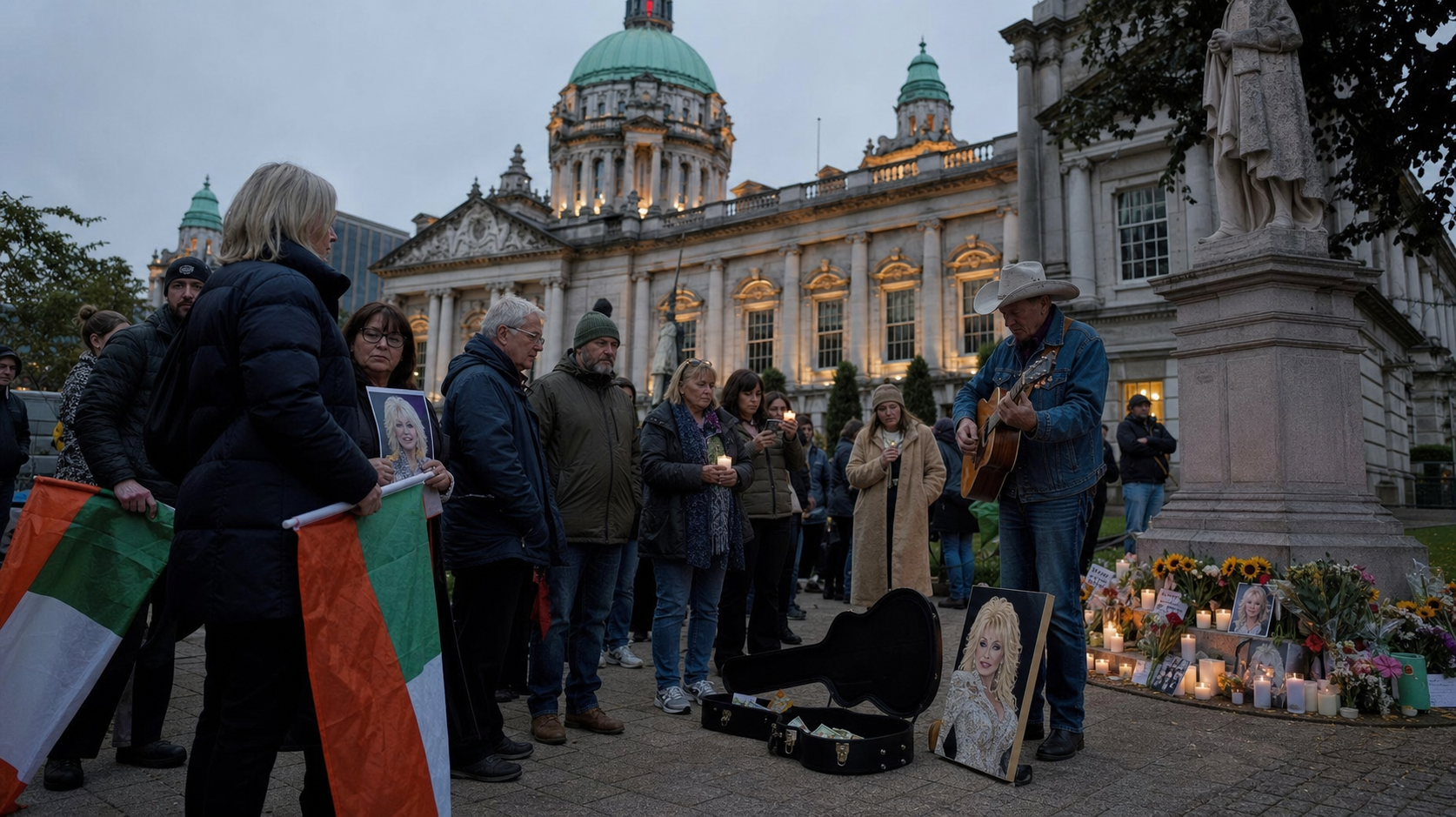
Fleadh Cheoil na hÉireann has concluded in Belfast after attracting more than 1.65 million visits to the city and transforming the city centre in ways that have sparked a serious political debate about permanently pedestrianising key streets — a legacy conversation that may prove as significant as the festival itself for the long-term character of Belfast's urban core.
Background
Fleadh Cheoil na hÉireann, the world's largest Irish traditional music festival, has been held annually since 1951 and rotates between towns and cities across Ireland. The decision to hold the 2026 Fleadh in Belfast — the first time the festival had been hosted in the city — was a significant cultural and political statement, reflecting the transformation of Belfast since the Good Friday Agreement and the growing confidence of the city's Irish cultural community. The festival, organised by Comhaltas Ceoltóirí Éireann, brings together musicians, singers, and dancers from across Ireland and the Irish diaspora for a week of competitions, sessions, and performances.
Belfast's hosting of the Fleadh was the culmination of years of preparation and negotiation, involving Belfast City Council, the Department for Communities, Tourism Northern Ireland, and a wide range of community and cultural organisations. The city invested significantly in infrastructure and programming, and the festival was designed to showcase Belfast's transformation from a city defined by conflict to one that can host a major all-island cultural event with confidence and pride. The decision to pedestrianise key streets in the city centre for the duration of the festival was one of the most visible and impactful elements of the planning, creating a car-free environment that allowed the festival to spill out from venues into the streets themselves.
The 1.65 million visits recorded during the festival represent a remarkable achievement for a city of Belfast's size and reflect both the scale of the Fleadh's appeal and the effectiveness of the planning and promotion that went into the event. The figure includes day visitors, overnight visitors, and those who attended multiple times during the week, and it represents a significant economic injection into the city's hospitality, retail, and cultural sectors.
Key Developments
The festival's conclusion has been marked by widespread praise for its organisation and impact, but the most significant political development to emerge from the Fleadh is the debate about permanent pedestrianisation of the city centre. Alliance, SDLP, and Green Party councillors have written jointly to Belfast City Council and the Department for Infrastructure calling for a comprehensive review of the city centre's street layout, arguing that the festival demonstrated the transformative potential of a car-free environment for the vitality and character of the urban core.
The councillors' letter points to the evidence of the Fleadh itself — the streets that were pedestrianised for the festival were filled with people, music, and activity in a way that the same streets, when open to traffic, rarely achieve. The argument is that the festival provided a proof of concept for a more ambitious approach to city centre pedestrianisation that could benefit Belfast's economy and quality of life year-round, not just during a single week of cultural celebration. Disability advocacy groups have responded to the pedestrianisation debate by urging that any future plans must prioritise accessibility, ensuring that the benefits of a car-free city centre are available to all residents and visitors, including those with mobility impairments.
Belfast City Council's planning and regeneration committee is expected to consider the pedestrianisation question in the autumn, and the Department for Infrastructure has indicated that it is open to a review of the evidence. The debate has also attracted interest from urban planning experts, who have pointed to the experience of other European cities — Dublin's Grafton Street, Copenhagen's Strøget, Amsterdam's canal streets — as evidence that pedestrianisation can transform the economic and social character of a city centre.
Why It Matters
The Fleadh's legacy debate is significant because it connects a cultural event to a broader conversation about the kind of city Belfast wants to be. The festival demonstrated that Belfast's city centre can be a vibrant, welcoming, and culturally rich environment when the conditions are right, and the pedestrianisation question is fundamentally about whether those conditions can be made permanent rather than temporary. For a city that has invested heavily in its post-conflict transformation, the ability to create a city centre that attracts residents and visitors year-round — not just during major events — is a crucial element of the long-term regeneration strategy. The Fleadh has provided both the evidence and the political momentum for a serious conversation about how that goal can be achieved.
Local Impact
The impact of the Fleadh on Belfast's city centre businesses has been overwhelmingly positive, with hotels, restaurants, pubs, and shops reporting exceptional trading during the festival week. The hospitality sector, which has been under pressure from rising costs and changing consumer behaviour, has welcomed the boost provided by the festival and has been among the most vocal advocates for a permanent pedestrianisation that would sustain higher footfall year-round. For the city's traditional music community, the Fleadh has been a moment of extraordinary visibility and celebration, with sessions taking place in venues across the city and the streets themselves becoming impromptu performance spaces. The festival has also generated significant interest in traditional music among younger Belfast residents who may not previously have engaged with the art form.
What's Next
Belfast City Council's planning and regeneration committee is expected to consider the pedestrianisation question at its September meeting, with a report from council officers on the evidence from the Fleadh and from comparable pedestrianisation schemes in other cities. The Department for Infrastructure will be asked to contribute its assessment of the traffic management implications of any permanent changes to the city centre street layout. Comhaltas Ceoltóirí Éireann has indicated that the success of the Belfast Fleadh will inform future decisions about hosting the festival in cities rather than smaller towns, and Belfast is likely to be considered for a return hosting in the coming years.