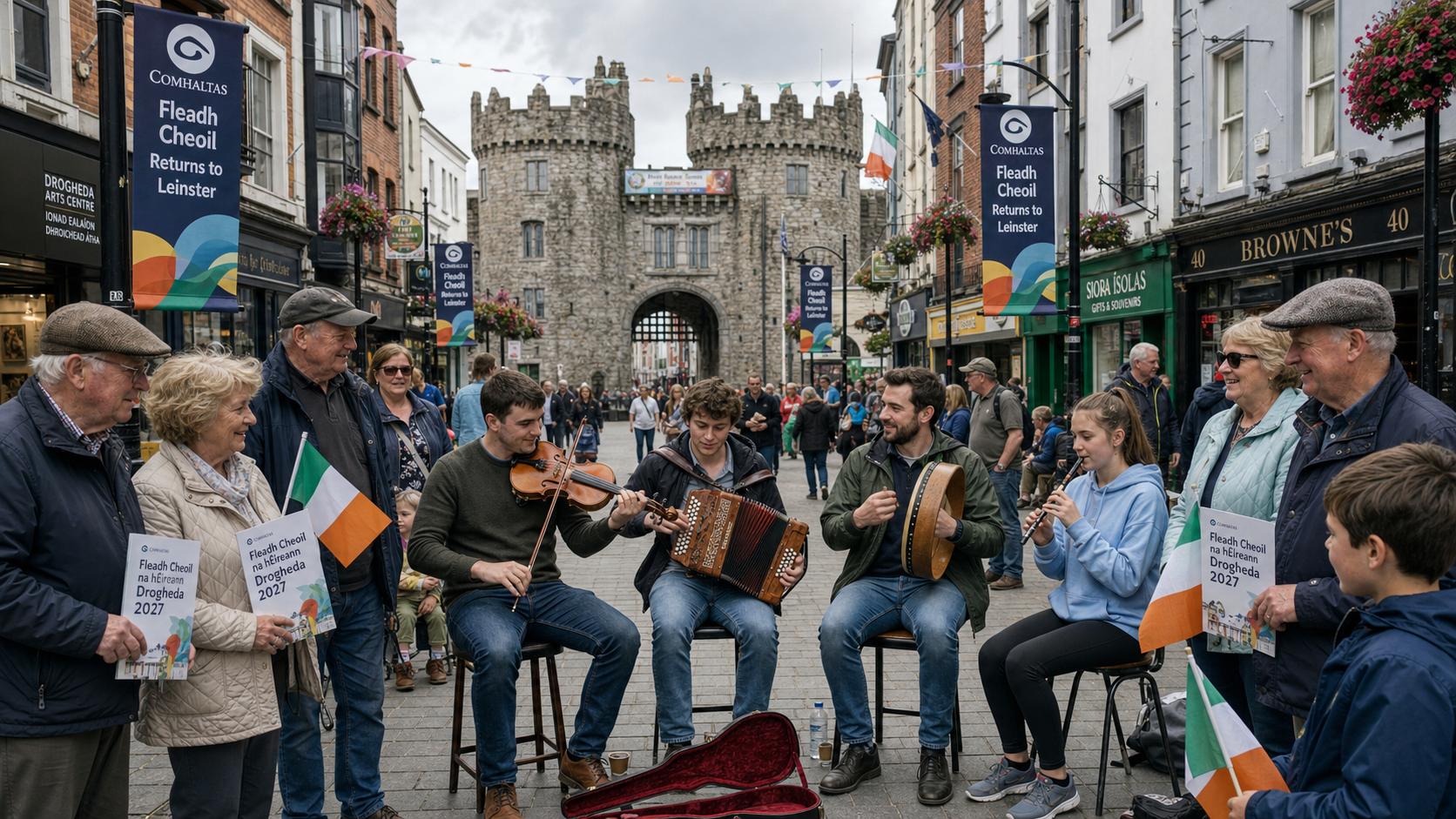
Fleadh Cheoil 2027 Dates Confirmed for Drogheda as Traditional Music Festival Returns to Leinster
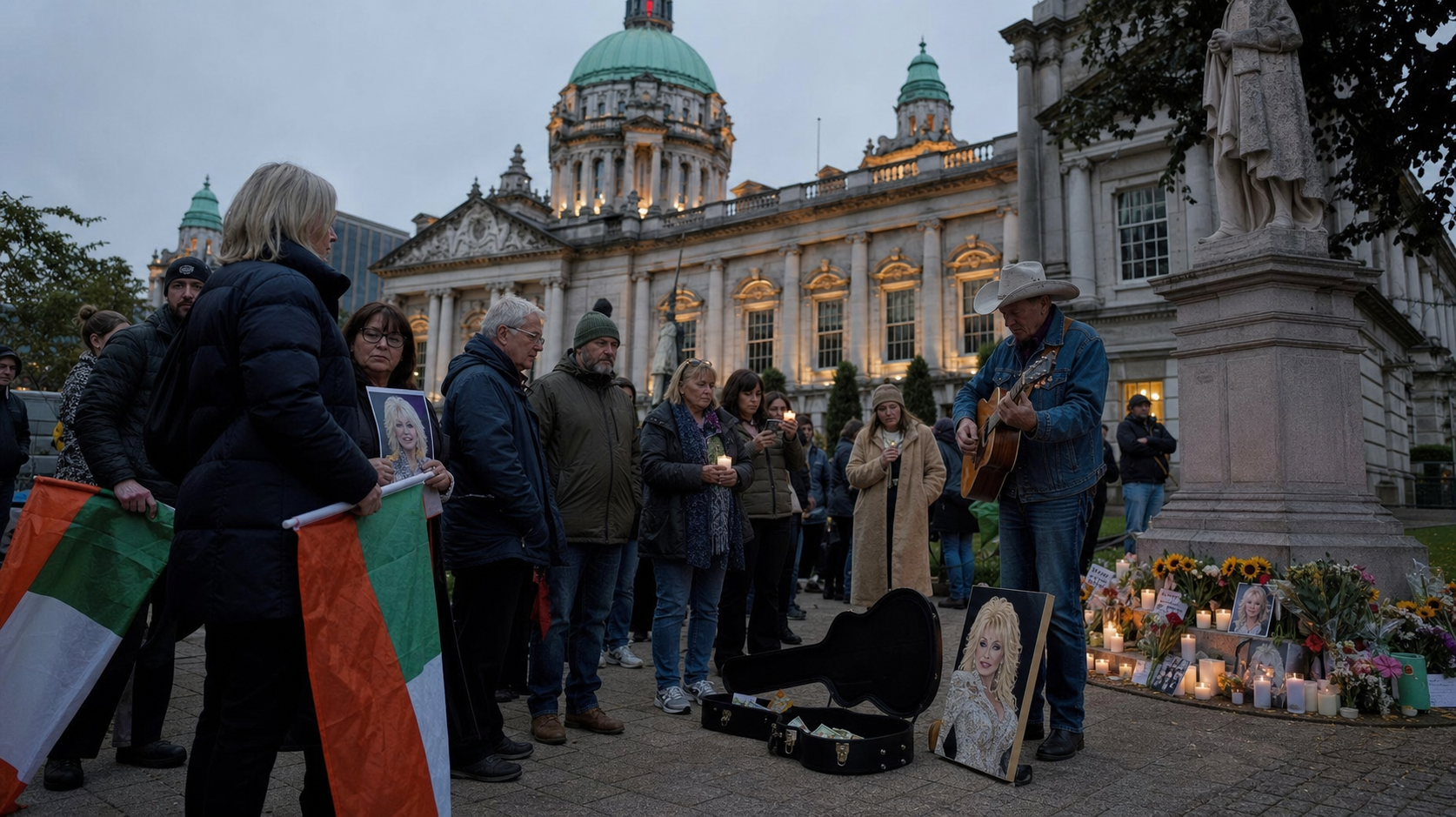
Comhaltas Ceoltóirí Éireann has confirmed that the 2027 Fleadh Cheoil na hÉireann will be held in Drogheda, County Louth — marking the festival's return to Leinster after several years in Munster and Connacht, and following the hugely successful 2026 edition in Belfast, which drew an estimated 500,000 visitors to the city over eight days and was widely regarded as one of the most significant cultural events in the north's recent history.
Background
The Fleadh Cheoil na hÉireann is the world's largest traditional Irish music festival and one of the most important cultural events in the Irish calendar. Founded in 1951 by Comhaltas Ceoltóirí Éireann, the organisation dedicated to the promotion and preservation of Irish traditional music, song, and dance, the Fleadh has grown from a modest gathering of musicians into a week-long celebration that attracts hundreds of thousands of visitors from Ireland and around the world.
The festival rotates between towns and cities across Ireland, with the host location selected by Comhaltas following a competitive application process. The selection of a host town is a significant economic and cultural event in its own right: the Fleadh generates substantial visitor spending, media coverage, and civic pride for the communities that host it. Previous host towns have included Ennis, Tullamore, Sligo, Cavan, and Drogheda itself, which last hosted the festival in 2018.
The 2026 Fleadh in Belfast was a landmark event. It was the first time the festival had been held in the north since 1953, and its return to Belfast — a city with a rich but sometimes contested relationship with Irish traditional music — was seen as a significant cultural and political statement. The festival's success, both in terms of visitor numbers and in terms of the warmth of the welcome extended by the city, exceeded all expectations and generated enormous goodwill for the Fleadh brand and for Belfast as a cultural destination.
Key Developments
The announcement that Drogheda will host the 2027 Fleadh was made by Comhaltas Ceoltóirí Éireann at a ceremony attended by representatives of Louth County Council, local business groups, and the traditional music community. The festival is expected to take place in August 2027, with the exact dates to be confirmed in the coming months.
Drogheda, a historic port town on the River Boyne with a population of approximately 45,000, has a strong tradition of hosting major events and a well-developed tourism infrastructure. The town's medieval streetscape, its proximity to the Boyne Valley heritage sites, and its excellent transport links — including direct rail connections to Dublin and Belfast — make it an attractive host for a festival of the Fleadh's scale.
Louth County Council has committed to a significant investment in the infrastructure and logistics required to host the festival, including temporary stage and performance spaces, traffic management, and visitor services. The council has also indicated that it will work with local businesses to develop a programme of complementary events and activities that will extend the festival's economic impact beyond the immediate Fleadh week.
Comhaltas president Liam O'Connor described the selection of Drogheda as "a wonderful opportunity to bring the Fleadh to a town with a deep connection to Irish culture and history." He noted that the 2026 Belfast Fleadh had demonstrated the festival's capacity to bring communities together and to celebrate Irish traditional music in a spirit of openness and inclusion that transcends political and cultural boundaries.
Why It Matters
The Fleadh Cheoil matters because it is one of the few events in the Irish cultural calendar that genuinely belongs to the whole island. Unlike many cultural events that are associated with specific regions or communities, the Fleadh draws participants and visitors from every county in Ireland and from the Irish diaspora worldwide. Its competitions — in which musicians, singers, and dancers compete for All-Ireland titles in their respective disciplines — are the culmination of a year-long series of county and provincial competitions that involve tens of thousands of participants across the country.
The festival also matters as a vehicle for the transmission of traditional music to younger generations. The Fleadh's youth competitions, which attract thousands of young musicians each year, are a critical part of the ecosystem that sustains traditional music as a living art form rather than a museum piece. The sight of young people competing with extraordinary skill in fiddle, uilleann pipes, flute, and other traditional instruments is one of the most compelling arguments for the vitality of Irish traditional music in the twenty-first century.
The economic impact of the Fleadh is also significant. The 2026 Belfast Fleadh generated an estimated €50 million in economic activity for the city and the surrounding region — a figure that reflects the scale of visitor spending on accommodation, food, transport, and entertainment. For Drogheda and County Louth, the 2027 Fleadh represents a comparable opportunity, and the local business community is already mobilising to maximise the benefit.
Local Impact
In Drogheda, the announcement has been welcomed with enthusiasm by the business community, the local arts sector, and the traditional music community. The town's pubs and music venues — which have a strong tradition of hosting traditional music sessions — will be at the heart of the festival's informal programme, providing the kind of spontaneous, unscripted musical encounters that are as much a part of the Fleadh experience as the formal competitions.
The festival will also provide a significant boost to the town's accommodation sector, with hotels, guesthouses, and bed-and-breakfasts across Drogheda and the wider Louth area expected to be fully booked for the duration of the festival. The proximity of Drogheda to Dublin — approximately 50km by road or rail — means that many visitors will also use the capital as a base, generating economic activity across a wider geographic area.
For the traditional music community in Leinster — which includes strong county boards in Dublin, Wicklow, Kildare, Meath, and Louth — the return of the Fleadh to the province is a source of particular pride. Leinster musicians have a strong competitive tradition, and the opportunity to compete at the All-Ireland Fleadh on home soil will be a significant motivation for the province's musicians in the year ahead.
What's Next
Comhaltas Ceoltóirí Éireann will confirm the exact dates for the 2027 Fleadh in the coming months, along with details of the competition schedule and the programme of events. County and provincial Fleadh competitions will begin in the spring of 2027, with the All-Ireland finals taking place during the Drogheda festival week. Louth County Council is expected to publish its hosting plan and investment commitment before the end of 2026, providing a framework for the local preparations that will need to begin in earnest in the new year.