Eurozone Inflation Rises to 3.3% as Irish Energy Prices Drive National Rate to 3.4% Ahead of Budget 2027
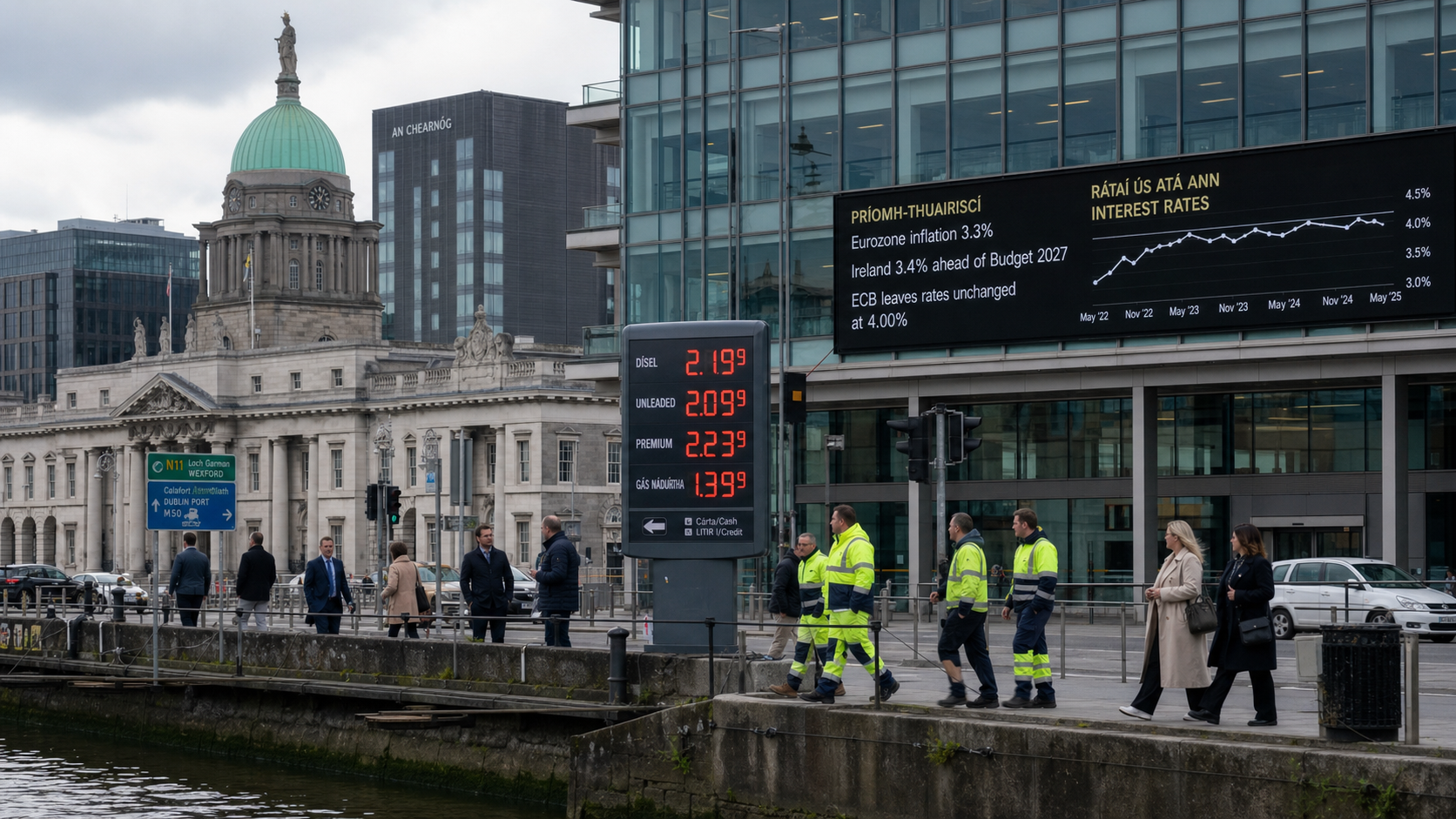
Eurozone inflation has risen to 3.3%, with Irish energy prices pushing the national rate to 3.4% — a development that complicates the government's Budget 2027 calculations, raises the prospect of a European Central Bank interest rate hike, and adds urgency to the public sector pay dispute that is threatening widespread industrial action before the end of the month.
Background
The return of inflation to the Irish and European economies has been one of the defining economic stories of the mid-2020s. After the sharp spike in inflation that followed the Covid-19 pandemic and Russia's invasion of Ukraine — which drove Irish inflation to a peak of over 9% in 2022 — the rate had been gradually declining, reaching a level that many economists regarded as manageable by late 2024. However, the combination of rising energy prices, persistent services inflation, and the impact of geopolitical tensions on global supply chains has pushed inflation back up in 2026, creating a more challenging environment for households, businesses, and policymakers.
Energy prices have been the primary driver of the increase in Irish inflation. The ongoing conflict in the Middle East, which has disrupted oil and gas supplies, and the impact of US sanctions on energy markets have contributed to a significant rise in wholesale energy costs that has fed through into household bills and business operating costs. The Irish government's decision to maintain the temporary energy credits that were introduced during the 2022 energy crisis has provided some relief, but the underlying pressure on energy costs remains significant.
The Budget 2027 context is crucial. The government is preparing its annual budget for presentation in October, and the inflation figures will be a central consideration in the decisions that Finance Minister Paschal Donohoe and Public Expenditure Minister Jack Chambers make about spending and taxation. The public sector pay dispute, which has produced a 96.6% strike mandate from Fórsa and a 97% mandate from SIPTU, adds a further layer of complexity to the budget calculations.
Key Developments
The Eurozone inflation figure of 3.3% was released by Eurostat on 2 September, exceeding the expectations of most economists and paving the way for what many analysts believe will be an ECB interest rate hike at the bank's next meeting. The Irish figure of 3.4% — slightly above the Eurozone average — reflects the particular vulnerability of the Irish economy to energy price movements, given the country's dependence on imported fossil fuels.
Despite the inflationary pressures, there are some positive signals in the Irish economic data. Irish factories have reported a sharp rise in new business, even against a backdrop of muted global demand — a reflection of the resilience of the Irish manufacturing sector, which has benefited from the presence of major multinational companies in the pharmaceutical, technology, and medical devices sectors. The construction sector, which had been struggling with inflationary pressures of its own, has also shown signs of stabilisation.
IKEA Ireland announced price cuts on 457 products, describing the move as an effort to assist "cash-strapped shoppers" who are feeling the impact of rising costs. The announcement was welcomed by consumer groups, though economists noted that the cuts represent a relatively modest intervention in the context of the broader inflationary environment. Grocery inflation, meanwhile, has eased to under 4% — a welcome development for households, though still above the level that most economists regard as comfortable.
The Irish Fiscal Advisory Council has warned that the government's planned spending increases for Budget 2027 risk adding to inflationary pressures, and has called for a more cautious approach to public expenditure. The council's warning is likely to be a significant factor in the budget negotiations, particularly in the context of the public sector pay dispute.
Why It Matters
The inflation figures matter because they affect every household and business in Ireland. For families already struggling with high mortgage costs, rising rents, and the general cost of living, an increase in the inflation rate means that their purchasing power is being eroded further. For businesses, higher inflation means higher input costs, which can squeeze margins and reduce competitiveness. And for the government, higher inflation complicates the budget arithmetic, making it harder to deliver the spending increases that are needed to address the public sector pay dispute and to invest in public services.
The prospect of an ECB interest rate hike is particularly concerning for Irish mortgage holders, many of whom are on variable or tracker rates that move in line with ECB decisions. Ireland has one of the highest rates of mortgage debt relative to income in the Eurozone, and any increase in interest rates will have a disproportionate impact on Irish households compared to their European counterparts.
Local Impact
Across Ireland, the impact of rising inflation is felt most acutely by those on fixed incomes — pensioners, social welfare recipients, and workers in low-paid sectors who have not seen wage increases that keep pace with the cost of living. In Dublin, where rents are already at record levels, the combination of housing costs and general inflation is creating genuine hardship for many households. In rural areas, where car dependency means that fuel costs represent a larger proportion of household budgets, the rise in energy prices is particularly damaging.
For small businesses — the backbone of the Irish economy outside the multinational sector — the combination of rising energy costs, higher wages, and increased input prices is creating a challenging operating environment. The hospitality sector, which is still recovering from the impact of the pandemic, has been particularly vocal about the pressures it faces, with the Licensed Vintners Association warning that many pubs and restaurants are operating on margins that leave no room for further cost increases.
What's Next
The ECB's next interest rate decision is expected in October, with most analysts predicting a 25 basis point increase if the inflation data continues to disappoint. Budget 2027 will be presented in October, with the government under pressure to balance the need for fiscal prudence with the demands of the public sector pay dispute and the broader cost-of-living crisis. The Irish Fiscal Advisory Council's assessment of the budget will be published in the weeks following its presentation, providing an independent evaluation of the government's fiscal choices.