Electric Vehicles Now Cheaper Than Petrol Cars in UK for First Time
In a landmark moment for the UK's transition to green transport, the average upfront cost of a new electric vehicle (EV) has fallen below that of its petrol-powered equivalent for the first time. This historic price parity, driven by a combination of government incentives, manufacturer competition, and rising fuel prices, is set to dramatically accelerate the demise of the internal combustion engine.Background
For years, the primary barrier to mass adoption of electric vehicles has been their high purchase price. While running costs—fuel, tax, and maintenance—have long been significantly lower for EVs, the initial showroom sticker shock was enough to deter many potential buyers. Early electric models were often small, compromised, and expensive, appealing only to early adopters and the environmentally conscious wealthy. The UK government has sought to address this through a variety of incentives, including direct grants to buyers (which have since been phased out for cars), tax benefits for company car users, and investment in public charging infrastructure.
The cornerstone of the government's strategy is the Zero Emission Vehicle (ZEV) mandate. This legally binding policy requires car manufacturers to sell an increasing percentage of zero-emission vehicles each year, starting from 22% in 2024 and rising to 80% by 2030, ahead of the planned ban on the sale of new petrol and diesel cars. This mandate has forced manufacturers to invest billions in developing new EV models and, crucially, to price them competitively to meet their sales targets. Failure to do so results in heavy fines. This has created a fiercely competitive market, with a flood of new, more affordable EV models arriving from Europe, Asia, and the US.
Key Developments
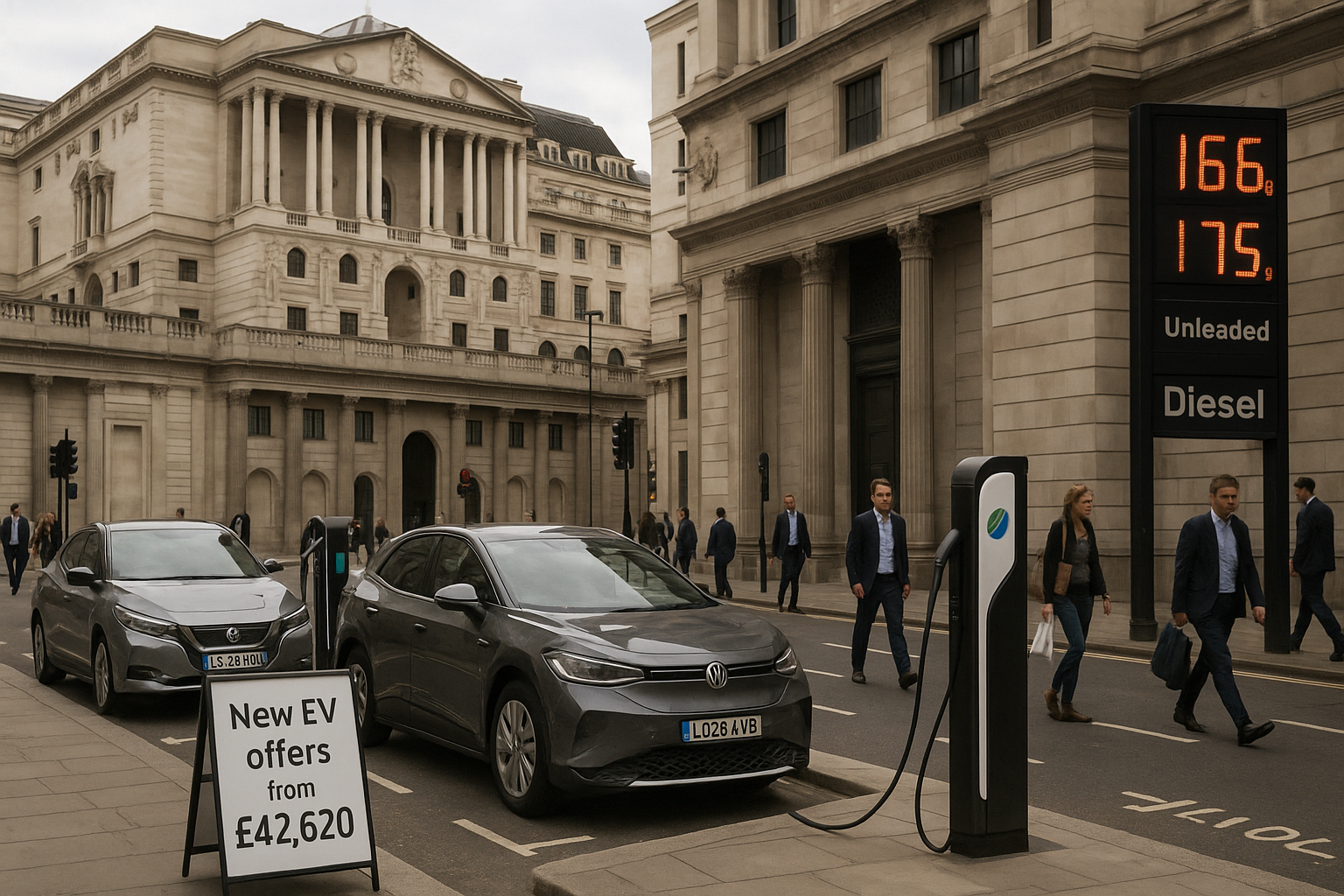
According to the latest market data from AutoTrader, the UK's largest automotive marketplace, the average asking price for a new electric vehicle in April 2026 was £42,620. For the first time, this was lower than the average price for a new petrol car, which stood at £43,405. This tipping point has been reached due to a perfect storm of factors. Firstly, the ZEV mandate is forcing manufacturers to offer significant discounts and finance deals on their EVs to ensure they meet their sales quotas. Secondly, the recent surge in global oil prices has pushed the cost of petrol and diesel to near-record highs, making the total cost of ownership for a petrol car even less attractive.
As highlighted by publications such as Positive News, this is a clear win for consumers and the environment. The increasing affordability and variety of EVs are making them a viable option for a much broader range of buyers. The government's commitment to the 2030 phase-out date, reaffirmed by the current Labour administration, has provided the certainty needed for massive investment in both vehicle production and the expansion of the UK's charging infrastructure. Political commentary, including from sources like LabourList, has framed this as a key success for long-term industrial strategy, demonstrating that clear government targets can drive market transformation.
Why It Matters
Achieving upfront price parity is the holy grail for the electric vehicle transition. It dismantles the single biggest argument against going electric and transforms the purchasing decision from an emotional or environmental one into a purely rational, economic one. When an EV is cheaper to buy, cheaper to run, and better for the environment, the case for buying a new petrol car collapses for a huge segment of the market. This moment is therefore likely to trigger a significant acceleration in the shift to electric mobility, far faster than many earlier predictions.
This has profound implications for the UK's ability to meet its legally binding climate change targets. Road transport is one of the largest sources of greenhouse gas emissions, and a rapid transition to EVs is essential for decarbonisation. It also has major economic consequences. It will boost the UK's burgeoning EV manufacturing and battery production sectors, while hastening the decline of the legacy automotive supply chain focused on internal combustion engines. Unlike Germany, which has been slower to embrace the EV transition due to its powerful traditional automotive industry, the UK's more flexible industrial base may allow it to adapt more quickly to the new landscape.
Local Impact
In Northern Ireland, the move towards price parity is a welcome development, but the region faces specific challenges in the EV transition. While EV sales are growing, Northern Ireland has lagged behind the rest of the UK in the rollout of public charging infrastructure. The lack of a functioning Stormont Executive has been blamed for a lack of strategic investment in this area. Achieving price parity will increase demand for EVs, putting further pressure on the existing, often unreliable, charging network. There is an urgent need for a coordinated strategy and investment to ensure that drivers in Northern Ireland, from Belfast to Enniskillen, are not left behind in the electric revolution and can fully benefit from the increasing affordability of these vehicles.
What's Next
With price parity achieved, the focus will now shift to the other major barrier to EV adoption: charging infrastructure. Expect a renewed push from government and the private sector to accelerate the rollout of fast, reliable public chargers across the country, particularly in residential areas and on the motorway network. The ZEV mandate will continue to tighten, with the required percentage of EV sales rising to 38% in 2027. We can also expect to see a wave of even more affordable, smaller electric cars entering the market as manufacturers compete for the budget-conscious end of the market, further cementing the financial case for making the switch.