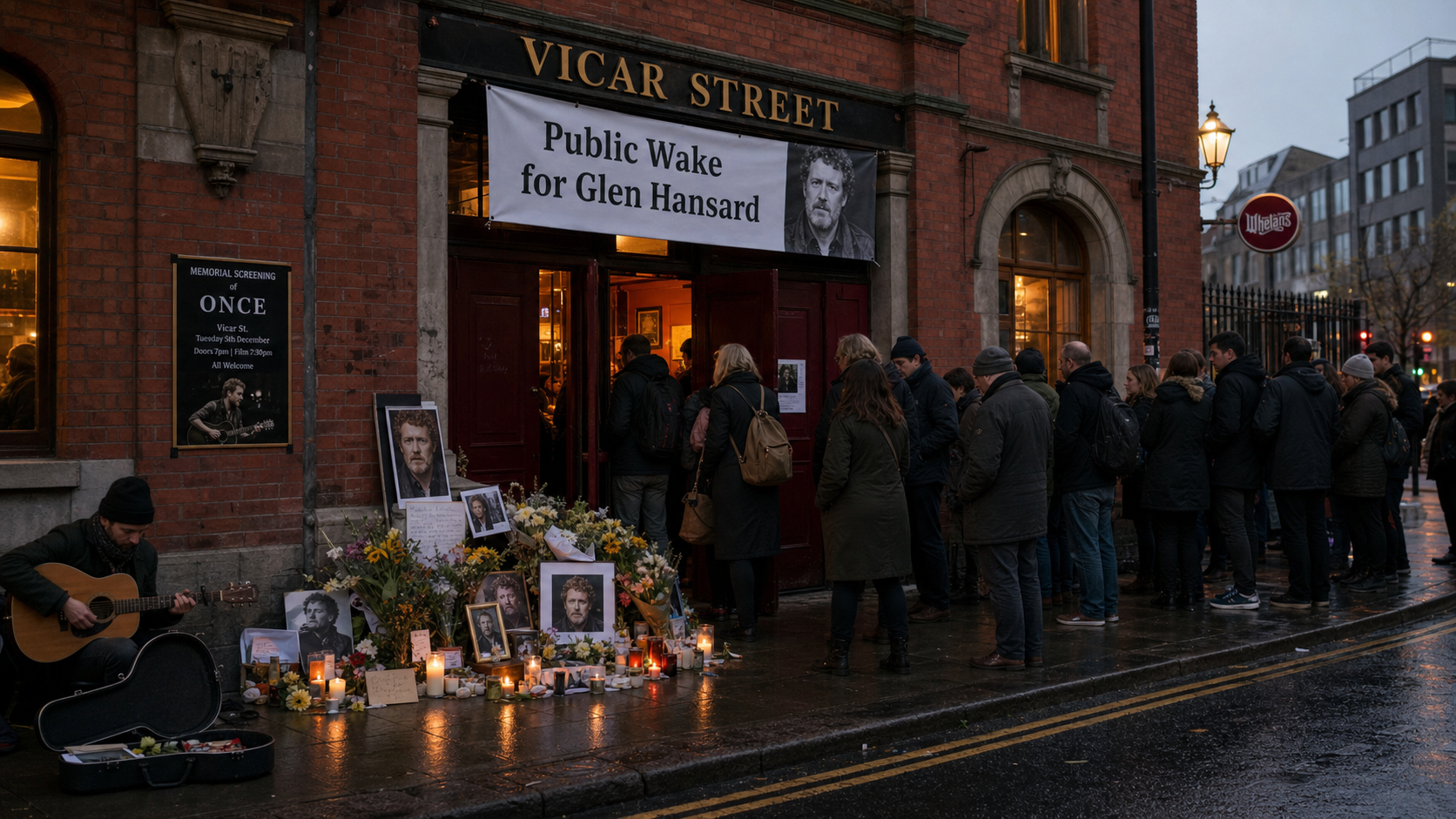
Dublin Prepares Public Wake for Glen Hansard as Ireland Continues to Mourn Oscar-Winner
Dublin is preparing a public wake for Glen Hansard, the Oscar-winning singer-songwriter who died in a motorcycle crash in the early hours of Wednesday morning, as Ireland continues to mourn one of its most beloved and distinctive musical voices — a man who went from busking on Grafton Street as a teenager to winning an Academy Award and performing on the world's greatest stages, and who never lost the quality that made him extraordinary: his absolute, unguarded sincerity.
Background
Glen Hansard was born in Ballymun in north Dublin in 1970 and left school at the age of 13 to pursue his passion for music, spending years busking on Grafton Street before forming the band The Frames in 1990. The Frames became one of the most respected acts in Irish music, building a devoted following through relentless touring and a series of albums that combined folk, rock, and soul influences in a way that was distinctly and unmistakably Irish.
Hansard's international breakthrough came through the 2007 film Once, in which he starred alongside Czech musician Markéta Irglová. The film, directed by John Carney, told the story of a Dublin busker and a Czech immigrant who form a musical partnership, and its soundtrack — which Hansard and Irglová wrote and performed — won the Academy Award for Best Original Song in 2008. The acceptance speech that Hansard gave at the Oscars, in which he urged aspiring musicians to "make art, make art, make art," became one of the most quoted moments in the history of the ceremony.
In the years that followed, Hansard continued to record and tour prolifically, both as a solo artist and with The Frames, and became a beloved figure in the Irish cultural landscape — not just for his music but for his generosity, his activism, and his willingness to use his platform to speak about issues he cared about, from homelessness to the rights of artists.
Key Developments
Hansard died in the early hours of Wednesday morning after a motorcycle crash in west Dublin. Gardaí are piecing together his last movements, which included a performance at a west Dublin pub in the hours before the accident. He was 55 years old.
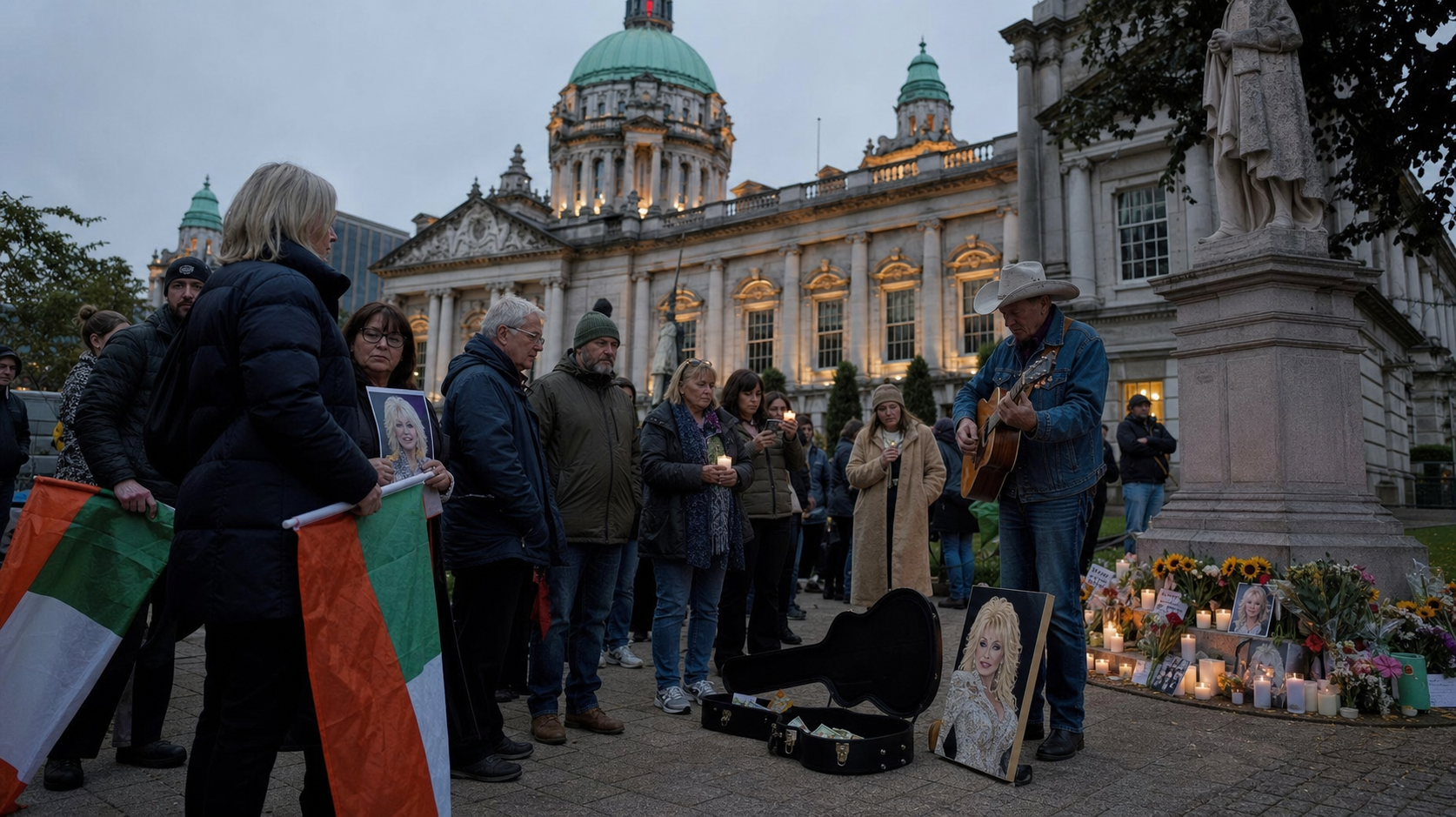
The reaction to his death has been one of the most intense outpourings of public grief that Ireland has seen in recent years. A book of condolence opened at the Mansion House in Dublin, with tributes pouring in from Barack Obama — who described Hansard as "a great musician who reminded us of the power of music to connect us" — Frances Black, and musicians from across Ireland and the world. Hundreds of musicians and fans gathered on Grafton Street, the place where Hansard began his career, to play his songs in tribute.
A public wake is being planned, with the details to be confirmed by his family in the coming days. A screening of Once is also being organised in Dublin as a tribute to his most celebrated work, and several venues across the city have announced special events in his memory. The Frames have issued a statement expressing their devastation at the loss of their founding member and closest friend.
Why It Matters
Glen Hansard's death is a loss that extends beyond the music industry. He was one of those rare figures who managed to be both a genuine artist — uncompromising in his commitment to his craft — and a beloved public figure, accessible and warm in a way that many artists of his stature are not. His willingness to perform at benefit concerts, to speak out on social issues, and to remain connected to the community from which he came gave him a moral authority that went beyond his musical achievements.
The outpouring of grief that has followed his death reflects the depth of the connection that Irish people felt with him. He was not just a musician they admired — he was someone they felt they knew, someone whose music had accompanied them through the significant moments of their lives. The loss of that presence is felt as something personal, even by people who never met him.
His death also raises questions about the safety of motorcyclists on Dublin's roads, an issue that has been the subject of growing concern in recent years. The circumstances of the accident are still being investigated by Gardaí, and it would be premature to draw conclusions about its cause. But the loss of such a prominent figure in such circumstances will inevitably focus attention on road safety in a way that statistics alone cannot.
Local Impact
In Ballymun, where Hansard grew up, and on Grafton Street, where he began his career, the grief is particularly acute. The community that produced him — working-class north Dublin, with its strong musical tradition and its fierce pride in its own — has lost one of its most celebrated sons. Local musicians who knew him, or who were inspired by him, have been gathering in pubs and community centres across the city to share memories and to play his songs in tribute. The public wake, when it takes place, is expected to draw thousands of people from across Dublin and beyond.
What's Next
The details of the public wake and the funeral arrangements are expected to be confirmed by Hansard's family in the coming days. The screening of Once is being organised for later in the week, with the venue and timing to be announced. Several of Ireland's leading cultural institutions — including the Abbey Theatre and the National Concert Hall — are expected to announce their own tributes in the coming days. The question of how Ireland will formally honour Hansard's legacy — whether through a permanent memorial, a named award, or some other form of recognition — will be a matter for discussion in the weeks and months ahead.