Derry Rower Daniel Collins Wins Identity Battle as British Rowing Reverses Declare as British Demand
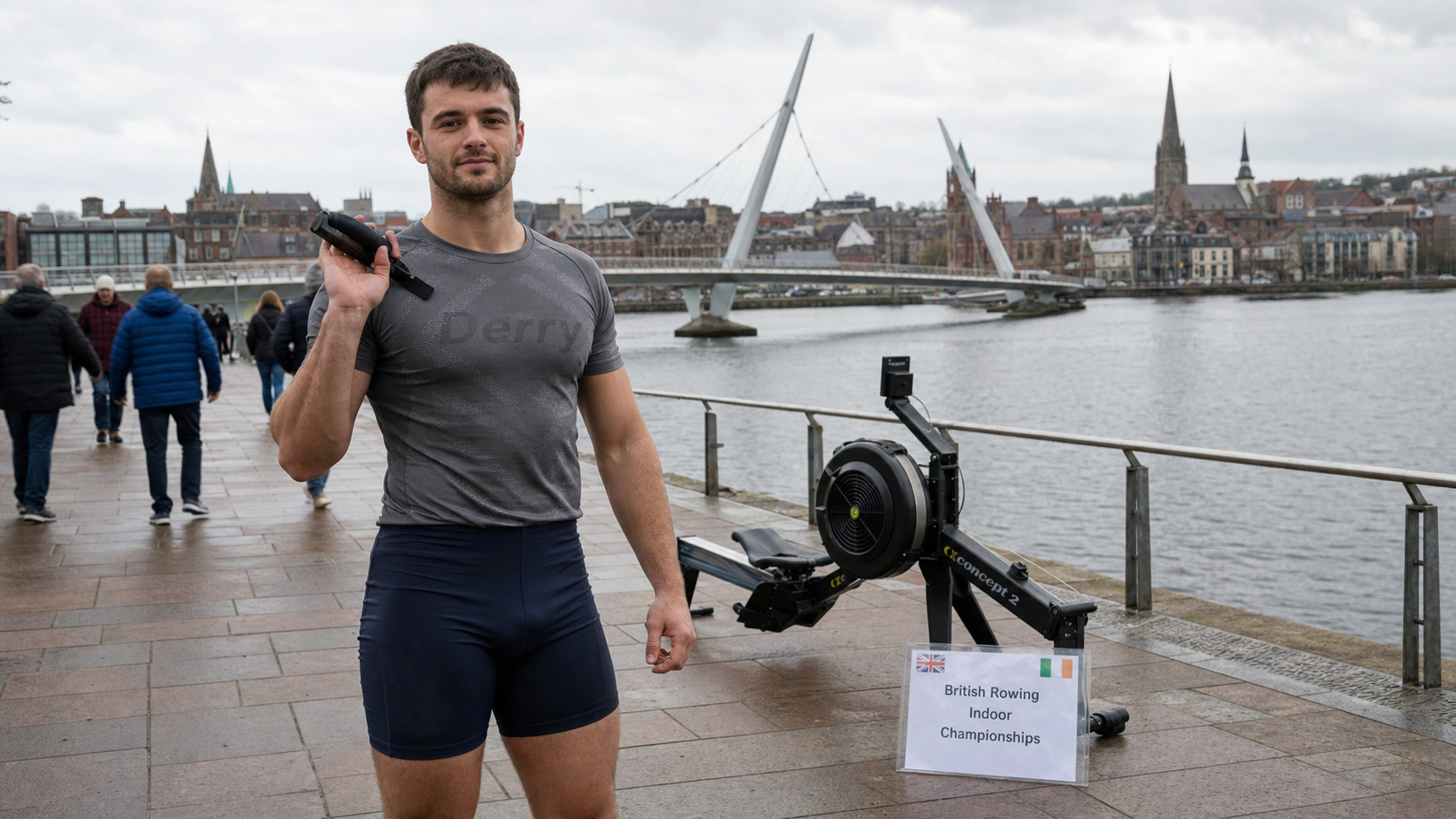
Indoor rowing champion Daniel Collins from Derry has secured a landmark personal victory after British Rowing reversed its requirement that he declare himself as British to compete in the British Rowing Indoor Championships, following a public campaign that drew support from Foyle MP Colum Eastwood and highlighted the unique identity rights enshrined in the Good Friday Agreement.
Background
Daniel Collins is an accomplished indoor rowing competitor who was born in County Donegal and lives in Derry, Northern Ireland. He identifies solely as Irish and has previously competed in the British Rowing Indoor Championships as an Irish entrant without difficulty. The dispute arose in September 2026 when Collins attempted to register for the 2026 British Rowing Indoor Championships, scheduled to be held concurrently with the World Rowing Indoor Championships at the National Exhibition Centre in Birmingham in December. Because the two events were running simultaneously, British Rowing stipulated that athletes wishing to appear in the British rankings were required to select UK as their nationality during the entry process. For Collins, who holds Irish citizenship and identifies exclusively as Irish, this requirement was not merely an administrative inconvenience — it was a direct challenge to his identity and, he argued, a breach of the rights guaranteed to people in Northern Ireland under the Good Friday Agreement. The Good Friday Agreement, signed in 1998, enshrines the birthright of people born in Northern Ireland to identify as Irish, British, or both, and to hold citizenship accordingly.
Key Developments
Collins raised his concerns publicly and sought support from Foyle MP Colum Eastwood, who took up the case with British Rowing and the UK Sports Minister, Stephanie Peacock. Eastwood emphasised that the situation reflected a broader need for sporting bodies and public institutions to develop a more nuanced understanding of the citizenship and identity landscape in Northern Ireland, where the binary British-or-Irish framing that applies elsewhere in the UK simply does not hold. In mid-September 2026, British Rowing issued a formal U-turn on its position. The organisation apologised for any distress caused to Collins and clarified its entry criteria, confirming that based on his citizenship status, he was eligible for inclusion in both the British and World rankings without being required to declare himself as British. British Rowing also amended its website and frequently asked questions to reflect the change and offered Collins complimentary entry to his events as a gesture of goodwill. Collins described himself as delighted with the outcome, saying the resolution meant he could compete at the highest level without compromising his identity.
Why It Matters
The Collins case is a reminder that the Good Friday Agreement's identity provisions, while enshrined in law, require active implementation across all areas of public and civic life — including sport. This is not the first time a Northern Ireland athlete has faced a conflict between institutional requirements and their right to identify as Irish, and it is unlikely to be the last. The fact that British Rowing moved quickly to resolve the issue once it was brought to their attention is encouraging, but the episode underlines the need for proactive rather than reactive approaches to identity accommodation. For the Irish community in Northern Ireland, the outcome carries symbolic as well as practical significance. The right to be Irish — to compete as Irish, to be counted as Irish — is not a courtesy extended by British institutions but a legal right. When that right is challenged, even inadvertently, it matters. Collins's willingness to stand his ground and the political support he received demonstrate that these rights will be defended.
Local Impact
In Derry, the outcome has been warmly received. Collins is a well-known figure in the local sporting community, and his case resonated with many residents who have navigated similar identity questions in professional, civic, and sporting contexts. The Foyle constituency, which Eastwood represents, has a strong Irish identity tradition, and the MP's intervention was seen as a straightforward exercise of his duty to constituents. Collins will now be able to compete in Birmingham in December as an Irish entrant, with his results counting in both the British and World rankings. The case has also prompted a broader conversation about how sporting bodies across the UK handle the unique identity circumstances of athletes from Northern Ireland.
What's Next
Collins will prepare for the British Rowing Indoor Championships and World Rowing Indoor Championships at the NEC in Birmingham in December 2026. British Rowing has committed to reviewing its registration processes to prevent similar situations arising in future. Eastwood has indicated he will continue to monitor how sporting bodies handle identity issues for Northern Ireland athletes, and has written to the UK Sports Minister seeking assurances that the lessons of the Collins case will be applied more broadly across British sporting governance.