McElhinney Rewrites the Record Books in Copenhagen with Stunning 5km Breakthrough
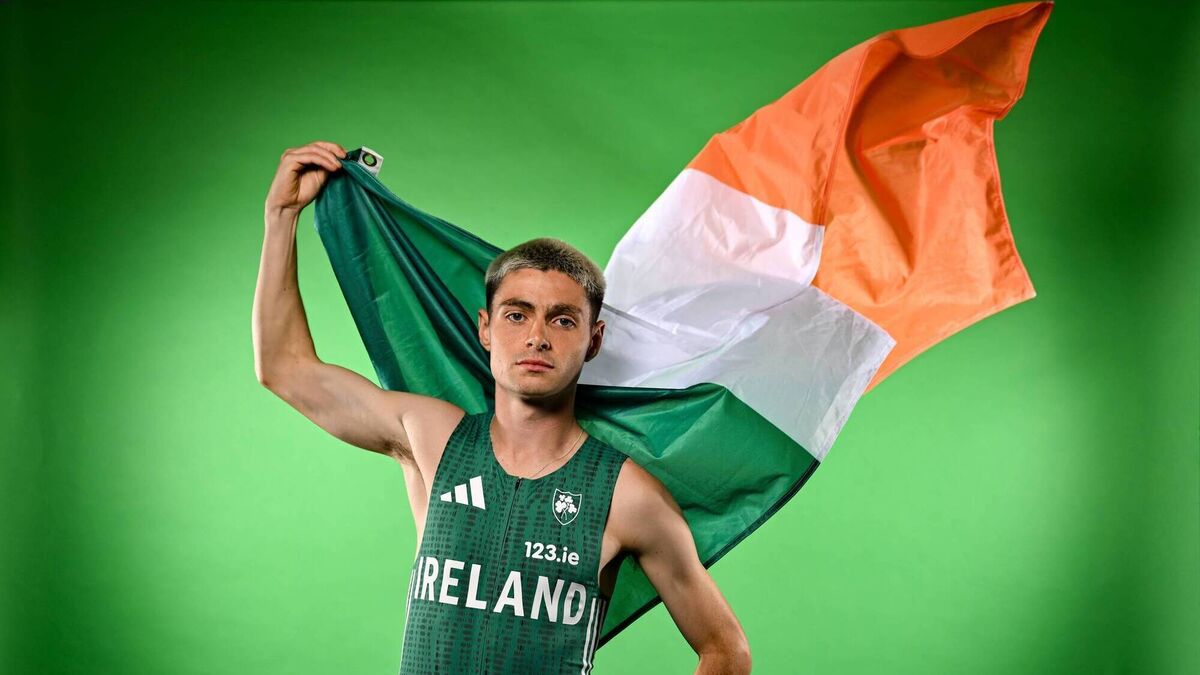
Darragh McElhinney, the 25-year-old distance runner from Glengarriff in County Cork, produced the finest performance of his senior career on Saturday at the World Athletics Road Running Championships in Copenhagen, clocking 13 minutes and 22 seconds over 5km to shatter an Irish national record that had stood for 14 years and announce himself as one of the most exciting middle-distance talents in European athletics.
Background
The record McElhinney erased had been held by Alistair Cragg, one of the most decorated Irish distance runners of his generation, who set the previous mark of 13:26 back in 2012. That Cragg's record survived for nearly a decade and a half speaks to the quality of the original performance — and to the magnitude of what McElhinney achieved on the streets of the Danish capital.
McElhinney had long been regarded as a prodigious talent. He emerged through the underage ranks with a string of impressive track performances, and his transition to senior competition had been marked by steady, if occasionally frustrating, progress. He had set underage national records across multiple distances, but Saturday's effort represented his first senior Irish record — a milestone that carries particular weight in a country with a proud tradition of distance running excellence.
The World Athletics Road Running Championships, held annually in a rotating host city, brings together the finest road runners on the planet. The 5km event is one of the most competitive on the programme, attracting athletes from East Africa who routinely set world-class times. For an Irish athlete to finish 16th in such company, and to do so in record-breaking fashion, is a genuine achievement of the highest order.
Key Developments
McElhinney described the conditions in Copenhagen as challenging, with a persistent wind requiring careful tactical management in the opening kilometres. "The wind made it difficult to go out hard early," he said after the race. "I had to be patient and trust that the fitness was there. When I saw the clock at the finish, I honestly couldn't believe it."
His time of 13:22 placed him 16th in a field dominated by Eritrean winner Dawit Seare, who set a national record of 12:56, and Norwegian superstar Jakob Ingebrigtsen, who finished second in 12:59. The gap between McElhinney and the podium positions reflects the extraordinary depth of global road running, but his performance was nonetheless celebrated as a landmark moment for Irish athletics.
Fellow Irish competitor Brian Fay also ran well, finishing 38th in 13:48 — a solid performance in its own right, though inevitably overshadowed by his compatriot's record-breaking effort. Athletics Ireland's high-performance director described McElhinney's run as "a statement of intent" ahead of the Tokyo 2027 World Championships.
Why It Matters
McElhinney's record is significant not merely as a statistical achievement but as a signal of the direction of Irish distance running. The sport has been in a period of transition since the retirements of Sonia O'Sullivan and Catherina McKiernan, and while Ciara Mageean has carried the flag with distinction on the track, the men's distance events have lacked a genuine world-class presence at senior level for some years.
What makes McElhinney's breakthrough particularly encouraging is the manner in which it was achieved — not on a fast track in ideal conditions, but on a road course in a crosswind, against the best in the world. That kind of performance suggests a robustness and competitive maturity that bodes well for the years ahead. He is now firmly in the conversation for Ireland's Tokyo 2027 team, and his coach has indicated that the focus will shift to the 5,000m and 10,000m on the track as the Olympic cycle intensifies.
For Irish athletics, which has invested heavily in its high-performance programme in recent years, this is precisely the kind of return that justifies that investment. McElhinney is the product of a system that has learned from past mistakes, and his record is as much a vindication of that system as it is a personal triumph.
Local Impact
In Glengarriff, the small West Cork village where McElhinney grew up, the reaction to his record was one of enormous pride. The village, nestled between the Caha Mountains and Bantry Bay, has a strong tradition of producing athletes who punch above their weight on the national stage. McElhinney trained with Bantry AC before moving to the University of Colorado on an athletics scholarship, and his success is seen locally as a reflection of the values instilled in him from an early age.
Athletics clubs across Munster reported a surge of interest from young runners following the news, with coaches noting that McElhinney's story — a rural Irish kid who worked his way to a world record — resonates powerfully with aspiring athletes who might otherwise feel that elite sport is beyond their reach. Athletics Ireland has confirmed that McElhinney will return to Ireland for a series of community events before the end of the year.
What's Next
McElhinney is expected to return to the United States in October to resume his training programme ahead of the indoor track season. His coach has indicated that the primary targets for 2027 will be the European Indoor Championships in February and the World Athletics Championships in Tokyo in August. A sub-13:20 5km is now considered achievable, and there is quiet confidence within the Irish athletics community that McElhinney has the potential to reach the final of a major championship over 5,000m within the next two years. Athletics Ireland will confirm his competitive schedule for the remainder of 2026 in the coming weeks.