Dáithí Mac Gabhann Receives Life-Saving Heart Transplant After Eight-Year Wait
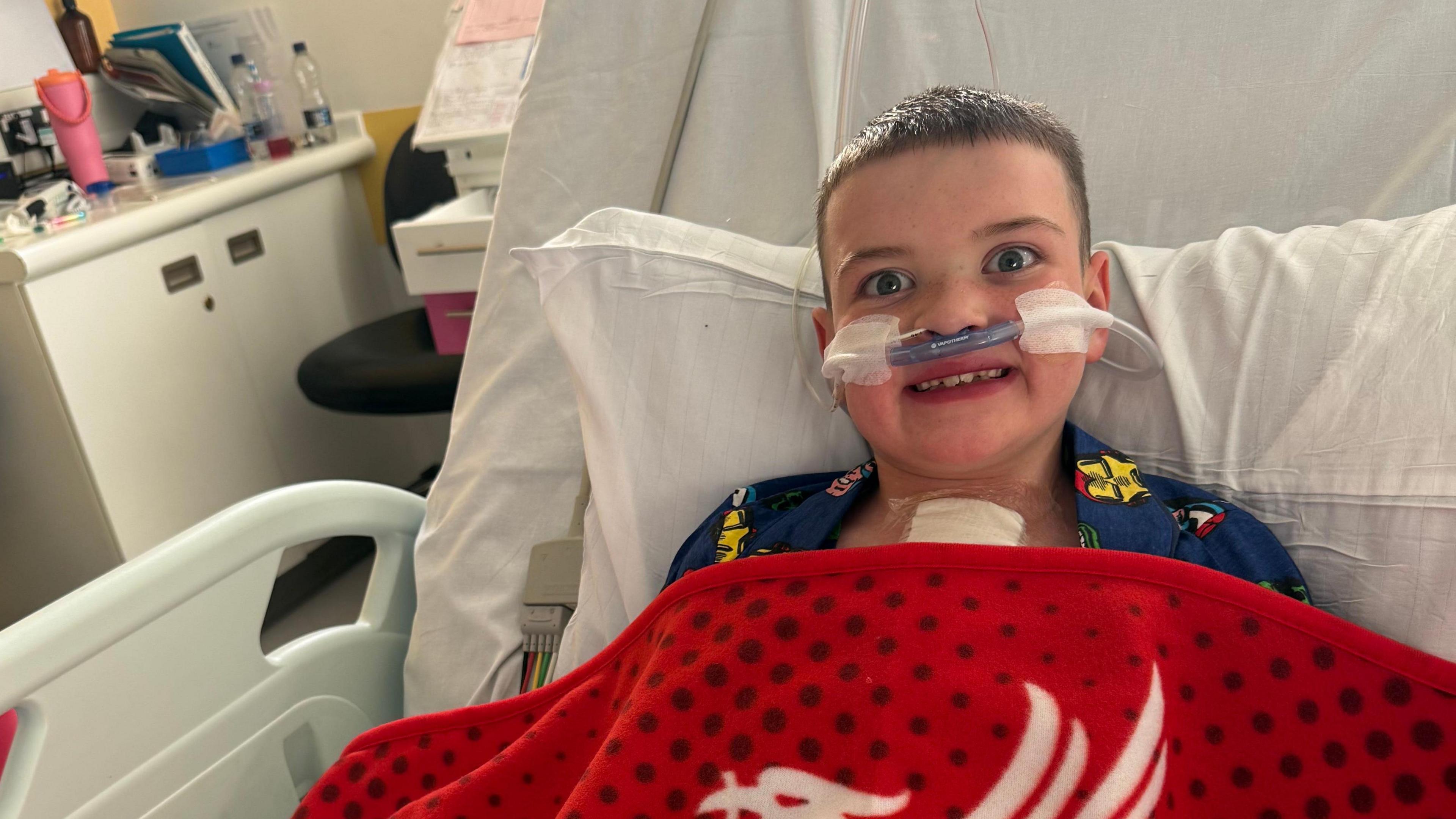
Nine-year-old Dáithí Mac Gabhann from Ballymurphy in west Belfast has received a life-saving heart transplant, ending an almost eight-year wait that became one of the most emotionally charged stories in Northern Ireland's recent history. The boy, whose family's tireless campaigning led directly to the introduction of opt-out organ donation legislation, underwent the procedure at a specialist centre in Newcastle, England, on Tuesday, following an emergency transfer from Belfast by private medical flight.
Background
Dáithí was placed on the transplant waiting list in 2018, when he was just two years old, after being diagnosed with hypoplastic left heart syndrome — a severe congenital condition in which the left side of the heart is critically underdeveloped. The condition left him dependent on a series of palliative surgical procedures, each buying time while the family waited for a donor match that seemed, at times, impossibly distant.
Rather than retreat into private grief, Dáithí's parents — Máirtín Mac Gabhann and Seph Ní Mheallain — channelled their anguish into public advocacy. Their campaign for an opt-out organ donation system in Northern Ireland gathered extraordinary momentum, drawing cross-community support at Stormont and eventually compelling the Assembly to legislate. The Organ and Tissue Donation (Deemed Consent) Act, known universally as Dáithí's Law, came into force in June 2023, bringing Northern Ireland into line with the rest of the United Kingdom and establishing a soft opt-out framework under which adults are presumed to consent to donation unless they have registered an objection.
In recognition of his family's efforts, Dáithí was granted the Freedom of Belfast in 2023 — the youngest person ever to receive the honour — and his father Máirtín was awarded an MBE in 2024. Yet even as the accolades accumulated, Dáithí's health continued to deteriorate. By February 2026, his condition had worsened to the point where he was transferred to the urgent transplant list, increasingly reliant on supplemental oxygen and a wheelchair for mobility.
Key Developments
The call came on Tuesday, July 21, 2026. Within two hours of receiving notification of a potential donor match, Dáithí and his father Máirtín were aboard a private medical flight from Belfast to Newcastle, where the transplant team was ready. The surgery itself lasted approximately five hours and was completed successfully.
Máirtín Mac Gabhann, speaking from Newcastle, described his son as showing visible signs of recovery and displaying the spark that had been so painfully absent in recent months. The family asked for privacy for themselves and, crucially, for the donor family — a request that speaks to the profound awareness the Mac Gabhanns carry of what another family's loss has made possible.
The family's statement emphasised that the transplant is a treatment rather than a permanent cure, and that Dáithí faces a long and demanding road to recovery. Immunosuppressant medication, regular monitoring, and the ever-present risk of rejection mean that the journey ahead is measured not in weeks but in years. Nevertheless, the news was greeted with an outpouring of relief and joy across Northern Ireland and the wider island, with tributes flooding in from political leaders, sporting figures, and members of the public who had followed Dáithí's story since he was a toddler.
Why It Matters
Dáithí's transplant carries significance that extends well beyond one family's relief. His case is, in the most direct sense, a vindication of the legislative campaign his parents waged. Dáithí's Law has now been in operation for three years, and while it is too early to draw definitive conclusions about its long-term impact on donation rates, the opt-out framework has already increased the pool of potential donors and prompted thousands of conversations within families about end-of-life wishes. Northern Ireland had historically lagged behind England, Wales, and Scotland in organ donation rates; the new legislation was designed to close that gap.
The story also illustrates the particular cruelty of paediatric heart transplantation. Children waiting for donor hearts face a uniquely constrained pool of potential matches — size, blood type, and tissue compatibility must all align within a narrow window. Dáithí's eight-year wait was, by his family's account, the longest endured by any child in the world for a heart transplant, a statistic that underscores both the scarcity of paediatric donors and the resilience required of families navigating that uncertainty.
For the broader organ donation movement in Ireland, north and south, the news provides a powerful, human illustration of what the legislation is for. The Republic of Ireland introduced its own opt-out system in 2023, and advocates on both sides of the border have pointed to Dáithí's case as evidence of why such frameworks matter. This is the first major test of Dáithí's Law's real-world impact — and the result is a child who is alive because the law changed.
Local Impact
In Ballymurphy, the west Belfast neighbourhood where Dáithí grew up, the news was met with celebration. The community had rallied around the family throughout the long wait, and local schools, GAA clubs, and community organisations had all played their part in keeping the campaign visible. The Belfast Health and Social Care Trust, which oversees services across the city, has been among the institutions monitoring the impact of Dáithí's Law on local donation rates. The Royal Victoria Hospital on the Falls Road, where Dáithí received much of his early cardiac care, will be central to his ongoing follow-up once he is well enough to return to Belfast. Translink staff at George Best Belfast City Airport, through which many medical transfers pass, have also expressed their support for the family.
What's Next
Dáithí will remain in Newcastle for an initial period of post-operative recovery and monitoring before any transfer back to Belfast is considered. The family has asked the public to respect their privacy during this time. Longer term, the Mac Gabhann family has indicated they intend to continue their advocacy work around organ donation awareness, ensuring that the conversation sparked by their campaign does not fade now that their immediate personal crisis has passed. The next review of Dáithí's Law's operational impact is expected to be published by the Department of Health in late 2026.