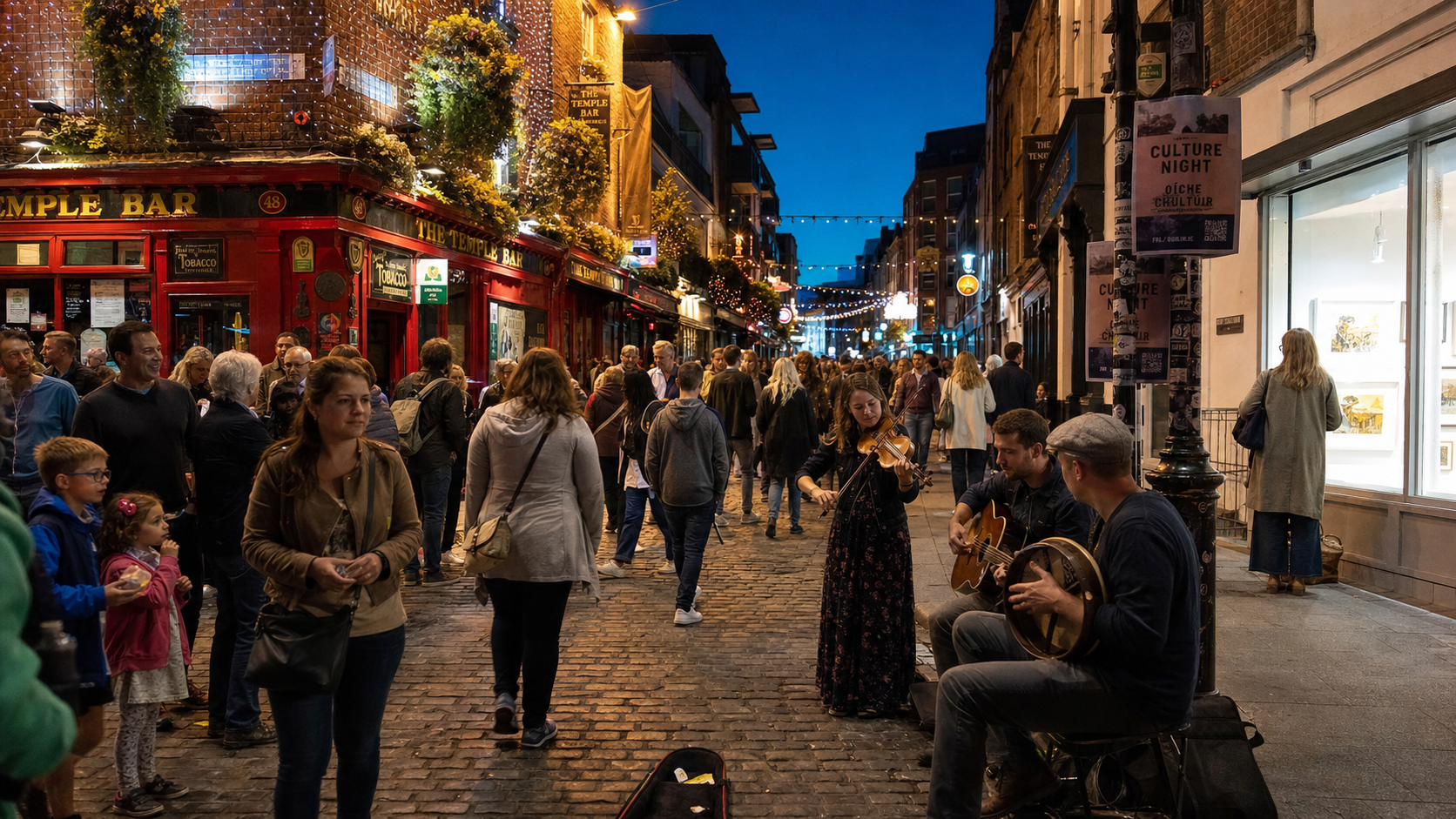
Culture Night 2026: Dublin Throws Open Its Doors for 21st Edition of Free Arts Celebration on September 18
Culture Night 2026, the 21st edition of Ireland's annual free arts celebration, takes place on Friday, 18 September, with hundreds of venues across Dublin and nationwide extending their opening hours and offering free access to performances, exhibitions, tours, workshops, and bespoke events in what has become one of the most anticipated evenings in the Irish cultural calendar.
Background
Culture Night — Oíche Chultúir — began as a Dublin initiative in 2006, inspired by similar events in European cities that had found success in opening cultural institutions to the public for a single evening each year. The concept was simple: remove the financial barrier to cultural participation for one night, and see what happens. What happened was an immediate and enthusiastic public response that demonstrated the appetite for cultural engagement that existed beneath the surface of Irish life.
Twenty-one years later, Culture Night has grown from a Dublin experiment into a nationwide event, with venues in Cork, Galway, Limerick, Waterford, and dozens of smaller towns and cities participating alongside the capital. The Arts Council and local authorities across the country co-ordinate the event, which now encompasses museums, art galleries, historic landmarks, theatres, cathedrals, libraries, artist studios, and community spaces.
The event's growth reflects a broader truth about Irish cultural life: the demand for arts and culture is not confined to those who can afford premium tickets or who live within easy reach of major cultural institutions. Culture Night's free-access model has consistently attracted audiences who would not otherwise attend cultural events, and the data on participation — which the Arts Council tracks carefully — shows that the event reaches demographics that the arts sector struggles to engage through conventional programming.
Key Developments
The 2026 programme for Dublin is expected to be the most extensive in the event's history, with the Dublin City Council Arts Office confirming that venue registrations are at a record level. The programme spans the full range of cultural activity: visual arts exhibitions in galleries from the National Gallery to small independent spaces in the Liberties and Stoneybatter; live music in venues from the National Concert Hall to community halls in Ballyfermot and Finglas; theatre performances in the Abbey, the Gate, and dozens of smaller venues; and guided tours of historic buildings and sites that are rarely open to the public.
The Irish Times has highlighted Culture Night as one of the key events in Dublin's autumn cultural calendar, noting that the 2026 programme includes a particular focus on emerging Irish artists — a deliberate effort to use the event's reach to introduce new voices to audiences who might not otherwise encounter them. Several of the evening's most anticipated events feature artists who have come to prominence in the past year, including performers who gained recognition at Electric Picnic and other summer festivals.
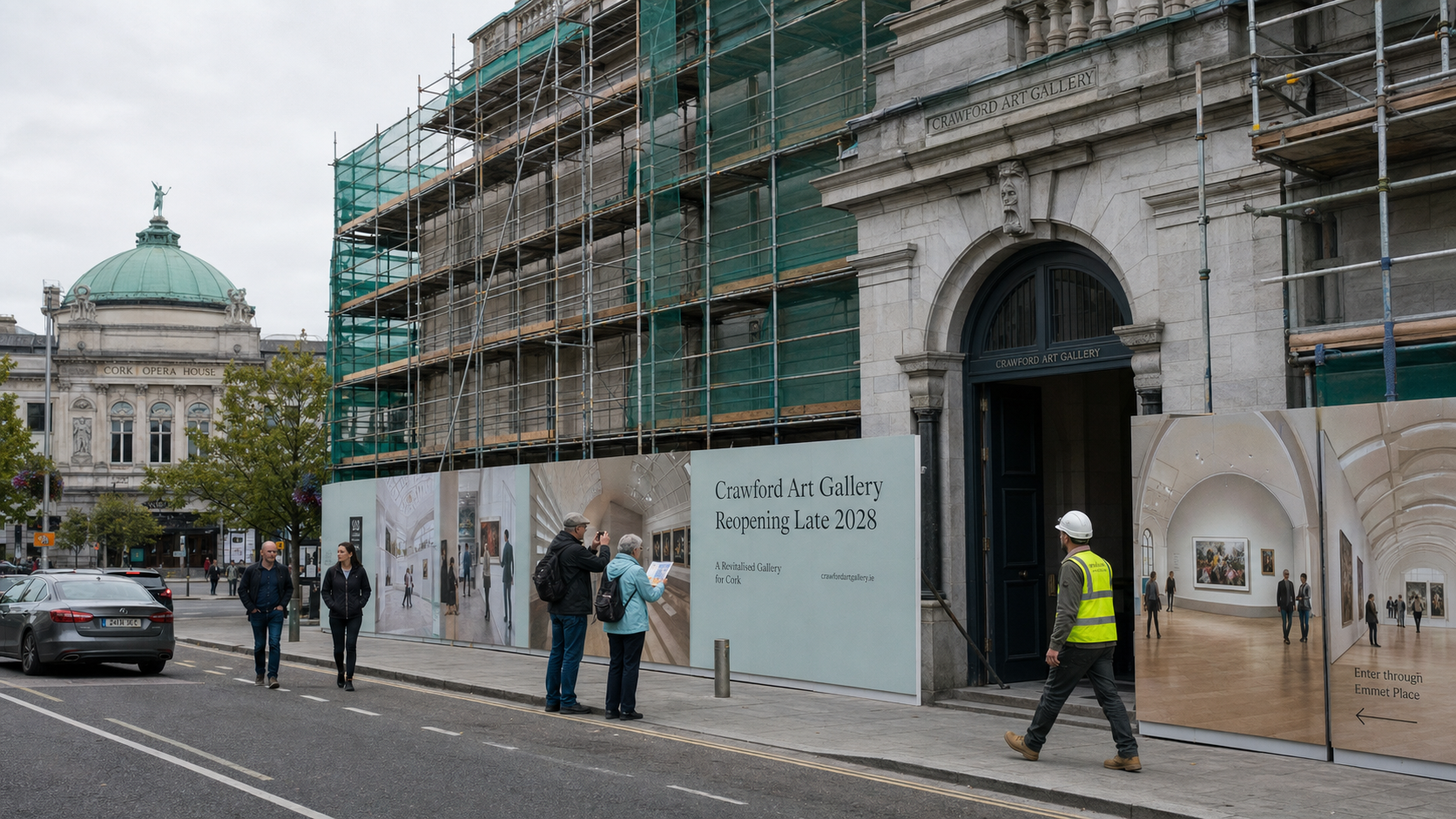
Outside Dublin, the Culture Night programme reflects the diversity of Irish cultural life. In Galway, the event coincides with the final weeks of the city's extended arts season, with venues from the Galway City Museum to the Druid Theatre participating. In Cork, the Crawford Art Gallery and the Cork Opera House are among the anchor venues, with a programme that extends into the city's vibrant independent arts scene.
Why It Matters
Culture Night matters because it makes a practical argument for the value of public investment in the arts. Every year, hundreds of thousands of people attend events that they would not otherwise have access to — not because they lack interest, but because the cost of cultural participation is a genuine barrier for many families and individuals. The event demonstrates, year after year, that when that barrier is removed, people engage enthusiastically.
The argument has particular resonance in the current economic context. Arts funding in Ireland has been under pressure, and the case for public investment in culture is not always easy to make against competing demands on the public purse. Culture Night provides a visible, tangible demonstration of what that investment produces — not abstract cultural enrichment, but real evenings of real engagement for real people across the country.
The event also serves a function that is harder to quantify but no less important: it reminds Irish people that their country has a rich and diverse cultural life that is worth celebrating. In a media environment dominated by international content, Culture Night is an assertion of Irish cultural identity — not defensive or nostalgic, but confident and forward-looking.
Local Impact
In Dublin, Culture Night has become a fixture of the city's social calendar, with families, couples, and groups of friends planning their evenings weeks in advance. The event generates significant footfall in the city centre and in neighbourhood venues across the capital, with the economic benefit to restaurants, cafés, and bars that stay open late to accommodate the evening's crowds estimated in the millions of euros.
For Dublin's arts organisations — many of which operate on tight budgets and depend on public funding — Culture Night provides a valuable opportunity to introduce their work to new audiences. The conversion rate from Culture Night visitors to paying audience members in subsequent months is a metric that arts organisations track carefully, and the evidence suggests that the event is an effective tool for audience development.
What's Next
The full Culture Night 2026 programme will be published on culturenight.ie in the coming weeks, with venues encouraged to register their events as soon as possible. The event takes place on Friday, 18 September 2026, with most venues open from 5pm until midnight. All events are free of charge. Dublin City Council has indicated that a dedicated Culture Night app will be available for download ahead of the event, allowing participants to plan their evening and navigate between venues.