Cross-Border Greenways Receive Major Funding Boost to Link Communities Across Ireland
Four cross-border greenway projects have secured significant new funding, with Northern Ireland's Infrastructure Minister Liz Kimmins welcoming the investment as a landmark step towards creating walking and cycling routes that will physically connect communities on both sides of the border for the first time — a development that promises to reshape rural tourism and strengthen the social fabric of the island.
Background
Greenways — traffic-free routes for walking, cycling, and other non-motorised travel — have become one of the most popular forms of recreational infrastructure in Ireland over the past decade. The Great Western Greenway in Mayo, stretching 42 kilometres from Westport to Achill, is frequently cited as one of the most successful tourism infrastructure projects in the country's history, generating tens of millions of euros in annual visitor spending and transforming the economic fortunes of communities along its route.
The success of that model has driven demand for similar routes across the island, and cross-border greenways have emerged as a particularly compelling proposition — combining the recreational and health benefits of active travel with the symbolic and practical value of connecting communities that were, for much of the twentieth century, separated by a heavily policed frontier. The removal of border infrastructure following the Good Friday Agreement created the physical possibility of seamless cross-border routes, but funding, land access, and jurisdictional complexity have slowed progress.
Both the Irish government and the Northern Ireland Executive have identified greenway development as a priority, and the Shared Island initiative — established by the Irish government to deepen cooperation across the island — has provided a funding mechanism for cross-border projects that require investment from both jurisdictions simultaneously.
Key Developments
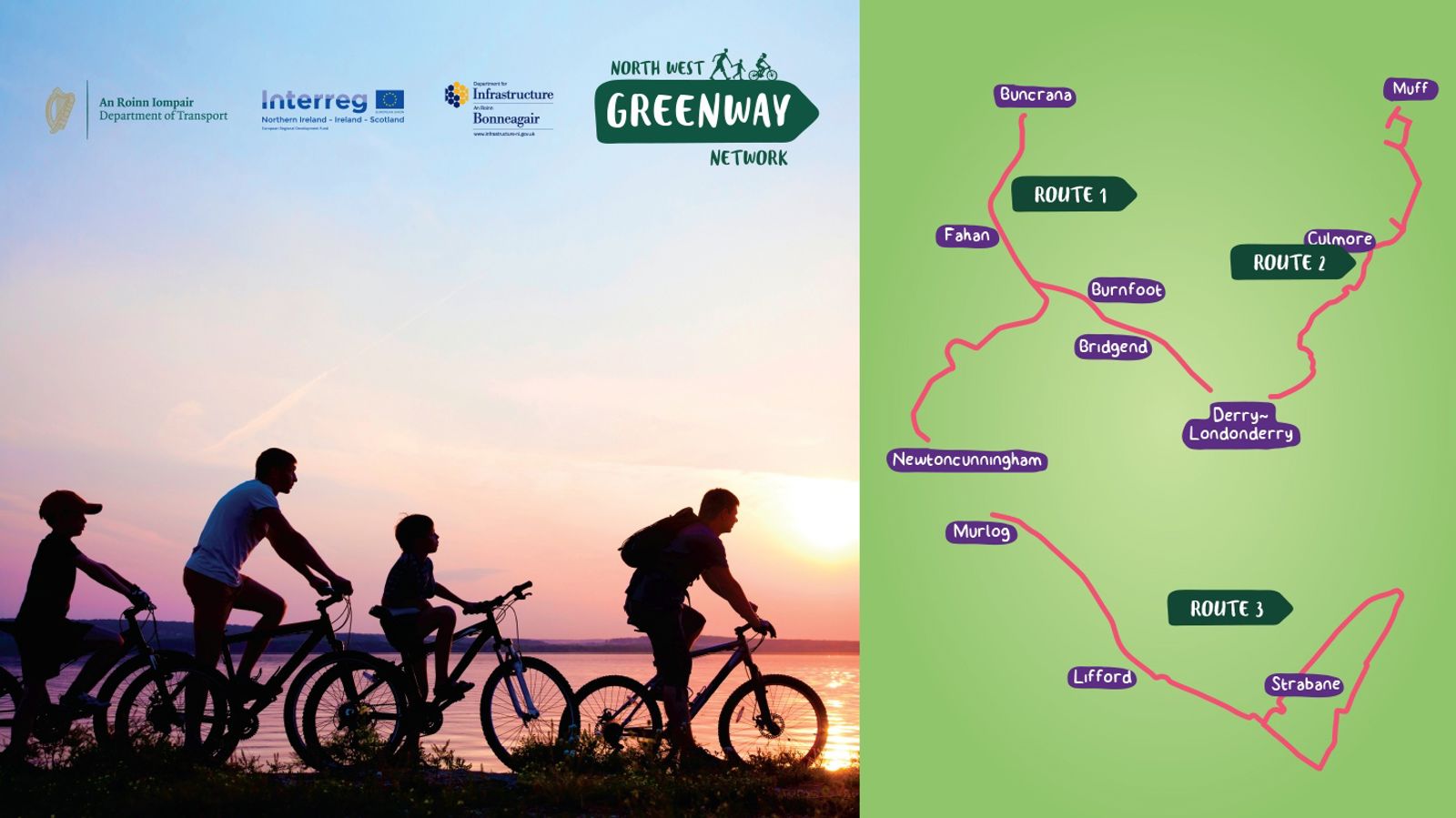
The funding package, welcomed by Minister Kimmins on 21 June, covers four distinct cross-border greenway projects at various stages of development. The routes are designed to link towns and villages in counties including Fermanagh, Tyrone, Armagh, and Down with their counterparts in Cavan, Monaghan, Louth, and Donegal. Full details of the individual routes and the precise funding amounts for each project are expected to be published in the coming weeks.
Minister Kimmins described the investment as a demonstration of what can be achieved when both governments work together on shared infrastructure priorities. The projects will require close coordination between the Department for Infrastructure in Belfast and the Department of Transport in Dublin, as well as engagement with local councils, landowners, and community groups on both sides of the border. The greenways are expected to attract significant numbers of recreational cyclists and walkers, as well as international tourists seeking the kind of immersive, landscape-based experience that Ireland's countryside uniquely offers. Economic modelling for similar routes suggests that each kilometre of completed greenway can generate substantial annual visitor spending in surrounding communities.
Why It Matters
Cross-border greenways carry a significance that goes beyond their recreational and economic value. They are, in a very tangible sense, a physical expression of the normalisation of relations across the island. When a family from Enniskillen can cycle to Cavan for lunch, or a group from Dundalk can walk to Newry for a weekend break, the border becomes not a barrier but simply a line on a map — and that shift in lived experience has a quiet but profound effect on how people on both sides of the divide understand their relationship with each other.
The health benefits are also substantial. Northern Ireland has some of the highest rates of obesity, cardiovascular disease, and mental health difficulties in the United Kingdom, and the Republic faces similar challenges. Infrastructure that makes active travel easy, enjoyable, and accessible — particularly in rural areas where car dependency is highest — is one of the most cost-effective public health interventions available to government. For rural economies that have struggled with depopulation and the decline of traditional industries, greenway tourism offers a genuinely sustainable model of economic development that does not require large capital investment in hotels or visitor centres.
Local Impact
Communities along the proposed routes in counties Fermanagh, Tyrone, Armagh, and Down stand to benefit most directly. Towns such as Lisnaskea, Dungannon, Keady, and Rathfriland — which have seen limited tourism investment in recent decades — could find themselves on internationally promoted cycling routes, with all the footfall and spending that entails. On the southern side, communities in Cavan, Monaghan, and Louth would similarly benefit from increased visitor numbers and the economic activity they generate. Local councils in both jurisdictions are expected to play a key role in the planning and maintenance of the routes once completed.
What's Next
Detailed planning and public consultation processes for each of the four routes are expected to begin in the second half of 2026. Land access negotiations with private landowners will be a critical step, as will environmental impact assessments for routes passing through sensitive habitats. The target is to have at least two of the four routes open to the public within three years, with the remaining two following as planning and construction timelines allow. Both governments have committed to regular progress reviews through the North-South Ministerial Council.