Cork Grandad's Remarkable Pigeon Rescue Mission Has Reunited Hundreds of Lost Birds with Their Owners Across Ireland and Beyond
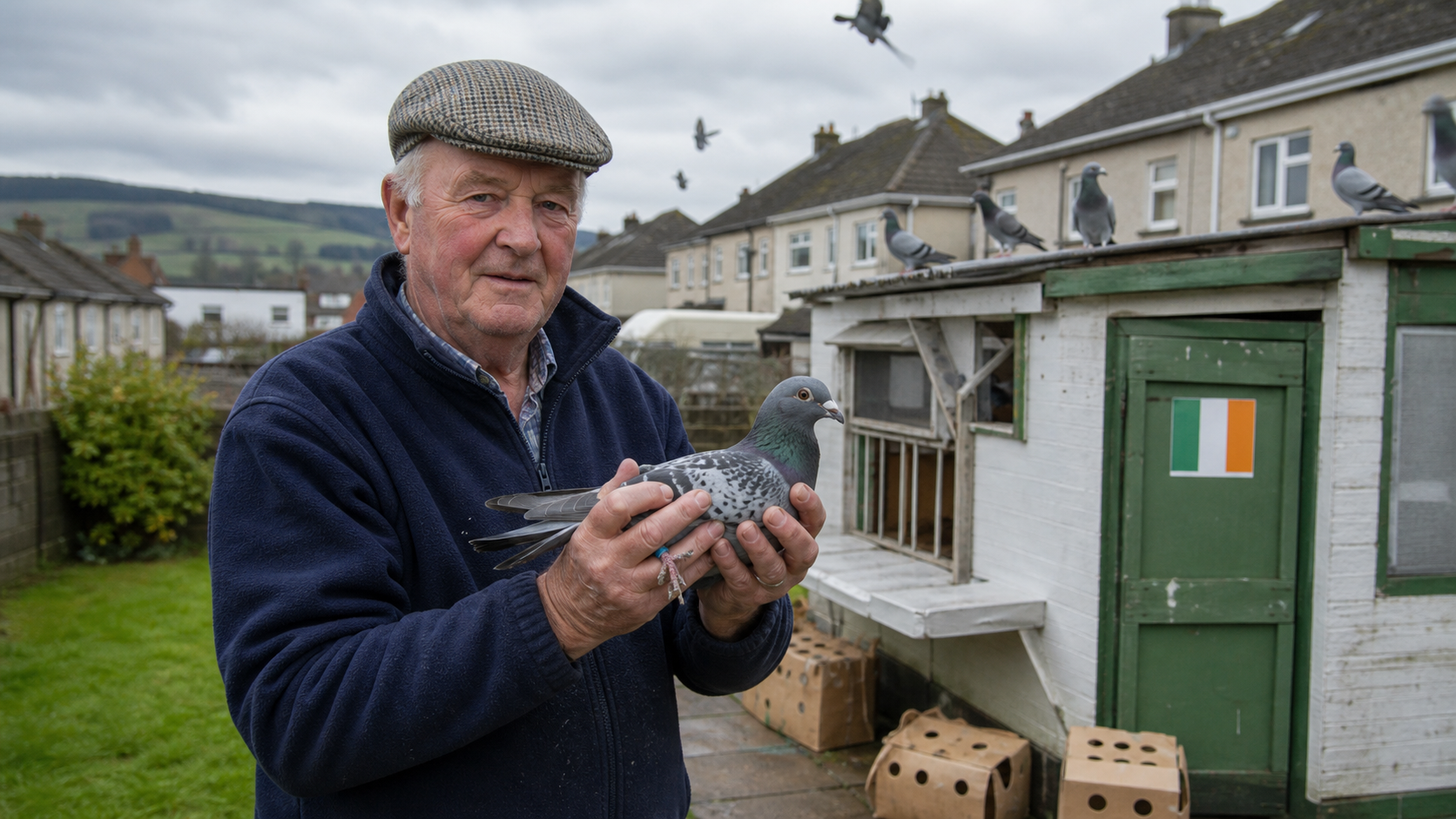
In a modest back garden in Cork city, surrounded by the soft cooing of birds he has nursed back to health, Seán Horgan has spent the better part of twenty-five years doing something that most people would consider eccentric, a few would call obsessive, and the pigeon racing community across Ireland and Europe regards as nothing short of invaluable: finding lost homing pigeons and getting them home.
Background
Homing pigeons are extraordinary navigators. Equipped with magnetoreception — the ability to sense the Earth's magnetic field — they can find their way back to their loft from distances of hundreds of miles with a reliability that has made them useful to human beings since antiquity. But they are not infallible. Exhaustion, severe weather, disorientation caused by electromagnetic interference, or the simple misfortune of being blown off course during a race can leave a bird stranded far from home, unable to complete the journey its instincts are driving it to make.
When that happens, the bird typically lands somewhere it can find food and shelter, and waits. If it is lucky, it lands near someone who recognises what it is and knows what to do. In Cork, that someone is increasingly likely to be Seán Horgan. A retired postal worker and grandfather of seven, Horgan became involved in pigeon rescue almost by accident in the early 2000s, when a bedraggled racing pigeon landed in his garden during a storm and he spent three days nursing it back to health before tracking down its owner through the leg ring it carried. "I was hooked from that moment," he told the Irish Examiner this week. "There is something about getting a bird home that just gets under your skin."
Since then, Horgan has developed an encyclopaedic knowledge of the Irish Homing Union's ring identification system, the Belgian and French racing federations' databases, and the informal networks of pigeon fanciers across Europe who share information about lost birds. He has also built a small but well-equipped recovery facility in his garden, capable of housing up to a dozen birds at a time while he works to identify their owners.
Key Developments
Horgan estimates that he has successfully reunited more than four hundred birds with their owners over the past two decades, including pigeons from Belgium, France, the Netherlands, and on one memorable occasion, a bird that had been entered in a race in the eastern United States and somehow ended up in Kinsale. "That one took me six weeks," he said. "The American racing federation had never had an inquiry from Ireland before. They thought I was pulling their leg."
The process of identifying and repatriating a lost pigeon is more complex than it might appear. Each racing pigeon carries a leg ring with a unique identification code, but accessing the relevant database requires knowing which federation issued the ring — information that is not always immediately obvious. International repatriation also involves navigating quarantine requirements and, in some cases, arranging specialist animal transport. Horgan does all of this voluntarily, funding the work himself and asking only that owners cover the cost of transport when birds need to travel internationally.
Why It Matters
Pigeon racing is a sport with deep roots in working-class communities across Ireland and Britain, and the loss of a prize bird can represent a significant financial and emotional blow to its owner. A well-bred racing pigeon can be worth thousands of euros, and the bonds that develop between fanciers and their birds over years of training and racing are not easily quantified. Horgan's work sits within a tradition of community mutual aid that has always been central to the sport — the understanding that when a bird goes missing, the community rallies to help find it. What makes his contribution unusual is its scale and its reach: where most fanciers might help a neighbour recover a local bird, Horgan has built something closer to an international rescue service, operating on goodwill and expertise alone.
Local Impact
Within Cork's pigeon racing community, Horgan is a well-known figure, regularly consulted by the Cork Homing Pigeon Club and the Munster Federation when birds go missing during major races. His reputation has spread beyond the sport: local vets now routinely refer injured or lost pigeons to him, and the ISPCA has contacted him on several occasions for advice on the care of birds found in distress. For the wider community in his neighbourhood near the Lough, his garden has become something of an informal wildlife sanctuary, with children from the surrounding streets regularly stopping to watch the birds he is currently caring for.
What's Next
Horgan has no plans to slow down. He is currently caring for three birds — two from Belgium and one whose ring suggests it originated in County Antrim — and is in the process of contacting their respective federations. He is also in discussions with the Irish Homing Union about developing a more formal national database for lost bird reports, which he hopes could be operational by the start of the 2027 racing season. "If we can make it easier for people to report a lost bird and easier for people like me to find the owner, we can get more birds home," he said. "That is all I want."