Budget 2027 Tax Cuts to Be 'Modest' as Chambers Signals 'Few Hundred Euro' for Most Workers
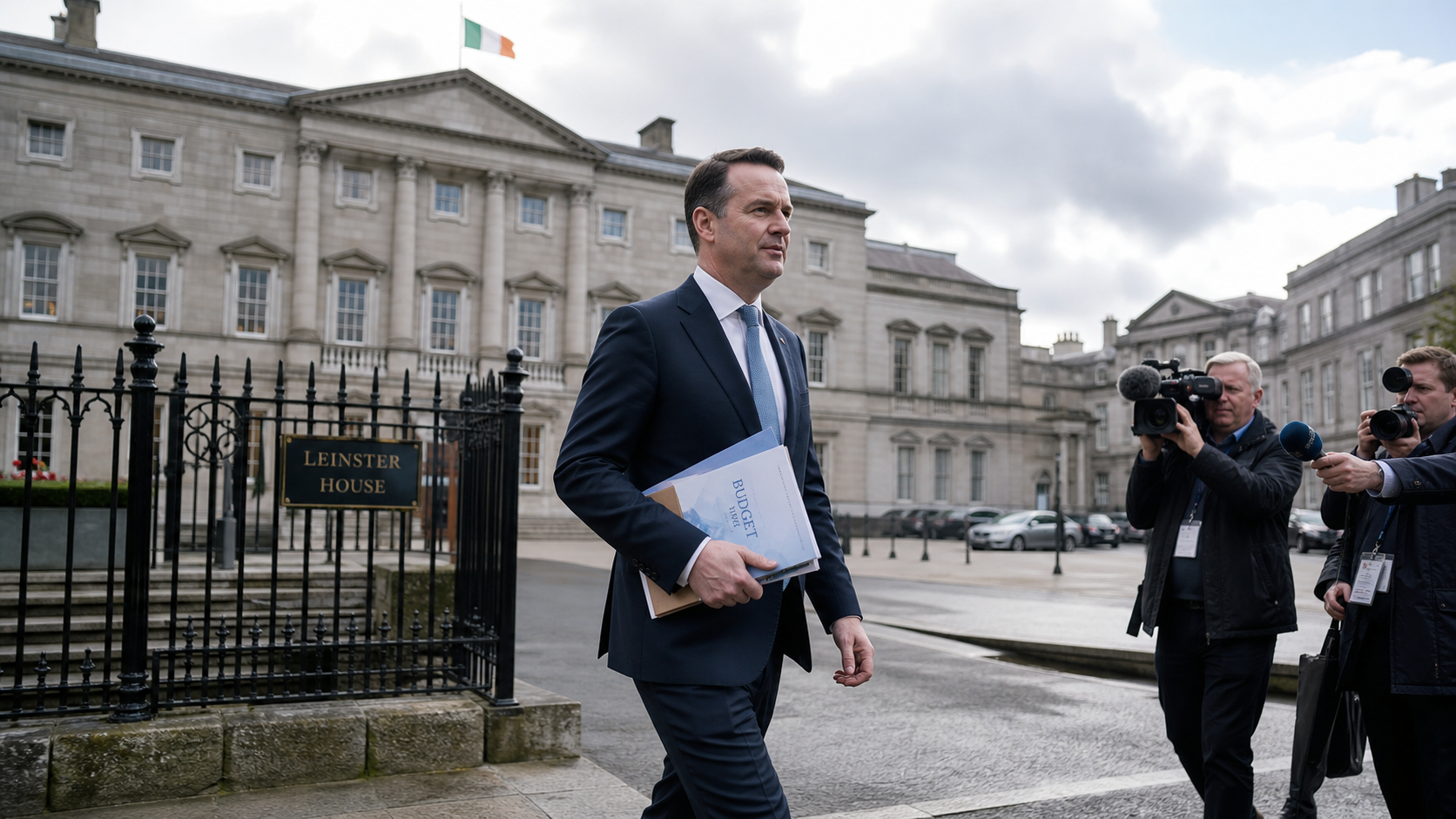
Finance Minister Jack Chambers has signalled that income tax cuts in Budget 2027 will amount to "a few hundred euro" for most workers, describing the package as "modest" and "progressive" and indicating that the government plans to lighten the tax burden in a "sustainable way" over multiple budgets rather than through a single large-scale intervention. The announcement comes as the government faces significant pressure over the cost of living, with inheritance tax reform, a "very significant" cut to childcare fees, and a potential stamp duty exemption for first-time buyers also among the measures being considered for the October budget.
Background
Budget 2027 is being prepared against a backdrop of significant economic and political pressure. The government coalition — Fine Gael, Fianna Fáil, and the Green Party — faces a challenging political environment, with Sinn Féin consistently polling ahead of Fine Gael as the most popular party in the state and with public dissatisfaction over the cost of living, housing, and public services running high. The budget, which will be presented in October, is the government's most important opportunity to demonstrate that it is delivering for ordinary workers and families, and the pressure to produce a package that is seen as meaningful and fair is intense.
The fiscal context for Budget 2027 is, on the surface, favourable. Ireland's public finances are in strong shape, with corporation tax revenues — driven largely by the profits of multinational companies based in Ireland — providing a significant windfall that has allowed the government to run substantial surpluses in recent years. However, the government has been cautious about using these windfall revenues for permanent tax cuts or spending increases, arguing that they are volatile and cannot be relied upon as a long-term source of funding. The establishment of the Future Ireland Fund and the Infrastructure, Climate and Nature Fund has been the government's preferred mechanism for managing the windfall revenues.
The political pressure on the government to deliver meaningful tax relief in Budget 2027 is significant. Sinn Féin has been calling for more ambitious income tax cuts, arguing that the government's cautious approach is leaving workers worse off in real terms. The Labour Party, which is positioning itself as a potential coalition partner, has also been pressing for more generous tax relief for lower and middle-income workers. The government's challenge is to produce a package that is seen as meaningful without undermining the fiscal prudence that has been central to its economic strategy.
Key Developments
Chambers's indication that income tax cuts will amount to "a few hundred euro" for most workers is consistent with the government's stated approach of delivering tax relief in a "progressive and sustainable way" over multiple budgets. The minister has indicated that the package will be weighted toward lower and middle-income workers, with higher earners receiving proportionally less benefit. The specific measures are expected to include adjustments to the standard rate band, increases to tax credits, and changes to the Universal Social Charge.
Inheritance tax reform is also on the table for Budget 2027, with junior minister Neale Richmond indicating that the government is "favourably disposed" to significant changes to the current system. The current inheritance tax thresholds — which have not been significantly increased in many years — are widely regarded as outdated and as failing to reflect the realities of modern family wealth, particularly in the context of rising property values. Reform of the system could allow families to pass on more of their assets to the next generation without incurring significant tax liabilities.
Children's Minister Norma Foley has described Budget 2027 as a "breakthrough budget" for children, with a "very significant" cut to childcare fees among the measures being considered. The government has already made significant progress in reducing childcare costs through the National Childcare Scheme, and a further reduction in fees would be a significant benefit for families with young children. A potential stamp duty exemption for first-time buyers is also being considered, with the Taoiseach indicating that he is "favourably disposed" to the measure.
Why It Matters
The Budget 2027 package will be a critical test of the government's ability to deliver for ordinary workers and families in the face of significant cost-of-living pressures. The indication that income tax cuts will amount to "a few hundred euro" for most workers has already attracted criticism from opposition parties, who argue that the package is insufficient to make a meaningful difference to people's living standards. Sinn Féin has called for more ambitious tax relief, while the Social Democrats have argued that the government should prioritise public services over tax cuts.
The inheritance tax reform dimension of the budget is politically significant. The current system has been criticised for failing to reflect the realities of modern family wealth, and reform could benefit a significant number of families across Ireland. However, critics have argued that inheritance tax reform primarily benefits wealthier families and that the resources would be better spent on measures that benefit lower-income households. The government will need to design the reform carefully to ensure that it is seen as fair and progressive.
The childcare fee cuts are likely to be the most politically popular element of the budget package. Childcare costs in Ireland are among the highest in Europe, and the government's progress in reducing them through the National Childcare Scheme has been broadly welcomed. A further significant reduction in fees would be a tangible benefit for families with young children and would help to address one of the most significant cost-of-living pressures facing Irish families.
Local Impact
The Budget 2027 package will have an impact across Ireland, but its effects will be felt differently in different communities. In Dublin, where the cost of living is highest, the income tax cuts and childcare fee reductions will provide some relief for workers and families who are struggling with high rents and living costs. In rural Ireland, where incomes are generally lower and public services are less accessible, the budget's impact will depend heavily on the specific measures chosen and on whether they are designed to address the particular challenges facing rural communities. The inheritance tax reform, if implemented, will benefit families across Ireland who are looking to pass on assets — including farms and family businesses — to the next generation. The stamp duty exemption for first-time buyers, if introduced, would be particularly significant in areas where property prices have risen sharply in recent years.
What's Next
Budget 2027 will be presented to the Dáil in October 2026. The specific measures will be finalised in the coming weeks, following consultations between the Finance Minister, the Minister for Public Expenditure, and the other members of the Cabinet. The government is expected to publish a pre-budget outlook document before the end of September, which will provide further detail on the fiscal parameters within which the budget will be framed. Opposition parties are expected to publish their own pre-budget proposals in the coming days, providing a basis for comparison with the government's package. The budget debate in the Dáil is expected to be one of the most politically charged in recent years, given the pressure on the government to deliver a package that is seen as meaningful and fair.