Boucher Road Playing Fields Set for Community Sport Transformation as Belfast Council Confirms GAA Pitch Plans
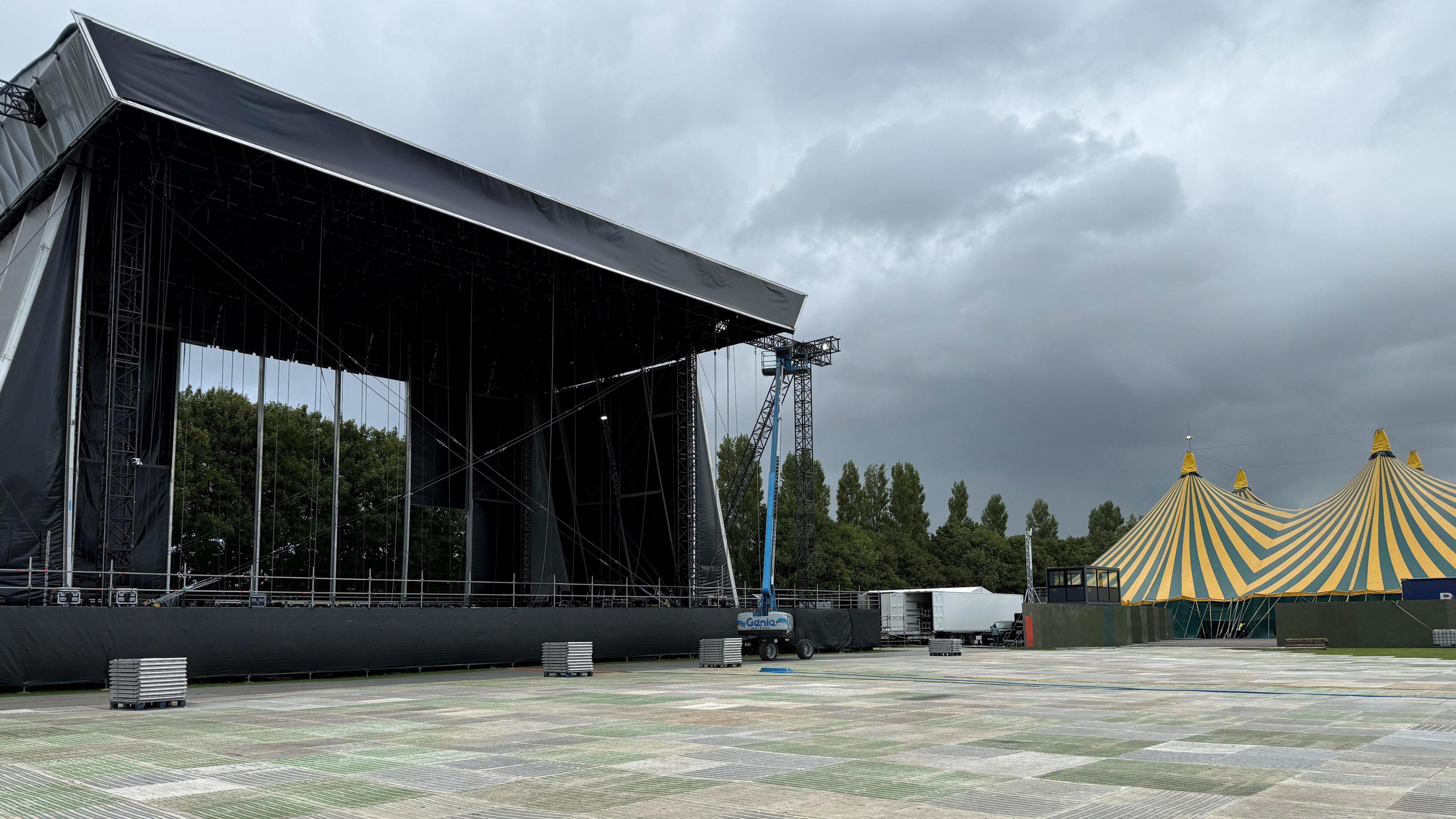
Belfast City Council has confirmed that the Boucher Road Playing Fields — the city's largest outdoor concert venue, capable of holding 40,000 people — will be converted into a community sporting hub featuring two full-size GAA pitches and an intermediate soccer pitch, with large-scale concerts ending at the site after 2027 in a decision that has been broadly welcomed by sporting and community organisations across south Belfast.
Background
The Boucher Road Playing Fields occupy a prominent site in south Belfast, close to the Lisburn Road and within easy reach of communities across the city. For much of the past two decades, the grounds have served a dual purpose: functioning as playing fields for local clubs during the week while hosting major outdoor concerts during the summer months. Acts including Ed Sheeran, Coldplay, and Westlife have performed at the venue, which became one of the most significant outdoor music spaces in Northern Ireland.
However, the site's primary designation has always been as playing fields, and pressure from sporting organisations — particularly those involved in Gaelic games — has grown steadily over the past decade. Belfast has historically been underserved in terms of GAA facilities relative to its population, a legacy of decades of underinvestment in communities where Gaelic games have deep roots. The shortage of full-size pitches has constrained the development of clubs across the city, limiting training capacity and forcing some teams to travel significant distances for competitive fixtures.
Belfast City Council voted in February 2026 to approve the conversion plan, following a period of consultation and debate that exposed genuine tensions between the economic value of the concert business and the community need for sporting infrastructure. The decision was not unanimous, with Alliance, DUP, UUP, TUV, and Green Party members raising concerns about the loss of a major entertainment venue and its potential impact on Belfast's cultural economy.
Key Developments
Under the approved plan, large-scale concerts will be permitted to continue at Boucher Road through 2027, giving promoters and the wider entertainment industry time to identify alternative venues within the city. From 2028, the site will be fully operational as a community sporting hub, with two full-size GAA pitches and one intermediate soccer pitch forming the core of the new facility.
Sinn Féin councillors, who were among the strongest advocates for the conversion, argued that the council had a statutory duty to provide sporting facilities for the community and that the needs of young people in south Belfast had been subordinated to commercial interests for too long. "This is about giving our young people the facilities they deserve," said one Sinn Féin representative during the council debate. "The GAA clubs in this city have been crying out for proper pitches for years."
The decision has been welcomed by the Ulster GAA, which has long identified Belfast as a priority area for facility development. The addition of two full-size pitches at a central, accessible location is expected to significantly increase training and match capacity for clubs across the city.
Why It Matters
The Boucher Road decision is about more than pitches and concerts. It reflects a broader question about how Belfast allocates its public spaces and whose needs take priority in a city that is still navigating the complex legacies of its divided past. GAA clubs in Belfast have historically operated in communities that faced significant disadvantage, and the provision of quality sporting infrastructure is widely recognised as a key component of community development and youth engagement. The conversion of Boucher Road represents a meaningful commitment to those communities. It is also worth noting that Belfast's concert economy, while significant, is not dependent on a single venue — the SSE Arena, Custom House Square, and other spaces provide substantial capacity for live events, and the city's growing reputation as a destination for major performances is unlikely to be fundamentally undermined by the loss of one outdoor site.
Local Impact
For GAA clubs in south Belfast — including those in the Lisburn Road corridor, the Markets area, and communities stretching towards Dunmurry and Finaghy — the new facility will represent a transformative improvement in training and match conditions. Young players who currently travel to grounds in Andersonstown, Casement Park, or further afield will have access to full-size pitches within their own part of the city. The soccer pitch will also benefit local clubs and schools, providing a shared resource that reflects the diverse sporting interests of south Belfast's communities. Belfast City Council has indicated that the facility will be managed to ensure equitable access for all clubs, with booking systems designed to prevent any single organisation from dominating the schedule.
What's Next
The council will now move to the detailed planning and design phase for the new facility, with consultation expected to begin before the end of 2026. A planning application is anticipated in early 2027, with construction scheduled to commence following the conclusion of the final concert season. The facility is expected to be fully operational by the summer of 2028. In the interim, the council has committed to maintaining the existing playing surfaces and ensuring that community sporting use of the site is not disrupted during the transition period.