Belfast Pride Marks 35th Anniversary with Biggest Parade in Festival History
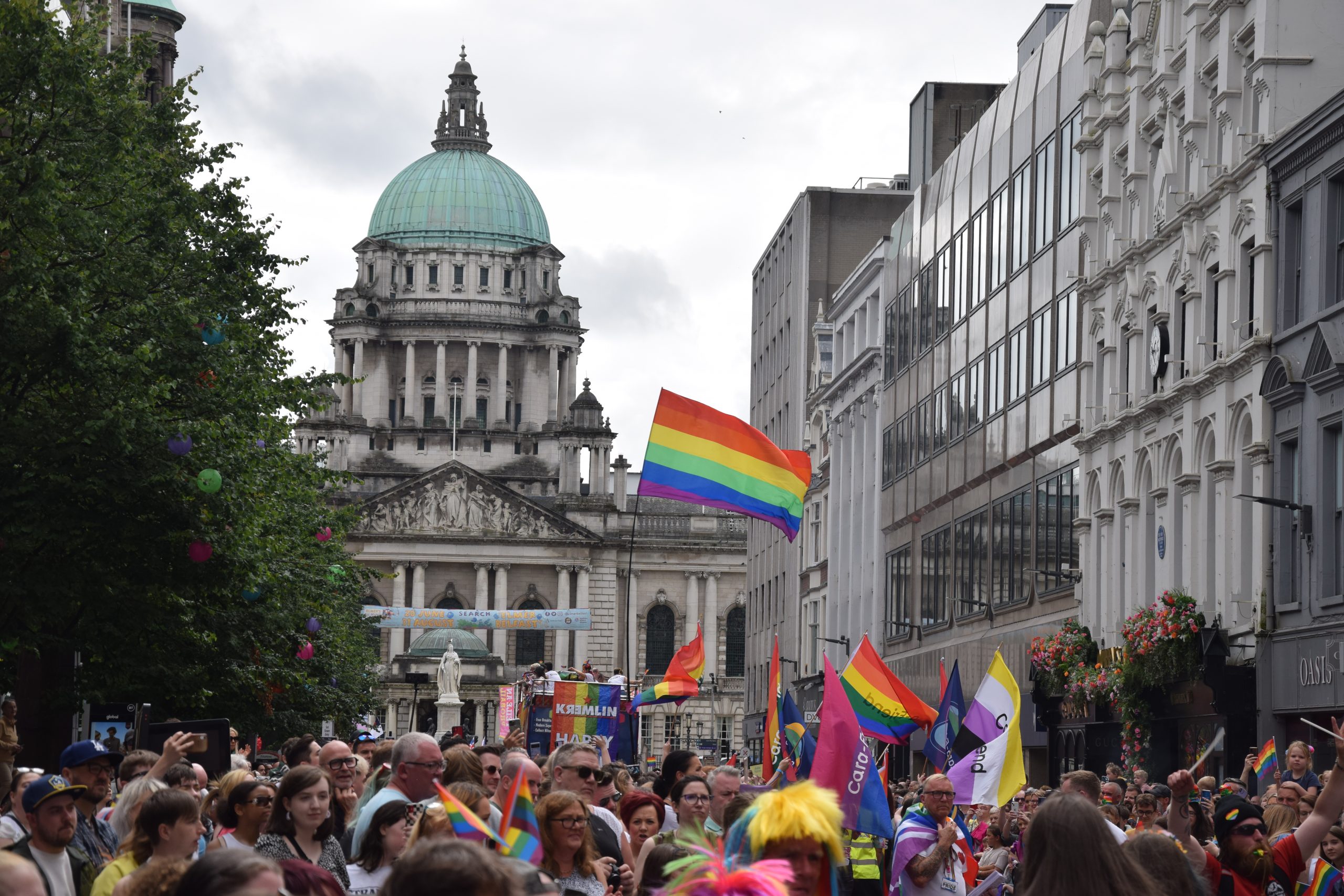
Tens of thousands of people took to the streets of Belfast city centre on Saturday afternoon for the 35th Belfast Pride Parade, the largest and most celebrated edition of the festival since its founding in 1991, with the theme 'Love in Every Colour' drawing participants from across Northern Ireland, the Republic, and beyond.
Background
Belfast Pride was established in 1991 at a time when homosexuality had only recently been decriminalised in Northern Ireland — a full fourteen years after the same reform had been enacted in England and Wales. The early parades were small, defiant gatherings, often met with hostility, held in a city still scarred by the Troubles and deeply conservative in its social attitudes. The contrast with today's festival could scarcely be more striking.
Over three and a half decades, Belfast Pride has grown from a handful of activists marching through the city centre into one of the largest civic celebrations in Northern Ireland's calendar. The 2025 festival attracted approximately 85,000 attendees, and organisers had set their sights on surpassing that figure for the 35th anniversary edition. By all accounts, they succeeded.
The festival's growth has mirrored — and in many ways helped to drive — a profound shift in public attitudes across Northern Ireland. Equal marriage was extended to Northern Ireland in 2020, following years of campaigning by LGBTQIA+ groups and a Westminster vote that bypassed a Stormont Assembly that had repeatedly blocked the measure. That legislative milestone gave the Pride movement a particular resonance in Belfast, a city that had long lagged behind the rest of the United Kingdom on equality legislation.
Key Developments
The 2026 parade stepped off from the Albert Clock at 1:00 pm on Saturday, July 25, winding through High Street, Bridge Street, Waring Street, Donegall Street, Royal Avenue, Donegall Place, and Donegall Square North before concluding near Victoria Street at approximately 4:00 pm. The route was lined with spectators from the early morning, with many families, community groups, and businesses turning out to show their support.
The theme 'Love in Every Colour' was chosen to honour the journey of the LGBTQIA+ community, recognise the courage of those who established the festival 35 years ago, and address contemporary challenges — particularly those facing the transgender community, which has found itself at the centre of an increasingly polarised public debate in recent years. Festival organisers were keen to emphasise that the celebration was inclusive of all identities within the community.
Following the parade, the 'Party in the Square' event at Custom House Square featured performances from a range of LGBTQIA+ artists and drag performers, with the official after-party, titled 'Taboo', taking place at The Telegraph Building later that evening. The ten-day festival, which ran from July 17 to July 26, included more than 150 events across the city, from film screenings and panel discussions to club nights and community workshops.
Why It Matters
The 35th anniversary of Belfast Pride is not merely a milestone for the LGBTQIA+ community — it is a marker of how far Northern Ireland has travelled as a society. In 1991, the organisers of the first parade faced genuine personal risk. Today, the event is supported by Belfast City Council, endorsed by political leaders across the spectrum, and celebrated by a city that has come to regard it as a defining feature of its cultural calendar.
That transformation has not been linear or without setbacks. The ongoing controversy surrounding the cancellation of a women's rights event at the West Belfast Festival — which led to legal proceedings being initiated this week — is a reminder that debates about rights and inclusion remain live and contested in Northern Ireland. But the scale and warmth of Saturday's parade offered a counterpoint: a city choosing, overwhelmingly, to celebrate rather than exclude.
For younger LGBTQIA+ people in Northern Ireland, Belfast Pride represents something that previous generations could not have imagined — a public, joyful, and unambiguous affirmation of their right to exist and to be celebrated. That is no small thing in a jurisdiction that was, within living memory, one of the most hostile environments in Western Europe for gay and lesbian people.
Local Impact
The parade brought significant economic activity to Belfast city centre, with businesses along the route reporting strong trading throughout the day. The hospitality sector in particular benefited, with bars and restaurants in the Cathedral Quarter, the city centre, and the Gay Quarter around Donegall Street reporting capacity crowds. Belfast City Council's events team coordinated closely with the PSNI and Translink to manage traffic diversions and public transport, with additional Metro services laid on to accommodate the crowds. The festival's ten-day programme also brought visitors from across Ireland and further afield, contributing to hotel occupancy rates that organisers described as among the highest of the summer season.
What's Next
The Belfast Pride Festival concludes on Sunday, July 26, with a final day of events. Organisers will begin planning for the 36th festival in the coming months, with early indications suggesting they will seek to build on the record attendance achieved this year. The legal proceedings initiated by the Women's Rights Network Northern Ireland against Féile an Phobail are scheduled for an urgent High Court hearing on Monday, July 27, a case that will be watched closely by equality advocates across the community.