Belfast City Council Approves Drug Testing at Concerts and Festivals in Landmark 'Save Lives' Decision
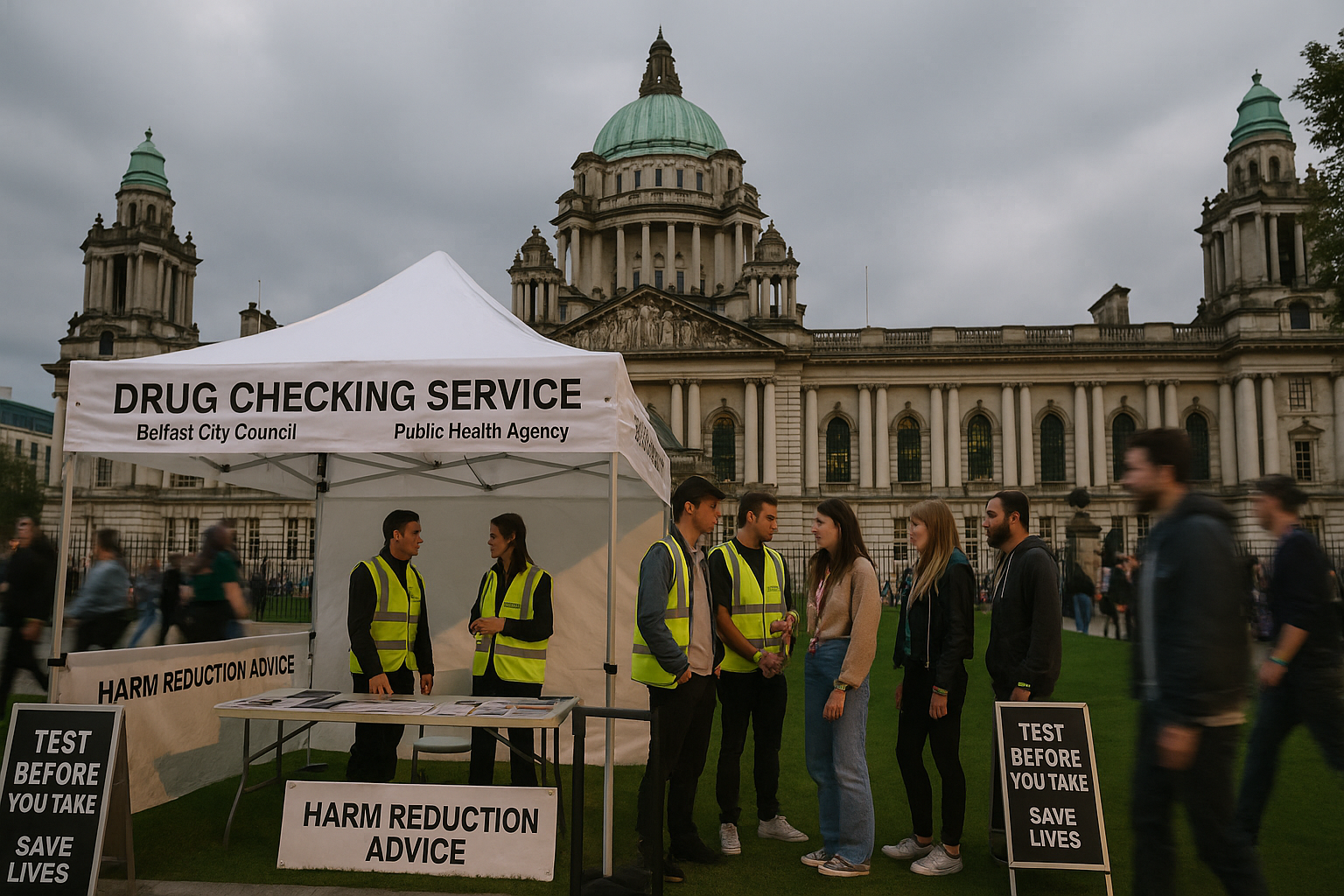
Belfast City Council has approved a landmark measure to allow drug testing facilities at concerts and festivals held in the city, in a decision that public health experts say will save lives by identifying dangerous substances in circulation, providing harm reduction advice to festival-goers, and generating valuable intelligence for health authorities and police about the illicit drug market — a move that follows similar successful programmes in other parts of the UK and Ireland and positions Belfast as a leader in evidence-based drug harm reduction.Background
Drug-related deaths at music festivals and concerts have been a persistent and tragic feature of the UK and Irish entertainment landscape for decades. The deaths are typically caused not by the drugs themselves but by the presence of dangerous adulterants — substances mixed into drugs to bulk them out or to mimic their effects — that can cause fatal reactions even in small quantities. Fentanyl, a synthetic opioid many times more potent than heroin, has been increasingly found in drug supplies across the UK and Ireland, and its presence in substances sold as MDMA or cocaine has been responsible for a significant number of deaths.
Drug checking services — which allow festival-goers to have substances tested before consuming them — have been operating in various forms across Europe for several decades, with the Netherlands, Portugal, and Spain among the countries with the most established programmes. In the UK, drug checking services have been piloted at a number of festivals, including Boomtown and Glastonbury, with results that have been broadly positive: the services have identified dangerous substances, prompted people to dispose of drugs they would otherwise have taken, and provided valuable data on the drug supply to health authorities.
In Ireland, drug checking services have been piloted at a smaller number of events, and the debate about their wider adoption has been ongoing for several years. The decision by Belfast City Council to approve drug testing at concerts and festivals is therefore a significant step forward, and one that is likely to be watched closely by other local authorities across Northern Ireland and the Republic.
Key Developments
Belfast City Council approved the drug testing measure on 7 May 2026, following a recommendation from the council's health and wellbeing committee. The decision was supported by public health experts, who argued that the initiative would save lives by identifying dangerous substances in circulation and providing an opportunity for harm reduction advice. The council's decision follows a period of consultation with public health bodies, police, festival organisers, and community groups.
The drug testing service will be operated by trained harm reduction workers, who will use rapid testing equipment to identify the substances present in samples provided by festival-goers. Results will be provided confidentially, and no information will be shared with police. Festival-goers who discover that their drugs contain dangerous adulterants will be encouraged to dispose of them safely and will be provided with information about the risks of drug use and the support services available.
The decision has been welcomed by public health organisations including the Public Health Agency of Northern Ireland, which has been advocating for evidence-based drug harm reduction measures for several years. Festival organisers in Belfast have also expressed support for the initiative, noting that it will help to make their events safer and reduce the risk of drug-related incidents that can damage the reputation of the city's live music scene.
Why It Matters
The Belfast City Council decision matters because it represents a shift in approach to drug harm reduction in Northern Ireland — from a purely enforcement-based model to one that acknowledges the reality that people will use drugs at festivals and concerts, and that the priority should be keeping them safe rather than punishing them. This is not a new idea — it has been the basis of drug policy in several European countries for decades — but it is a significant departure from the traditional approach in Northern Ireland, where drug policy has historically been more conservative than in England, Scotland, or the Republic of Ireland.
The evidence from other jurisdictions is clear: drug checking services save lives. A study of the drug checking service at Glastonbury found that 10% of people who had their drugs tested disposed of them after discovering they contained dangerous substances. In the Netherlands, where drug checking services have operated for over 30 years, drug-related deaths at festivals are significantly lower than in countries without such services. Belfast's decision to adopt this approach is therefore not merely a symbolic gesture — it is a practical, evidence-based intervention that will have a measurable impact on public health.
Local Impact
For festival-goers in Belfast — at events including the Cathedral Quarter Arts Festival, Belsonic, and the various concerts held at the SSE Arena and other venues — the drug testing service will provide a practical safety net. For the families of young people who attend these events, it offers some reassurance that there is a safety mechanism in place. For the city's live music and events industry, which is an important part of Belfast's cultural economy and its tourism offer, the initiative will help to ensure that Belfast's reputation as a safe and welcoming city for events is maintained. The decision may also prompt other councils in Northern Ireland to consider similar measures, potentially leading to a more consistent approach to drug harm reduction across the region.
What's Next
Belfast City Council will now work with public health bodies, festival organisers, and harm reduction organisations to develop the operational framework for the drug testing service. The service is expected to be in place for the summer festival season, with the first events likely to take place in June or July 2026. Readers should watch for: the announcement of the specific festivals and events at which the service will operate; any response from the Police Service of Northern Ireland to the council's decision; and whether other councils in Northern Ireland follow Belfast's lead in approving drug testing at events.
Sources: BBC News Northern Ireland — Drug testing at Belfast concerts; Belfast Telegraph — Northern Ireland news