Belfast Cements Status as European Fintech Hub as £1.25 Billion Investment Package Drives High-Skilled Jobs Growth
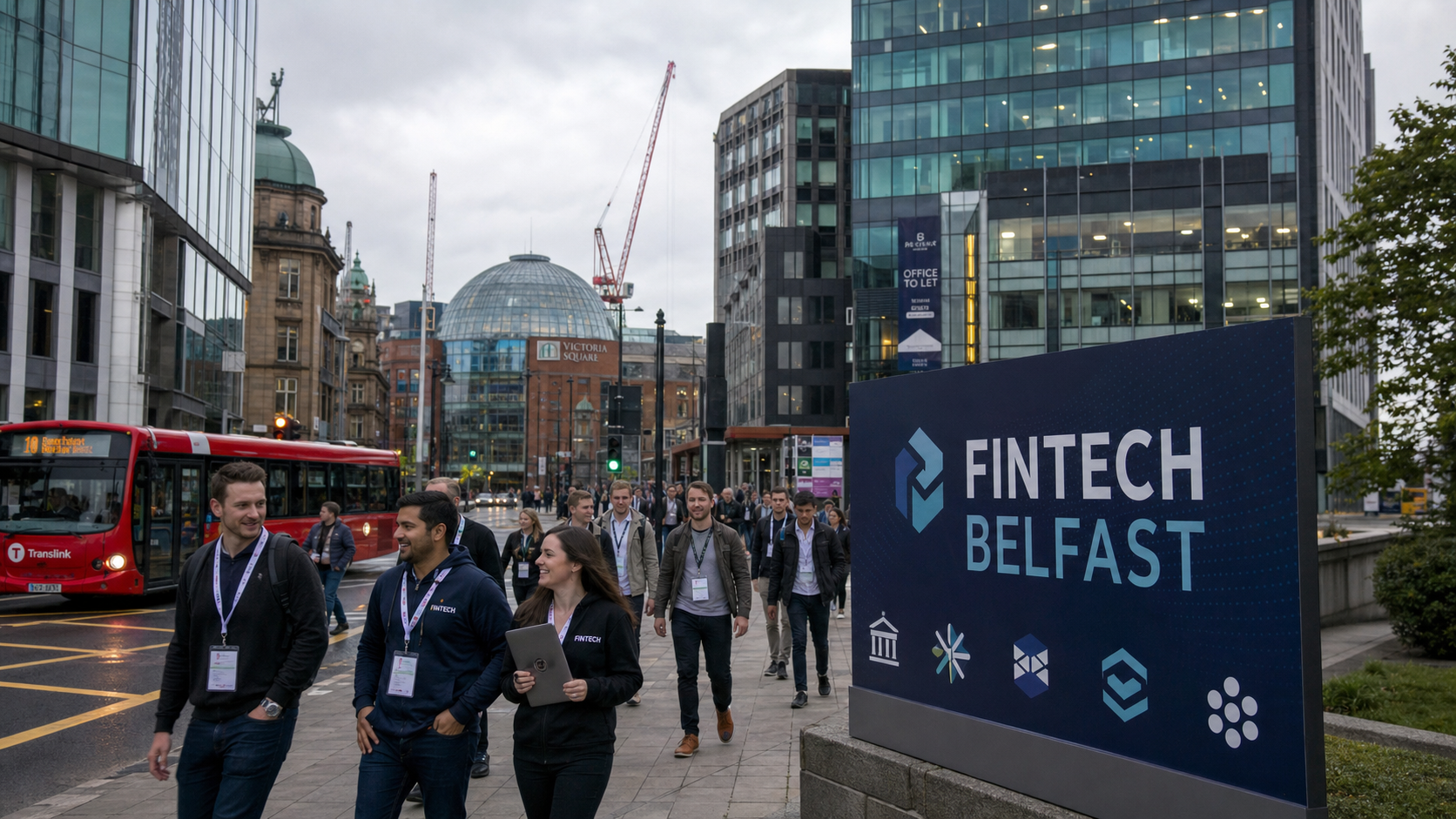
Belfast has been formally identified as a "centre of excellence" for financial technology and security services, with a £1.25 billion investment package from major international firms including Bank of America, Citigroup, and PayPal set to create thousands of high-skilled jobs — but an Ulster University report has warned that the economy needs over 5,000 additional workers annually to sustain growth, with a projected supply gap of 5,400 workers per year and infrastructure deficits posing an £11 billion risk to long-term economic development.
Background
Belfast's emergence as a significant centre for financial technology is one of the more striking economic stories of the post-pandemic period. The city, which spent much of the 1990s and 2000s rebuilding its economic base after the devastation of the Troubles, has in recent years attracted a cluster of major financial services and technology firms that have recognised its particular combination of advantages: a highly educated workforce, competitive costs relative to London and Dublin, excellent digital infrastructure, and a time zone that allows it to serve both American and European markets within normal working hours.
The growth of the fintech sector in Belfast has been driven by a combination of deliberate policy choices and organic market development. Invest NI, the regional economic development agency, has targeted financial services and technology as priority sectors for inward investment, and has developed a range of incentives and support programmes designed to attract and retain firms in these areas. The results have been impressive: Belfast now hosts significant operations for several of the world's largest financial institutions, alongside a growing ecosystem of indigenous fintech startups and scale-ups.
The Windsor Framework, which came into effect in 2023, has added a further dimension to Belfast's economic appeal. By maintaining Northern Ireland's access to the EU single market for goods while keeping it within the UK customs territory, the Framework has given Belfast a unique "dual market access" that is not available anywhere else in the United Kingdom. Economy Minister Conor Murphy has noted that since the Framework was implemented, Northern Ireland's exports to the EU have risen by over 10%, contrasting with a decline in British exports to the EU — a differential that reflects the practical advantages of the dual market position.
Key Developments
The £1.25 billion investment package represents a significant vote of confidence in Belfast's economic trajectory. Bank of America, Citigroup, and PayPal are among the most recognisable names in global finance, and their decision to expand their Belfast operations — rather than consolidating in London, Dublin, or other European financial centres — reflects a genuine assessment that the city offers a competitive proposition for high-value financial services work.
The most recent addition to Belfast's fintech roster is Biller Genie, a US-based fintech firm that has announced the creation of 100 jobs in the city. While 100 jobs is a relatively modest number in the context of the overall investment package, it is significant as an example of the kind of indigenous fintech growth that Belfast needs to develop alongside the large multinational operations. A healthy fintech ecosystem requires not just the anchor tenants provided by the major banks and payment processors, but also the smaller, more agile firms that drive innovation and create the talent pipeline for the sector as a whole.
The Ulster University report on workforce supply is a sobering counterpoint to the investment announcements. The report projects that the Northern Ireland economy needs over 5,000 additional workers annually to sustain its current growth trajectory, but that the supply of workers — taking into account demographic trends, emigration, and the skills profile of the available workforce — falls short of that requirement by approximately 5,400 per year. This is not a small gap; it represents a structural constraint on growth that cannot be addressed simply by attracting more investment.
Economy Minister Murphy has acknowledged the workforce challenge and has indicated that Invest NI will direct 65% of its investments outside the Greater Belfast area by 2026/27, in an effort to address the regional imbalances that have concentrated economic growth in the capital while leaving other parts of Northern Ireland behind. This is a significant policy commitment, but its implementation will require sustained effort and the development of economic infrastructure in areas that have historically been less attractive to inward investors.
Why It Matters
Belfast's fintech success matters for Northern Ireland's economic future in several ways. First, it demonstrates that the region can compete for high-value, knowledge-intensive investment against established financial centres — a significant achievement for a city that was, not so long ago, better known for its industrial decline than its economic dynamism. Second, the fintech sector creates the kind of well-paid, skilled jobs that can sustain a middle class and generate the tax revenues that fund public services. Third, it builds a cluster of expertise and talent that attracts further investment, creating a virtuous cycle of economic development.
The workforce gap identified by Ulster University is the most significant threat to this virtuous cycle. If Belfast cannot find the workers it needs to fill the jobs being created by the fintech investment, firms will either scale back their plans or look elsewhere. The solution requires action on multiple fronts: improving the skills pipeline through education and training, attracting workers from other parts of the UK and Ireland, and making Northern Ireland a more attractive place to live and work through investment in housing, public services, and quality of life.
The infrastructure warning — that water system deficits alone pose an £11 billion risk to the economy — is a reminder that economic development cannot be sustained without the physical infrastructure to support it. Northern Ireland's water and sewerage system is in poor condition, and the investment required to bring it up to the standard needed to support continued economic growth is substantial. This is a challenge that requires political will and sustained public investment over many years.
Local Impact
In Belfast city centre, the growth of the fintech sector is visible in the transformation of the office market. Several major new office developments have been completed or are under construction in the city centre and in the Titanic Quarter, driven by demand from financial services and technology firms. The Titanic Quarter, built on the former Harland and Wolff shipyard site, has become a particular focus for tech and financial services investment, with a cluster of firms now operating from purpose-built facilities in one of the most striking urban regeneration projects in these islands.
The impact on the housing market has been significant. The influx of well-paid workers in the fintech sector has contributed to rising property prices and rents in Belfast, particularly in the south and east of the city where many of the sector's employees choose to live. This is creating affordability pressures for lower-income residents and for workers in other sectors, and it is a challenge that Belfast City Council and the Northern Ireland Housing Executive are having to address.
For the wider Northern Ireland economy, the concentration of fintech investment in Belfast raises questions about regional balance. While the city's success is welcome, the benefits need to be more widely distributed if the economic development of Northern Ireland as a whole is to be sustainable. The Invest NI commitment to directing more investment outside Belfast is a step in the right direction, but it will need to be backed by concrete action and measurable results.
What's Next
The next phase of Belfast's fintech development is likely to focus on deepening the ecosystem — developing the connections between the major multinational operations and the indigenous startup community, building the research and development capacity that drives innovation, and creating the talent pipeline that will sustain the sector over the long term. Queen's University Belfast and Ulster University both have significant roles to play in this process, and both institutions have been developing their fintech-related research and teaching programmes in response to the sector's growth.
The workforce gap will be a central challenge for the coming years. Invest NI and the Department for the Economy are expected to publish a workforce strategy in the autumn that will set out how they intend to address the supply shortfall, including measures to attract workers from other parts of the UK and Ireland and to improve the skills pipeline through education and training.
The infrastructure investment required to support continued economic growth — particularly in water and sewerage — will be a major item in the Stormont Executive's capital spending plans for the coming years. The scale of the investment required means that it will need to be phased over many years, and the political will to prioritise it over other competing demands will be tested repeatedly.