Archbishop Fulton Sheen Beatified in St Louis as Irish-American TV Pioneer's Legacy Celebrated
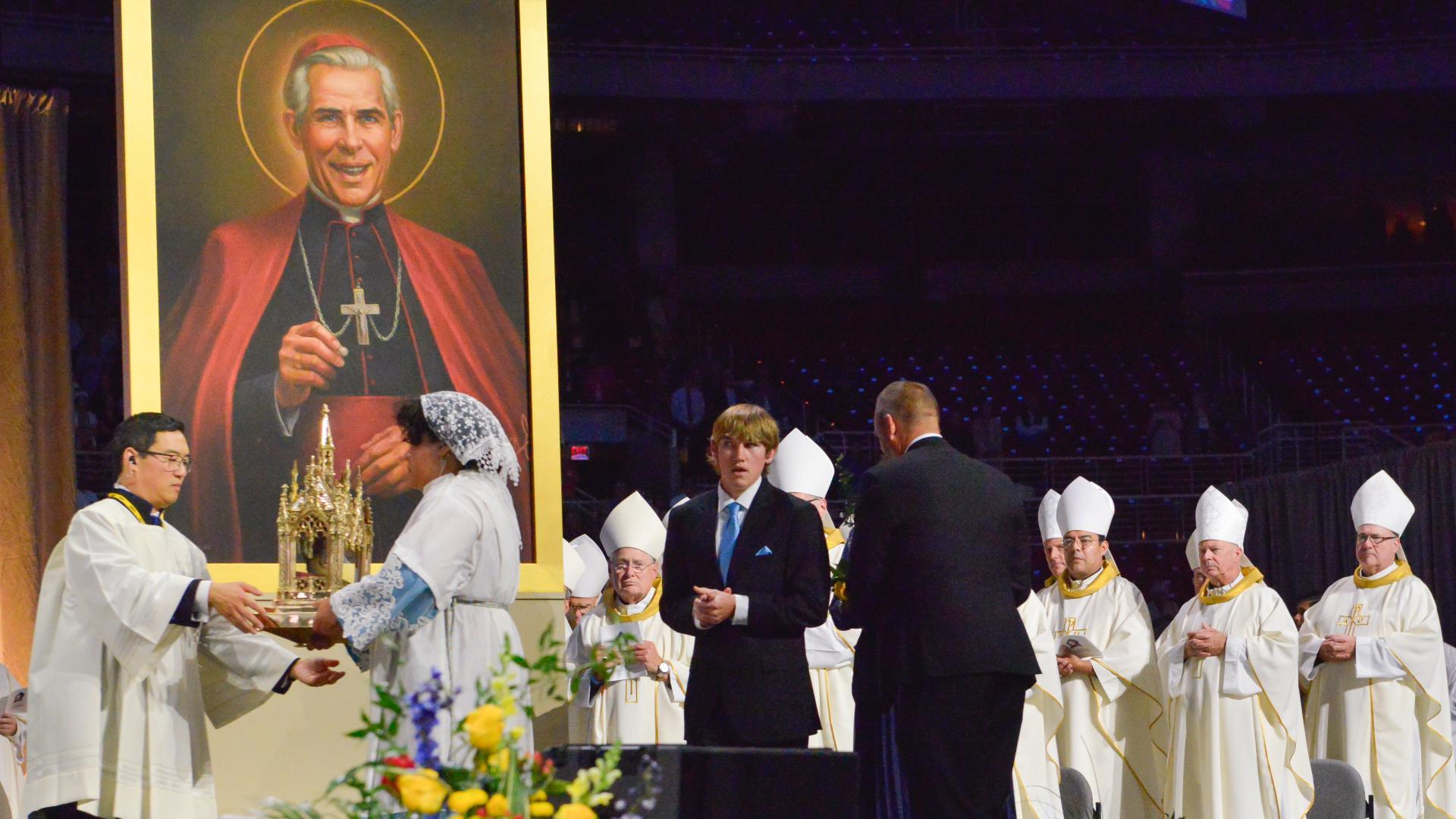
Archbishop Fulton J. Sheen, the Irish-American television pioneer whose Emmy Award-winning programme Life is Worth Living made him one of the most recognisable Catholic figures in 20th-century America, has been beatified at a Mass in St Louis, Missouri, presided over by Cardinal Luis Antonio Tagle, acting as the representative of Pope Leo XIV. Sheen, who was born in 1895 to second-generation Irish parents in El Paso, Illinois, is now one step away from sainthood following the Vatican's recognition of a miracle attributed to his intercession, and his beatification has been celebrated by Irish-American communities across the United States.
Background
Fulton John Sheen was born on May 8, 1895, in El Paso, Illinois, to Newton Morris Sheen and Delia Fulton, both of whom were the children of Irish immigrants. His maternal grandparents had emigrated from County Roscommon during the Famine era, and Sheen grew up in a household where Irish Catholic identity was central to family life. He was ordained a priest in 1919, earned a doctorate in philosophy from the Catholic University of Louvain in Belgium, and rose rapidly through the ranks of the American Catholic Church, becoming a bishop in 1951 and an archbishop in 1969.
Sheen's fame, however, rested not on his ecclesiastical career but on his extraordinary gifts as a communicator. His radio programme The Catholic Hour, which he hosted from 1930 to 1952, attracted an audience of millions, and his transition to television in 1951 — with the programme Life is Worth Living on the DuMont Network — made him one of the most watched figures on American television. The programme, which ran until 1957, attracted audiences of up to 30 million viewers per week, and Sheen's Emmy Award for Most Outstanding Television Personality in 1952 — beating competitors including Milton Berle and Lucille Ball — confirmed his status as a genuine television phenomenon.
The path to beatification has been a long one. Sheen died in 1979, and his cause for canonisation was opened in 2002. The Vatican's recognition of a miracle attributed to his intercession — the recovery of a stillborn infant in 2010 — cleared the way for his beatification, which was originally scheduled for 2019 but was delayed by a dispute between the Diocese of Peoria, where Sheen was born, and the Archdiocese of New York, where he died, over the location of his remains. The dispute was resolved in 2021, and the beatification was rescheduled for September 24, 2026.
Key Developments
The beatification Mass at the Dome at America's Center in St Louis was attended by thousands of faithful, including a significant contingent of Irish-Americans who travelled from across the United States to witness the occasion. Cardinal Tagle, who presided over the Mass as the representative of Pope Leo XIV, described Sheen as "a man who understood that the deepest human questions are also the deepest spiritual questions, and who had the gift of making that connection accessible to millions." The Mass included readings in English and Irish, reflecting Sheen's Irish heritage, and the congregation included representatives of the Irish government and the Irish Embassy in Washington.
Sheen's Irish-American identity was central to his public persona and to his effectiveness as a communicator. According to Dr Matthew O'Brien, a history professor at the Franciscan University of Steubenville, Sheen's Irish roots were instrumental in softening the image of the Catholic Church in postwar America. By employing self-deprecating wit, playful anecdotes about "the old country," and a distinctively warm, non-authoritarian style, Sheen was able to defuse tensions and appeal to Protestant and Jewish viewers alike. His ability to maintain his clear, uncompromising Catholic identity while simultaneously engaging with the wider American culture is considered a foundational element of his legacy.
The Irish government has welcomed the beatification, with the Department of Foreign Affairs issuing a statement noting Sheen's significance as a figure of Irish-American heritage and his contribution to the cultural and spiritual life of the United States. The Irish Embassy in Washington hosted a reception for Irish-American community leaders following the beatification Mass.
Why It Matters
Fulton Sheen's beatification matters for the Irish diaspora because it is a recognition of the extraordinary contribution that Irish-Americans have made to the cultural, spiritual, and intellectual life of the United States. Sheen was not merely a religious figure — he was a public intellectual, a television pioneer, and a cultural bridge-builder who used his Irish heritage as a source of warmth and connection in a country that was still navigating the complexities of Catholic identity in a predominantly Protestant culture. His beatification is a reminder of the depth and breadth of the Irish-American contribution to American life, and of the enduring significance of the Irish diaspora as a force for cultural and spiritual influence in the world.
The beatification also has significance for the broader Irish Catholic community, both in Ireland and in the diaspora. Sheen's life and work represent a model of engaged, intellectually serious Catholicism that speaks to the challenges facing the Church in the contemporary world — the need to communicate the faith in a language that resonates with modern audiences, to engage with the culture rather than retreating from it, and to demonstrate the relevance of the Gospel to the deepest questions of human existence. His beatification is a reminder that these challenges are not new, and that the Irish Catholic tradition has produced figures of extraordinary gifts who have risen to meet them.
Local Impact
In Ireland, the beatification has been marked by special Masses in dioceses across the country, with the Diocese of Roscommon — from which Sheen's maternal grandparents emigrated — holding a particularly significant celebration. The Roscommon connection has been a source of local pride, and the county's GAA clubs and community organisations have organised events to mark the occasion. In the United States, Irish-American communities in cities including New York, Boston, Chicago, and San Francisco have held their own celebrations, with the Ancient Order of Hibernians and the Irish-American Cultural Institute both issuing statements welcoming the beatification. The Irish-American community's celebration of Sheen's beatification reflects the enduring importance of the Catholic faith as a marker of Irish-American identity, even as the community has become increasingly diverse and secular in its broader cultural orientation.
What's Next
Fulton Sheen's beatification is the penultimate step on the path to canonisation, which would require the recognition of a second miracle attributed to his intercession after his beatification. The Cause for Canonisation of Fulton Sheen, which is managed by the Diocese of Peoria, has indicated that it is aware of several potential miracles that are being investigated, and that the process of canonisation will continue in the coming years. The Diocese of Peoria has also announced plans to develop a Fulton Sheen Heritage Centre in the city, which will serve as a centre of pilgrimage and education for those interested in Sheen's life and legacy. The Irish government has indicated that it will support the development of the heritage centre through the Emigrant Support Programme, recognising the significance of Sheen's Irish heritage to the project.